Prepare speakers and program

TEDx organizers and speakers share the responsibility of upholding our audiences' trust. Make sure you review these guidelines, which aim to provide a practical set of standards.
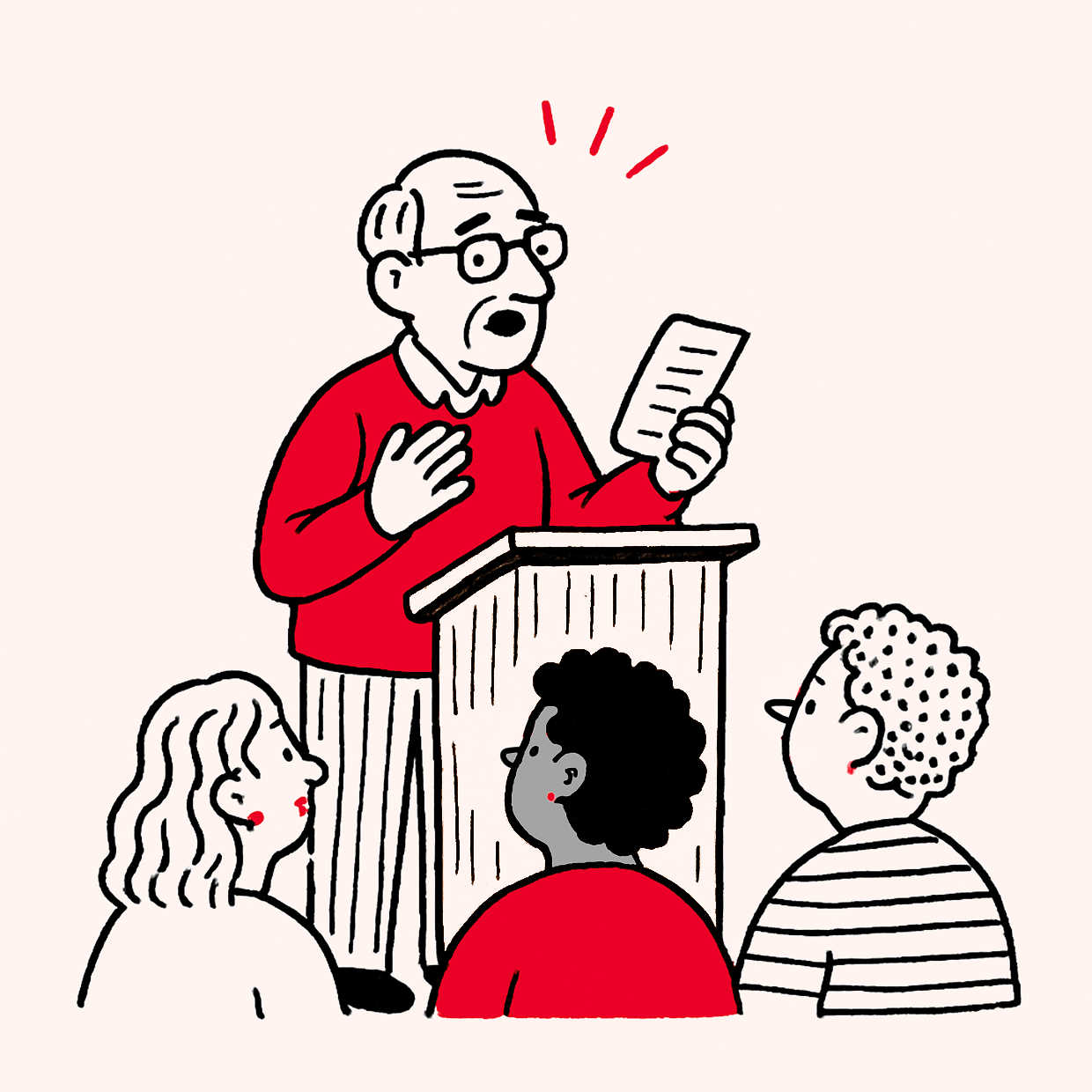
Speaker preparation is rigorous and time-intensive, so it's important to set clear expectations from the start.
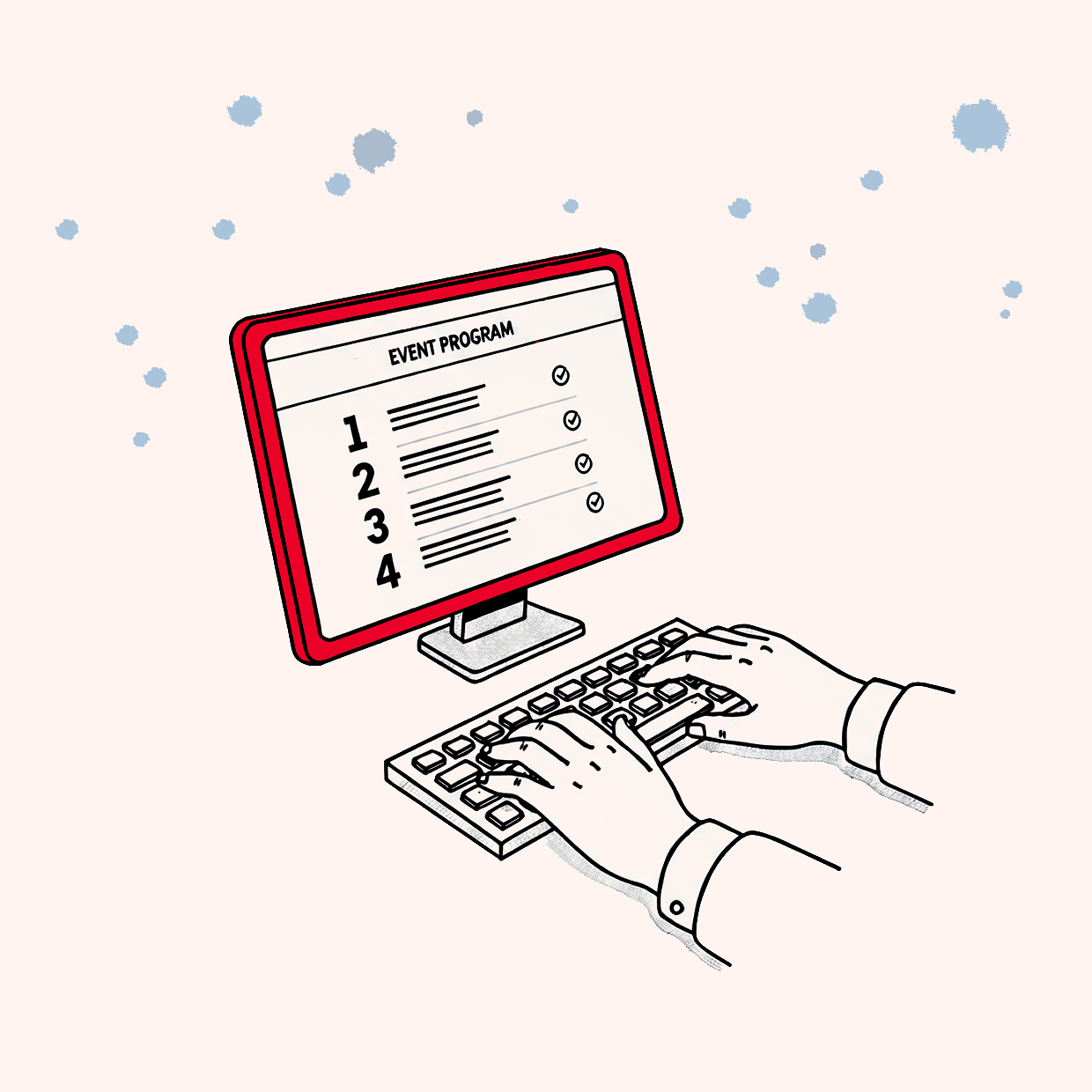
Your program is the heart of your TEDx event, so it’s important to craft it with care.

Great talks come from months of rehearsal and thoughtful coaching. On event day, ensure your speakers feel prepared and supported.
Content guidelines and fact-checking
These content guidelines and our fact-checking guide aim to provide a practical set of standards to ensure, as much as possible, that audience members can trust the ideas they hear.
The ethos
TED provides information directly to millions of people through TED and TEDx Talks. Sharing accurate information is a responsibility we take seriously, and TEDx organizers and speakers share this responsibility of upholding our audiences’ trust and maintain TED's reputation as a forum for sharing ideas that matter.
It’s inherently difficult to share hard and fast rules in this area, and these guidelines will likely evolve as the program responds to new challenges. We ask you to help preserve the integrity and value of TED and TEDx stages around the world by upholding the guidelines and respecting our publishing policy.
TEDx Content Guidelines
Four essential guidelines to help you responsibly share ideas with a global audience while upholding TED’s mission and values.
Review the Content Guidelines →
TEDx Fact-Checking Guide
Fact-checking means going through a script’s empirical claims — basically, anything that can be verified in the real world — and making sure that they are as accurate as possible. All talks should be thoroughly fact-checked before publication.
Review the Fact-Checking Guide →
Fact-checking FAQs and tips
Get answers to frequently asked questions and common script issues. Refer to the guide above for the in-depth fact-checking process.
Review FAQs and Tips →

Tips
Each TEDx event has complimentary access to TED Masterclass, TED's official public speaking course that helps speakers develop and refine their talks. Review the details and sign your speakers up on the TEDxHub.
Rule reminders
If a talk does not follow the Content Guidelines or Copyright Guidelines, organizers have the discretion to withhold the talk. They must inform both TED staff and the speaker(s) that they have made this decision, along with their reasoning.
Prepare speakers
Share expectations with your speakers early on. Work diligently to help them craft and deliver a strong TEDx Talk, which is very different from giving a speech or lecture.
Your speaker accepted! Now what?
Once a speaker accepts your invitation, you’ll want to give them more information about the event and discuss the idea. The goal of your conversation is to communicate the following:
Explain what a TEDx Talk is
A TEDx Talk is very different from a lecture or speech. Be prepared to explain what a TEDx Talk is and what sets it apart. A speaker may have already heard of TED, which is a plus, but you should still discuss how they’re unique.
Share expectations
Be sure to share these key expectations. TEDx speakers:
- Are required to write an outline and/or script and slides
- Must be contactable before the event, and have occasional check-ins with your team
- Will rehearse their talk for weeks or months in advance, and attend at least one rehearsal, including a dress rehearsal
Discuss potential talk ideas
- You likely selected this speaker because of an idea you already identified in their work, but stay open: they may have new work or a different angle that's even more exciting to explore. The goal of this conversation is to confirm you're both aligned on the right idea before moving forward, not just to prepare the one you started with.
Plan some questions to help a speaker identify their idea, like:
- What's a controversy in your field that a general audience would understand?
- What's a common misconception you'd love to clear up?
- Why is this idea important, and to whom?
- Who would disagree with you, and why?
- How did you carry out this idea in your own work?
- What's the big idea behind your new project? How did you sell that idea to funders and collaborators?
- You may not find the idea in your first conversation, but you’ll help your speaker begin shaping a clear, compelling idea for a general audience.
- If, after your conversation, both you and your potential speaker are ready to move forward with crafting a great TEDx talk together, add this new speaker to your official program!
Explain and collect the speaker release form
Each speaker must sign the TEDx Speaker Release before they present. Have them review and sign the agreement before rehearsals begin. Keep the signed forms for your records. We will request this if their talk is selected for wider sharing on TED channels.
TEDx Speaker Release
Outline and script
Constructing a TEDx talk takes discipline and creativity, so it’s important your speaker feels supported and empowered throughout the process. First and foremost, share the TEDx Speaker Guide, which includes all the guidance they’ll need to draft and deliver a compelling talk. Additionally, it’s important to check in regularly, offer support, and make sure they’re not falling behind.
Create a timeline
The first draft of your speaker’s talk will not be their last. Set a timeline with specific milestones that your speaker can aim for. Here’s a sample timeline:
- 6 months before the event: Thesis and basic outline due
- 5 months out: A script or detailed outline due
- 4 months out: Second draft and first rehearsals
- 3 months out: Final draft and more rehearsals
- 2 months out: Bi-weekly rehearsals
- 1 month out: Weekly rehearsals
- 2 weeks out: Take a break. (Don’t think about the talk.)
- 1 week out: Rehearsals
- 1-2 days out: Dress rehearsals
Your own timeline depends on your schedule and the needs of your speakers. Once you have set a realistic timeline with milestones in place, make sure you keep checking in to help speakers stay on track.
3 key elements of a strong talk outline/script
Look for the following as you review talk outlines and talk drafts:
Structure
This is the foundation of a good TEDx talk. Make sure each speaker’s script has a clear introduction, middle, and end.
Brevity
Your speaker should know how many minutes they have for their talk. Make sure their script is an appropriate length for their time slot, or else their content may seem cramped. Think: Is there more than one major idea here? If so, which is the best? Help your speaker hone in on the one major point they’re trying to make. Think about what talk format works best for this idea.
Purpose
Every point within a talk should serve the purpose of proving the talk's main idea and its importance. Make sure these points will be understood by the audience, and there’s a clear explanation as to why they matter.
You also want to make sure the talk is relevant to the audience. Does this talk make a connection with the guests? Is it relatable? Speakers' should always keep the listener and what they might want or need to know in mind.
Decide if you need slides
Not every speaker decides to use slides, but every speaker who uses slides should follow this rule: Keep it simple.
Are slides necessary?
Slides can be helpful, but are not always necessary or complementary to the talk. In fact, a lot of the best TED and TEDx talks have no slides. If you don’t think your speaker needs slides, encourage them not to use slides. Explain that their talk is strong enough without them.
If you choose to use slides
- When speakers do have slides, the general consensus is that less is more. A single, strong graphic image or succinct line of text is more compelling than a crowded collage of pictures or a long paragraph. Remember, people need to process everything a speaker is saying while simultaneously absorbing the slides.
- Your speakers will have tips and instructions on slides in the Speaker Guide, but it’s important to review their slides, edit, and cut when needed.
For images and design:
- Make sure the slides are visually rich, and easy to understand. Bring in a designer if needed.
- Only use high-resolution pictures and graphics.
- Keep graphs visually clear, even if the content is complex.
For text and content, ask:
- Do the slides have a lot of text? Text-heavy slides will only distract the listener from the heart of the message.
- Do the slides have too much information? No slide should support more than one point.
- Is each slide necessary? Too many slides can be distracting. Make sure every slide has a purpose – for those that don’t, cut them.
Design slides for the stage
Things to check before finalizing your speaker’s slide deck.
Work with your production manager and tech team to make sure your team and speakers are aware of any relevant technical details.
Text size and background
- Text should be large enough that the person sitting farthest from the stage can read it. Make sure you test this during rehearsals.
- A simple background keeps the text readable. If you are using a dark or black background, make the text bold.
Make sure slides are sized correctly
You can't always know what type of presentation screen you'll be using. Build slides that will work in any of the following dimensions:
- Widescreen HD (16:9 aspect ratio): 1920x1080 (hi res)
- Widescreen HD (16:9 aspect ratio): 1280x720 (low res)
- Squarescreen (4:3 aspect ratio): 1024x768 (hi res)
- Squarescreen (4:3 aspect ratio): 800x600 (low res)
Store presentation files in a central location
Load all presentations onto one or two house computers, rather than speakers' laptops, as well as a backup device. This ensures compatibility, and helps to speed transitions between presenters.
Rule reminders
Your speakers must own the rights to all images used on their slides. If they use an image under a Creative Commons license, cite the source at the bottom of the slide.
Tips
Rather than one complex slide, encourage speakers to show several slides – each with one idea, image or data point.
Create your program
Your stage program is the heart of your TEDx event, so it’s important to craft it with care.
Create your program
To capture the spirit of a TED conference, we recommend you follow TED's own stage program structure. Here are some basic principles to follow:
Start strong
You'll want to get your audience’s attention right from the start – be sure your event has a very strong opening.
Mix it up
Break up your program with thrilling demonstrations and moving performances. Throw in a few shorter talks or counterpoints.
Program sessions + schedule
Ultimately, the format is up to you. Most people create 90-minute sessions, each of which have four full-length talks and a few short presentations.
- A full day event often has up to four stage sessions, broken up by "conversation breaks" and lunch, and conclude with a reception/dinner.
- A half day event often has up to two stage sessions as well as a reception or other post-event gathering, like lunch or dinner.
- When it comes to sessions, cover a mix of topics that relate loosely to each other, allowing the audience to make connections and draw their own conclusions.
- Mix up the order of your talks and performances. Vary the pace of your program by mixing longer talks with a few shorter talks or counterpoints. Make sure to pad each session with an extra 15 minutes, to account for transitions, introductions, and other small delays that inevitably occur.
Tip
You aren't required to show pre-recorded TED or TEDx talks, but you are welcome to supplement your program with them. Check out the TEDx library on TED.com to get started.
Rule reminder
All TEDx events begin with the short, official video introduction featuring Head of TED Chris Anderson. It ensures your audience understands what TEDx is and the difference between TEDx and TED. After the video, your host can introduce the first session.
Plan compelling breaks
All TEDx events, regardless of length, should have breaks between sessions. People need time to think about what they’ve seen (and use the restroom).
- To make the most of time in between sessions, we highly recommend:
- Providing food and drinks. Ideally, you should offer full meals (or at least the chance to purchase a meal) during breaks that coincide with mealtimes. Make filling snacks, coffee, and water always available.
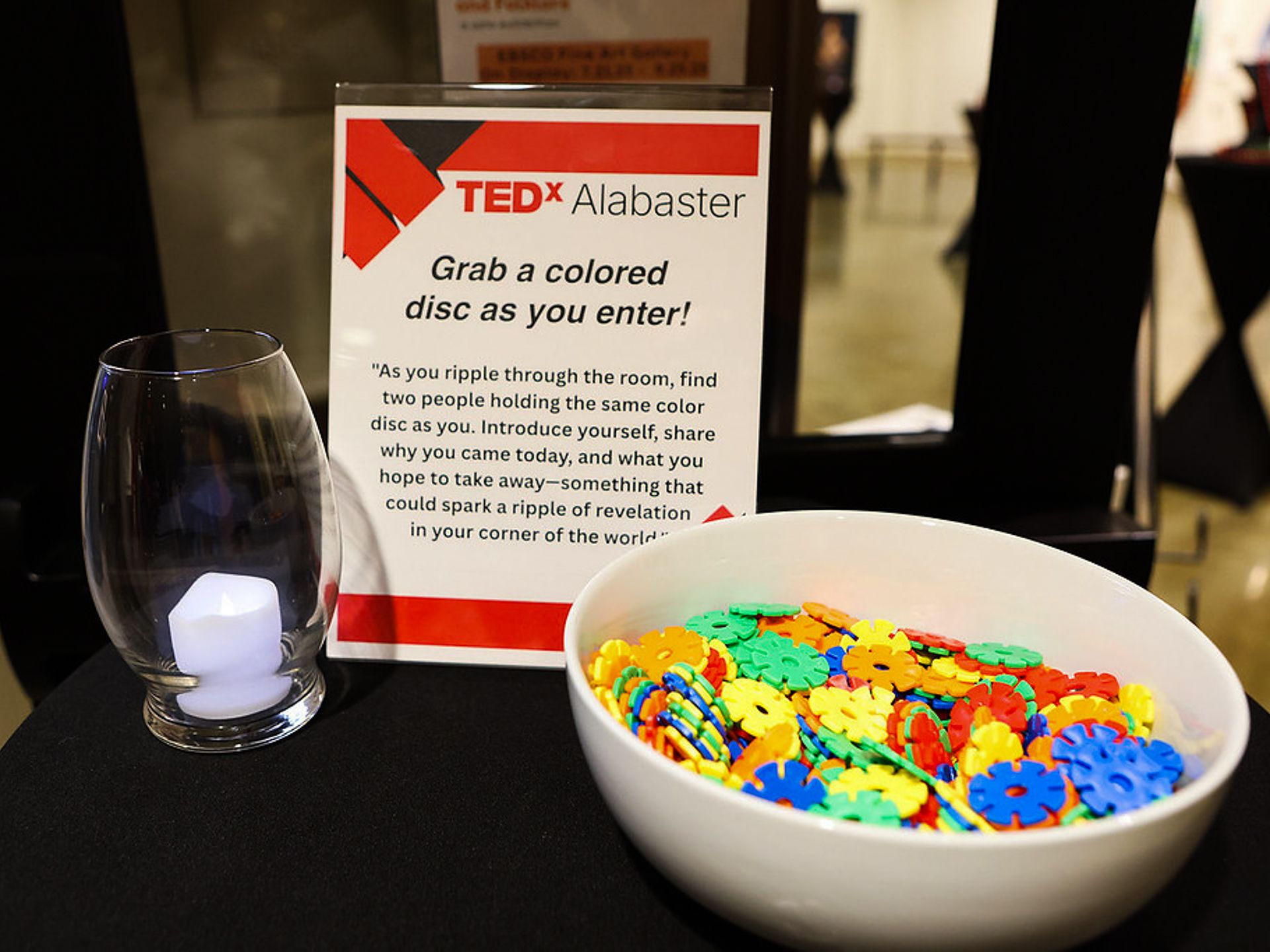
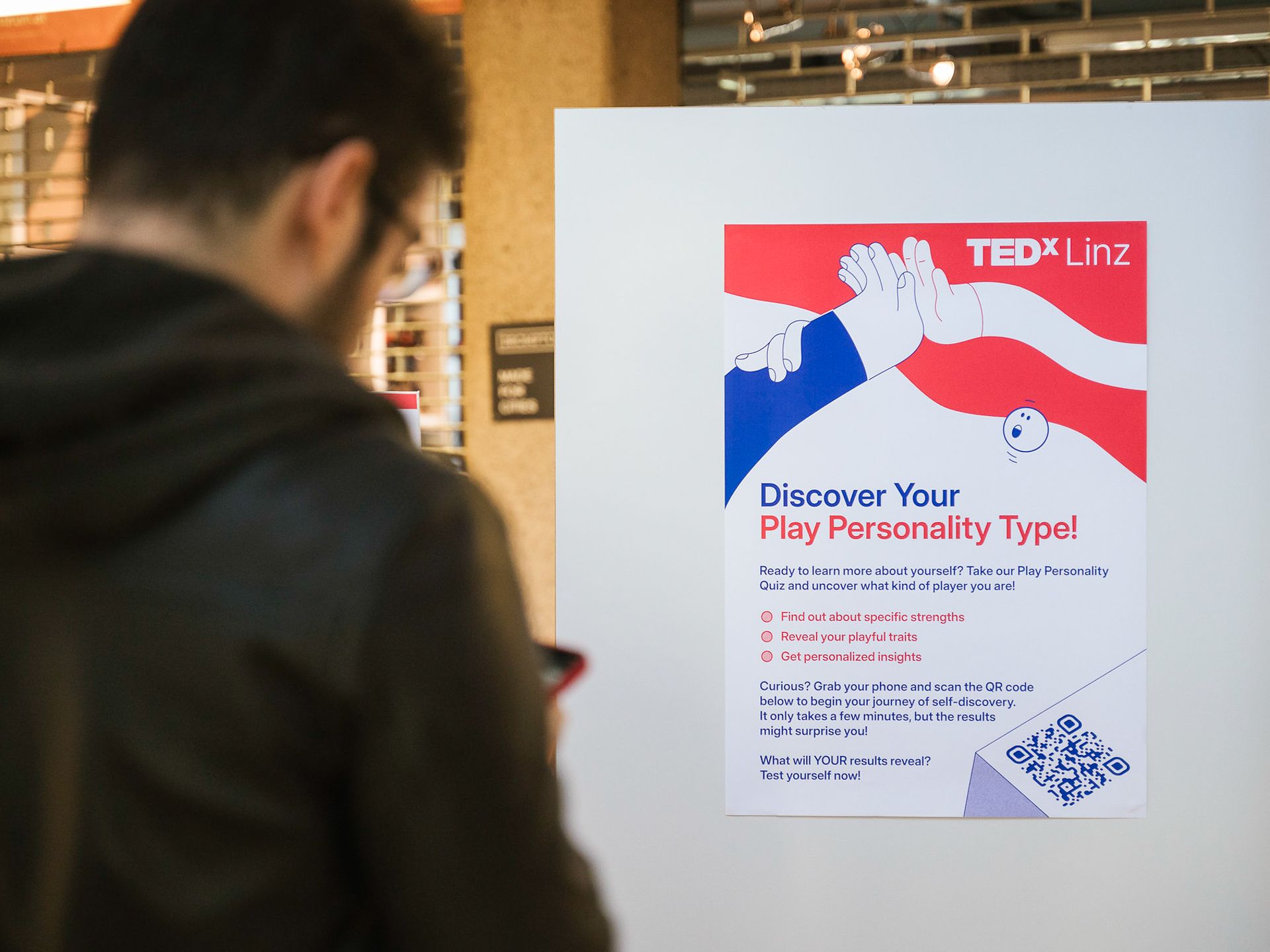
- Offering activities. Create stations with hands-on activities. These can be related to your speakers’ topics, local interests, or even feature your sponsors’ projects.
Activity ideas1/5



Interludes
Palate cleansers help create a comfortable pace for your event and refresh your audience’s attention.
Aside from session breaks, it’s important to keep a good pace during each session with interludes and short breaks Here are some examples:
- Play brief non-talk videos. Short videos can act as the perfect bridges between two talks. Just don’t forget to obtain the rights to anything you use.
- Get up and stretch. In the middle of your second or third session, have your host ask the guests to stand up and stretch. It’s a good way to keep things casual, and clear the mind before the next talk.
Your host’s responsibilities
Your host plays a big role in ensuring your event flows smoothly. Their responsibilities include:
Introductions
Gives short intros for the speakers, videos and other parts of your program. Introductions should tease, but not reveal, what each speaker will say, and be about 30 seconds long.
Time-keeping
Enforces time limits and encourages quick transitions to keep speakers on track.
Troubleshooting
Responds quickly to technical difficulties or delays in the program, and is able to help speakers resolve minor technical glitches.
Announcements
Announces all “housekeeping” announcements and changes to the program.
Connections
Helps link onstage content with the event’s theme, drawing connections to fuel conversation during the session breaks.
Audience participation
Encourages the audience to engage with the speakers through applause, laughter, etc. to create a positive feedback loop throughout the event. A lively audience is not only more fun for speakers but also better in video recordings.
Tips
Encourage conversation! One of your jobs as an organizer is to reduce tension and make everyone comfortable talking to strangers. A few ideas: Have audience members provide you with facts about themselves to be printed on their name badge as a conversation starter. Or have your host suggest essential questions that everyone should discuss during breaks.
Rule reminders
Everyone who appears on stage during your event must sign a TEDx Speaker Release Form (located under the Recording and sharing content section). This gives TED and others the right to edit and distribute video of their appearance and/or presentation.
Rehearsals and event day
Great talks come from months of rehearsal and careful coaching. Ensure your speakers feel prepared, confident, and excited to share their ideas on event day.

Rehearse, rehearse, rehearse
Rehearsals are a non-negotiable to delivering a fantastic talk.
Once a TEDx speaker has a solid first draft of their script or outline, they should start rehearsing their talk. The key to a great talk is to start rehearsing as early as possible.
It’s also important that your speakers have your curation team’s support during this process for both positive and constructive feedback.
Best practices for great talk delivery include:
Body language
- When speakers step onstage, they should let a beat or two go by, take a breath and anchor their feet before beginning.
- Have speakers rehearse standing still. Pacing onstage makes things difficult for the camera crew and can ruin a video.
- Work on physicalizing the talk. Gestures can help speakers emphasize important points.
Script and memorization
- Record, transcribe, edit, repeat. Some speakers will benefit from hearing themselves speak. It’s a great way to get speakers to believe you when you tell them bits of their talks aren’t quite right.
- When a speaker sounds too rehearsed, they’re not done rehearsing. Speakers should run through the talk again and again, until they don’t have to think about the fact that they’re reciting a script. Encourage them to rehearse until the words feel like a key part of their being. Or, ask them to let go of their plan and rely on the fact that they understand their idea better than anyone else. This depends on the speaker.
Emotion and tone
- Help speakers find a conversational tone. One way is to ask speakers to imagine they’re at a dinner party telling the one story of the night that will make the whole table pause.
- Encourage speakers to tap into honest, contagious emotions during their talk – wonder, optimism, anger, surprise, etc.
Other considerations
- Speakers may not use a podium or lectern unless they need to. These objects separate the speaker from the audience, create an overly formal atmosphere, and encourage presenters to read from their notes (which is always boring to watch).
- Your speakers should have the opportunity to rehearse as many times as possible. Have them find one or two people they can always turn to for practice sessions, and/or consider organizing special rehearsals – in speakers' homes or elsewhere – where they can present in front of small, live audiences.
Work out the kinks
Quirks to look for, point out, and eliminate from your speaker’s talk:
- Talking about the talk
- Apologizing to the audience
- Asking questions when statements would be clearer
- Introducing too much vocabulary
- Redundancies
- Repetition
- Reading quotes
- Whispering
- Yelling
- Nervous pacing
- Awkward stillness
- Failing to admit controversy
- Overstating points
- Utopianism
- Dystopianism
- Forcing emotions
- Unnecessary slides
- Making TED puns
- Purely anecdotal evidence.
Tips
Don’t push strategies onto your speaker that don’t seem to be working. Let speakers find an approach that works best for them.
Know when to make a cut
- This is a tough one. TEDx organizers often face a situation where a speaker is not prepared enough for their talk, or their talk simply doesn’t meet the TEDx standard.
- If this happens you have the liberty to remove that speaker’s talk from your program. It’s never a fun thing to do, but it’s the fair thing to do for your TEDx community and for the speaker.
Dress rehearsal and final prep
Give your speakers and team a chance to practice for the event in a setting that’s as close as possible to the real thing.
General prep
A day or two before the show, run through the following with your speakers and performers at the site of the event:
- Where they will get ready and be given their microphone
- Where they will sit
- How they will step on stage
- How you will cue them when their time runs out
- How to exit the stage
- Make sure speakers have a chance to go through their talk or performance several times – onstage with their slides and with a host introducing them.
Technical prep
- What (not) to wear: Speakers should wear something comfortable that they feel good in. Speakers and performers should not wear stripes, complicated patterns, or bright colors that could disrupt lights – or dangling jewelry that could interfere with microphones.
- Slide control: Will your speakers have control over their slides? If you give speakers a remote for advancing their slides, make sure they rehearse with the remote multiple times so they can remember when each slide should change. Alternatively, a speaker can have someone offstage change slides using their script as a guide. This decision should be the speaker's.
Day of the event
On the day of your TEDx event, your speakers will be feeling the pressure – there’s a lot riding on their talk, so you’ll want to make sure they feel completely supported and celebrated for their hard work.
Stay in communication
It’s important to keep your speakers updated on the internal schedule of the day – you might even make a schedule specifically for them, so they know where to be and when.
It’s also important to have immediate access to your speakers , in case something unexpected happens. Make sure you have speakers' phone numbers, and ask that they tell you where they will be throughout the day.
Provide comfort and fun
You want to make sure your speakers are well taken care of before, during and after your event. Here are a few things to consider:
Room and board
- You can’t pay speakers, but if your budget allows it, you can cover travel costs, lodging and meals.
- While most of your speakers should be local, this is especially useful for any speaker coming from out of town. Even local speakers can benefit from a rideshare versus public transportation, or having a place near the venue to rest and focus before their talk.
- If you’re able to, try to book all of your speakers rooms at the same hotel, and provide an easy mode of transportation to and from your event venue.
Speaker activities
Planning activities around the event is a great way to engage and honor your speakers. Many TEDx event teams host a special dinner for speakers the night before the event, allowing speakers to shake off some of their pre-event jitters, and connect with one another. Other organizers may plan a local tour, especially for speakers who are traveling from outside of the region.
Pre-talk preparation
Cover a few essentials with your speakers before they get on stage:
- Conduct a simple check-in with your speakers before their talk. Ask them how they are and if there’s anything they need, so you can make sure they’re prepared for the stage.
- Be sure that speakers are properly fed and hydrated. One way to do this is to have a platter of snacks and bottles of water available backstage or in a green room, if your venue has one.
- If you have access to a volunteer makeup artist or hair stylist, let them primp speakers for the stage.
- Set aside space and time to mic your speakers. Depending on the kind of microphone you use, this may be in the green room or on the stage. Either way, make sure it’s done in advance to factor in any technical issues.
Tips
Having a “green room” or private space for your speakers is not required, but is a great way to prepare your speakers before their talk.
Praise and thanks
One of the most important ways to honor your speakers is with a simple thanks. Here are a few suggestions:
Thank them on the stage
Have your host thank all of the speakers as the event closes.
Give them a small gift
Gifts for speakers are not required, but they’re a nice way to show speakers how much you appreciate their willingness to share their ideas with your community. Bonus points if it reflects the local flair of your community.
Send a thank you letter
Don't underestimate the power of a simple "thank you" — give or send your speakers a thank you letter after the event to thank them for their hard work.
FAQs
Can my event be more than one day?
It depends on your licensing tier. The Summit or Legacy licensing tiers allow organizers to host two-day events, but Community or Community Plus tiers are for one-day events. Find your licensing tier here.
More questions? Ask TEDxAssist!
Need more help? Visit help.ted.com
Design and promote event