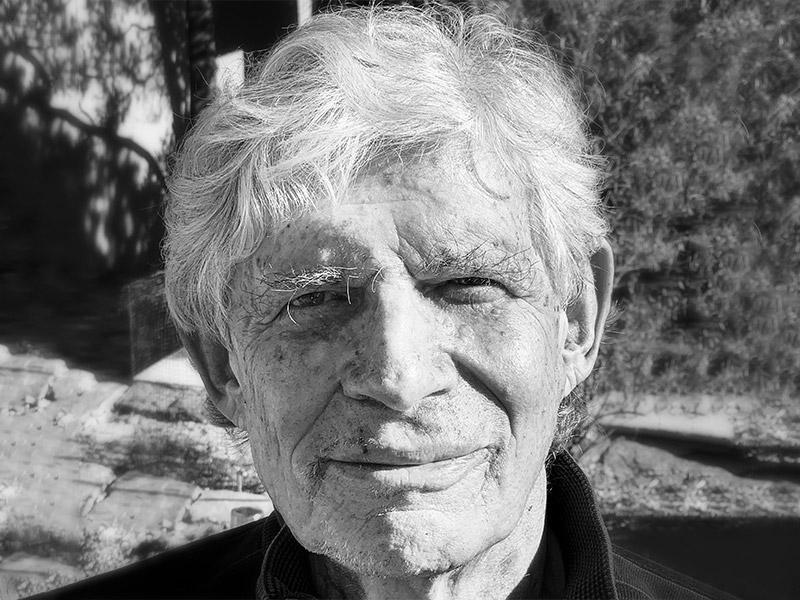
Stuart Kauffman's work on the origin of life on Earth posits that complex biological systems may have resulted as much from self-organization as from natural selection.
Why you should listen
Theoretical biologist Stuart Kauffman has developed groundbreaking theories that have shaped scientific understanding since the 1960s, including work on the genetic regulatory networks of living cells and the emergence of life in the universe. With biochemist Marc Ballivet, he holds broad biotechnology patents for creating artificial proteins which led to new medicines and catalysts that have been foundational to modern medicine.
Kauffman is perhaps best known for developing the TAP equation, or the "theory of the adjacent possible," which seeks to explain the (relatively) recent explosive growth in the number and diversity of goods in the global economy and, thus, the Anthropocene. More recently, he has been collaborating with AI and complex systems researcher Andrea Roli on work that shows one cannot use any mathematics based on Set Theory to deduce the evolution of the Earth’s biosphere. He is a MacArthur Fellow and an emeritus professor of biochemistry at the University of Pennsylvania.
Kauffman is perhaps best known for developing the TAP equation, or the "theory of the adjacent possible," which seeks to explain the (relatively) recent explosive growth in the number and diversity of goods in the global economy and, thus, the Anthropocene. More recently, he has been collaborating with AI and complex systems researcher Andrea Roli on work that shows one cannot use any mathematics based on Set Theory to deduce the evolution of the Earth’s biosphere. He is a MacArthur Fellow and an emeritus professor of biochemistry at the University of Pennsylvania.