
Siddharthan Chandran
Regenerative neurologist
Siddharthan Chandran explores how to heal damage from degenerative disorders such as MS and motor neuron disease (ALS).
Why you should listen
Multiple sclerosis (MS) affects the nervous system by chewing up the axons that connect neurons to one another, which slows, stops or simply randomizes the transmission of nerve impulses. At the Centre for clinical brain sciences at the University of Edinburgh, Siddharthan Chandran works in the emerging discipline of regenerative neurology -- exploring how injured or damaged neurons in the brain might actually be repaired.
His research strategy uses MS and motor neuron disease (ALS, or Lou Gehrig's diesease) as primary disease models, combining laboratory and clinical activity to study brain injury, neurodegeneration and repair, using stem cells to model and test. His work, he says, "reflects the complexity of the brain. You can replace a kidney, but not a brain. One must remain careful and humble in the face of current knowledge." He is also director of the Anne Rowling Regenerative Neurology Clinic.
What others say
Chandran's crusade against Multiple Sclerosis got a boost when author J K Rowling, the creator of the Harry Potter series, gifted £10 million to the centre he co-directs.
Siddharthan Chandran’s TED Talk
More news and ideas from Siddharthan Chandran
Live from TEDGlobal
Regenerating hope: TEDGlobal 2013 with Siddharthan Chandran
June 12, 2013
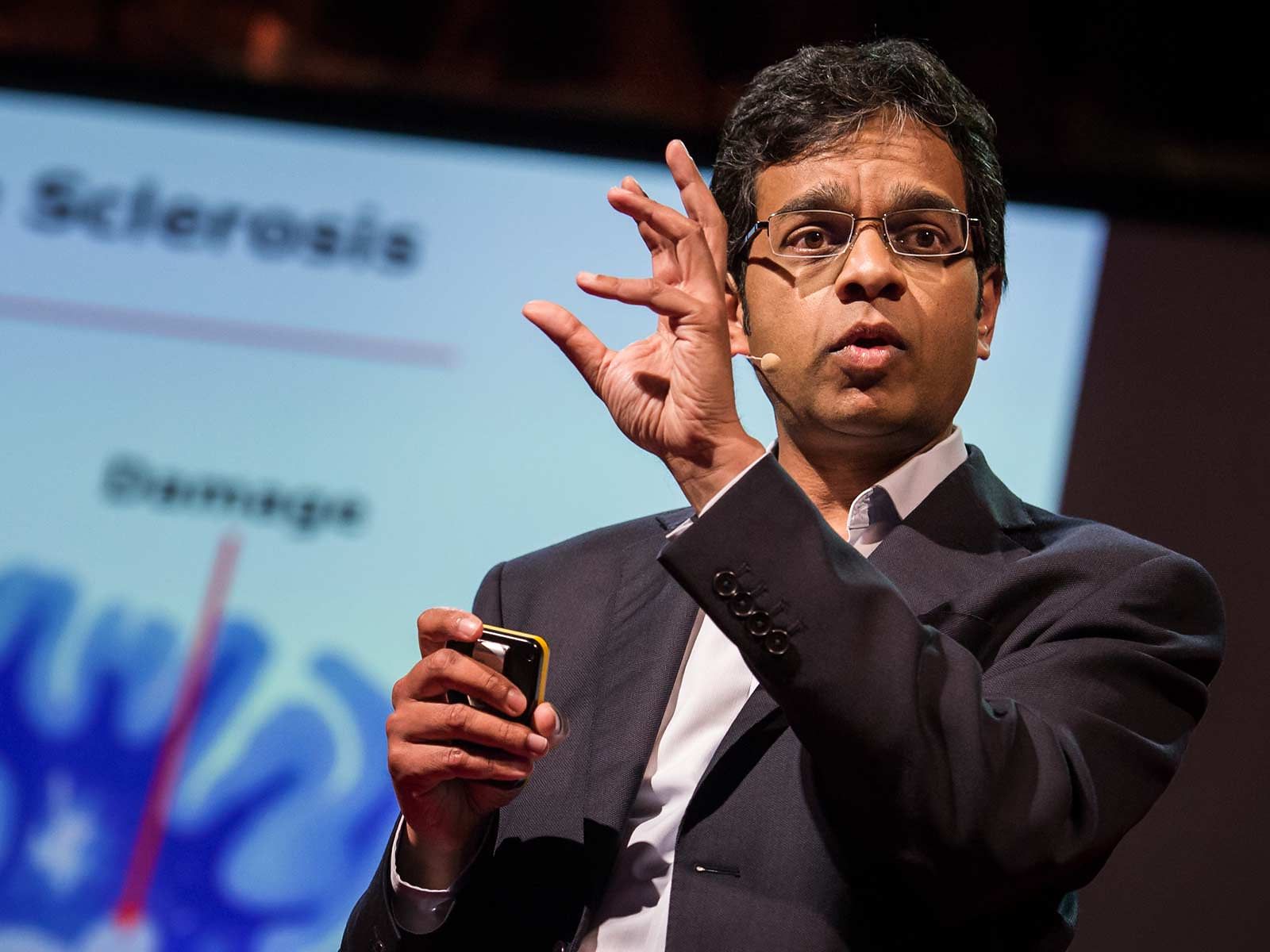
Regenerative neurologist Siddharthan Chandran asks whether we can repair the damaged brain. Here’s the problem: Humanity is facing an epidemic of fast-progressing, devastating neurological disease such as Alzheimer’s, motor neuron disease, Parkinson’s, multiple sclerosis and Huntington’s. Collectively, this is one of the biggest public health threats of our time. Over 35 million people are affected, […]
Continue readingLive from TEDGlobal
Regeneration: The speakers in Session 7 at TEDGlobal 2013
June 12, 2013
Session 7, “Regeneration,” couldn’t come at a better time; it’s the end of the second day of TEDGlobal 2013, and we could all use a little repair and restoration. In this session, four scientists and researchers look closely at the ways in which the body breaks down — and how we can rebuild them. Here […]
Continue reading