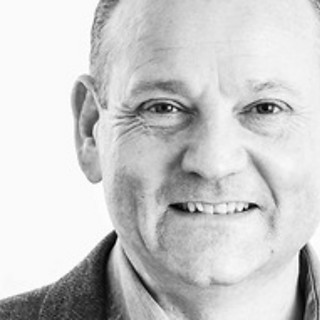
Russell Foster
Circadian neuroscientist
Russell Foster studies sleep and its role in our lives, examining how our perception of light influences our sleep-wake rhythms.
Why you should listen
Much as your ear does double duty (balance plus hearing), Russell Foster posits that the eye has two jobs: creating vision, but also -- as a completely separate function -- managing our perception of light and dark, providing the clues that our circadian rhythms need to regulate sleep-wake cycles. He and his team at the University of Oxford are exploring a third kind of photoreceptor in the eye: not a rod or a cone but a photosensitive retinal ganglion cell (pRGC) that detects light/dark and feeds that information to the circadian system. As Foster explains: "Embedded within our genes, and almost all life on Earth, are the instructions for a biological clock that marks the passage of approximately 24 hours." Light and dark help us synchronize this inner clock with the outside world.
The research on light perception hits home as we age -- faced with fading vision, we also risk disrupted sleep cycles, which have very serious consequences, including lack of concentration, depression and cognitive decline. The more we learn about how our eyes and bodies create our sleep cycles, the more seriously we can begin to take sleep as a therapy.
What others say
Even in animals and people in whom the rods and cones used for vision have been completely destroyed and who are otherwise totally visually blind, the pRGCs can still detect light to shift the circadian clock.
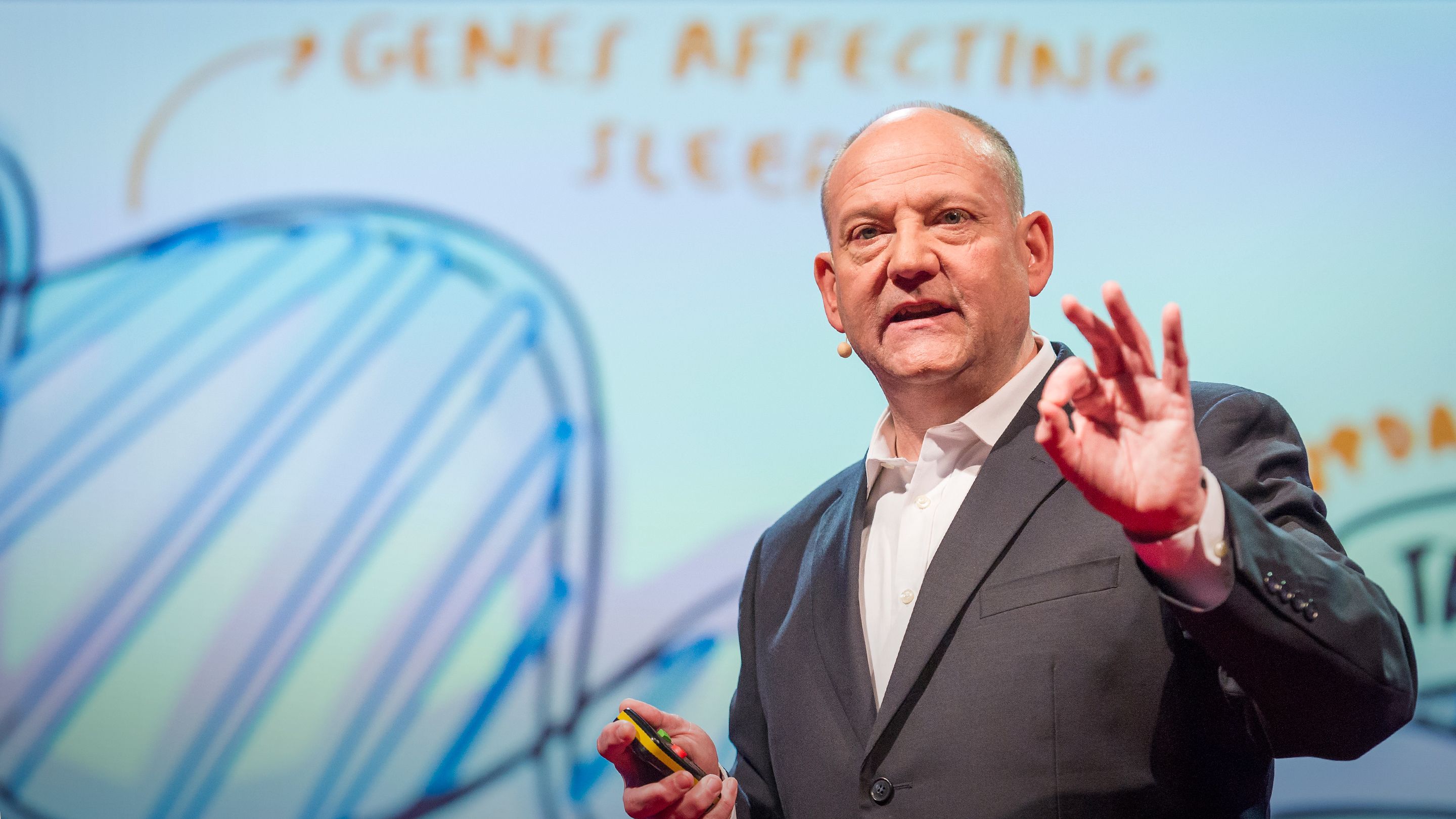
Russell Foster’s TED Talk
More news and ideas from Russell Foster
Health
What’s the connection between sleep and mental health? A Q&A with circadian neuroscientist Russell Foster
August 14, 2013
We spend about a third of our lives asleep — a figure that may make all that time spent in bed seem like a waste. But according to neuroscientist Russell Foster, it is quite the opposite. In today’s talk, given at TEDGlobal 2013, Foster explores why we sleep, a question which no one has been […]
Continue readingLive from TEDGlobal
The neuroscience of sleep: Russell Foster at TEDGlobal 2013
June 11, 2013
Neuroscientist Russell Foster opens a session of TEDGlobal all about … us, asking the question: Why do we sleep? Thirty-six percent of our lives are spent asleep, which means, if you live to 90, you’ll have slept for 32 years. But we don’t appreciate sleep enough, says Foster. He quotes Thomas Edison — “Sleep is […]
Continue readingLive from TEDGlobal
Exquisite, Enigmatic Us: The speakers in session 3 at TEDGlobal 2013
June 11, 2013
In the wilds of planet Earth, there exists a species so creative that it not only uses tools but is constantly rewriting the rules of what a tool can be, so cooperative that they build wildly complex systems to support each other and so consternating that its inconsistent behavior would make even the most seasoned […]
Continue reading