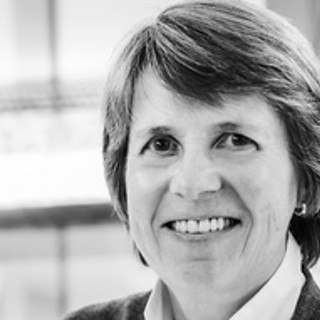
Penny Chisholm
Microbial oceanographer, author
Penny Chisholm studies an extremely tiny microorganism that plays an enormous role in ocean ecosystems. Discovered only three decades ago, it has defined her career and inspired her to think differently about life on Earth.
Why you should listen
Penny Chisholm (whose scientific works are published under the name Sallie Chisholm) has been studying microscopic plants called phytoplankton since she was an undergraduate. After she joined the MIT faculty, in the 1980s she was lucky enough to be involved in the discovery of the smallest and most abundant phytoplankter on the planet: Prochlorococcus. Less that 1/100th the width of a human hair, this tiny photosynthetic microbe thrives in the sunlit surface waters across large swaths of the global ocean, where it uses the sun's energy to release oxygen, consume carbon dioxide and grow. There are an estimated three billion billion billion of these tiny cells in the global ocean where they provide sustenance for other microorganisms and fuel ocean food webs. "Prochlorococcus has been my muse for more than 30 years," Chisholm says. "It has taught me an enormous amount about the role of photosynthesis in shaping our planet, and about the power of diversity. Most important, it has taught me to be humbled by the mind-blowing complexity of the natural world."
Chisholm is one of ten Institute Professors at MIT and has received many honors for her research on Prochlorococcus, including the 2011 National Medal of Science awarded by President Obama at the White House. She has also co-authored a series of children's books about the role of photosynthesis in shaping our world.
Penny Chisholm’s TED Talk
More news and ideas from Penny Chisholm
Live from TED2018
In Case You Missed It: Finding space to dream at day 3 at TED2018
April 13, 2018
TED2018 hit its stride on day 3, with talks from explorers of space and oceans, builders of cities and bridges, engineers of the future and many more. Here are some of the themes we heard echoing through the opening day, as well as some highlights from around the conference venue in Vancouver. Are we alone […]
Continue readingLive from TED2018
What on earth do we do? Notes from Session 6 of TED2018
April 12, 2018
This beautiful blue marble, our shared earth: On a sunny morning in Vancouver, we pack into the darkened TED theater to learn more about its mysteries, its challenges, and how we might help it thrive. There’s no shiny “nature porn” here (well, maybe a little bit) but a clear-eyed look at what’s going right and […]
Continue reading