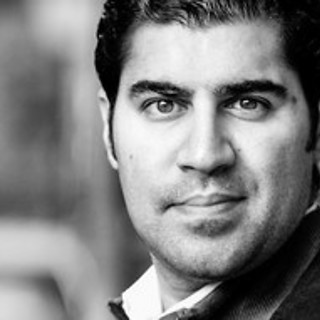
Geopolitical futurist Parag Khanna foresees a world in which megacities, supply chains and connective technologies redraw the map away from states and borders.
Why you should listen
Global theorist Parag Khanna travels the world with his eyes open -- seeing patterns emerging from the chaos of today’s complex world. In his book Connectography: Mapping the Future of Global Civilization, he redraws the way humanity is organized according to lines of infrastructure and connectivity rather than our antiquated political borders.
At TEDGlobal 2009, Khanna spoke about mapping the future of countries, and he curated and guest-hosted the session "The Upside of Transparency" at TEDGlobal 2012. On the mainstage at TED2016, he presented glowing maps of our hyper-connected global network civilization, and at TEDxGateway 2018, he shared "Why Asia is the center of the world (again)." Listen to Khanna's discussion with head of TED Chris Anderson on The TED Interview.
Parag Khanna’s TED Talks
More news and ideas from Parag Khanna
Global Issues
Q&A with Parag Khanna: Redrawing the map for a safe, secure world
September 28, 2009
Last week, Parag Khanna sat with the TED Blog to discuss no less than the political future of the world we live in. He works in the expansive field of geopolitics, and his TEDTalk discusses the history and future of some of the world’s most troubled states and the possibilities of a borderless world. In […]
Continue readingUncategorized
Parag Khanna at TEDGlobal 2009: Running notes on Session 10
July 23, 2009
Parag Khanna asks: Do we live in a borderless world? Our world has over 200 countries. He suggests that those of us watching TED live in “TEDistan” — a world we feel is defined by cities — a world that looks like the image of the world at night from space. But for 90% of […]
Continue readingUncategorized
Twitter Snapshot: Parag Khanna on the appearance and disappearance of borders
July 23, 2009
Geopolitical expert Parag Khanna examined the historic and present-day implications of nation-state borders. Borders may be popping up on the atlas year after year, however, in practical human interactions, borders seem to be vanishing. A critical component to guiding this trend in a benevolent direction is building infrastructure. Followers on Twitter were receptive to Khanna’s […]
Continue reading