Michael Hansmeyer
Computational architect
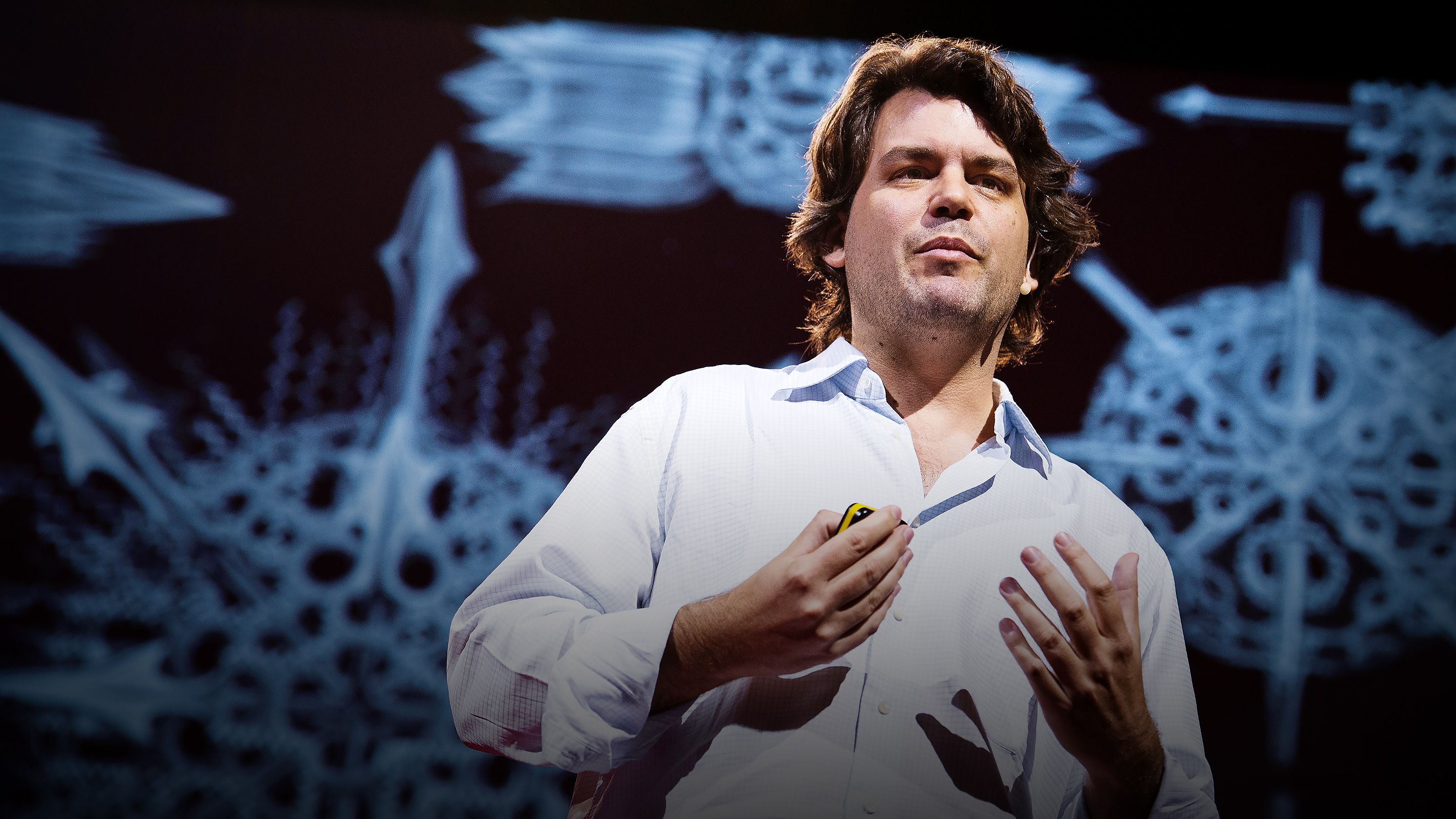
Michael Hansmeyer is an architect and programmer who explores the use of algorithms and computation to generate architectural form.
Why you should listen
Classical architecture is defined by "orders" -- ways to connect a column to a building, to articulate the joining of materials and structural forces. Colloquially, these orders are based on elemental forms: the tree trunk, the plank, the scroll, the leaf. Michael Hansmeyer is adding a new elemental form: the subdivision algorithm. He turns his math and programming skills to making ornate, organic, hyperdetailed columns generated from lines of code and then comped up in cross-sections of cardboard, almost as if they're being 3D printed.
His recent work with cupolas and domes is even more mesmerizing, like looking deep inside an organic form of near-unbearable complexity. See images at digital-grotesque.com >>
What others say
His work is composed of sixteen million faces and made from 2,700 layers of cardboard. It is the result of a cutting-edge computational process, and people's responses to it are just as improbable.