
TED Fellow Manu Prakash is on a mission to bring radical new technology to global health.
Why you should listen
An assistant professor of bioengineering at Stanford University, Manu Prakash is a physicist working at the molecular scale to try and understand no less than how the world really works. As he told BusinessWeek in 2010, he is humbled and inspired by nature’s own solutions to the world's biggest problems. "I build and design tools to uncover how and why biological systems so often outsmart us. I believe one day we will be able to understand the physical design principles of life on Earth, leading to a new way to look at the world we live in."
Born in Meerut, India, Prakash earned a BTech in computer science and engineering from the Indian Institute of Technology in Kanpur before moving to the United States. He did his master’s and PhD in applied physics at MIT before founding the Prakash Lab at Stanford.
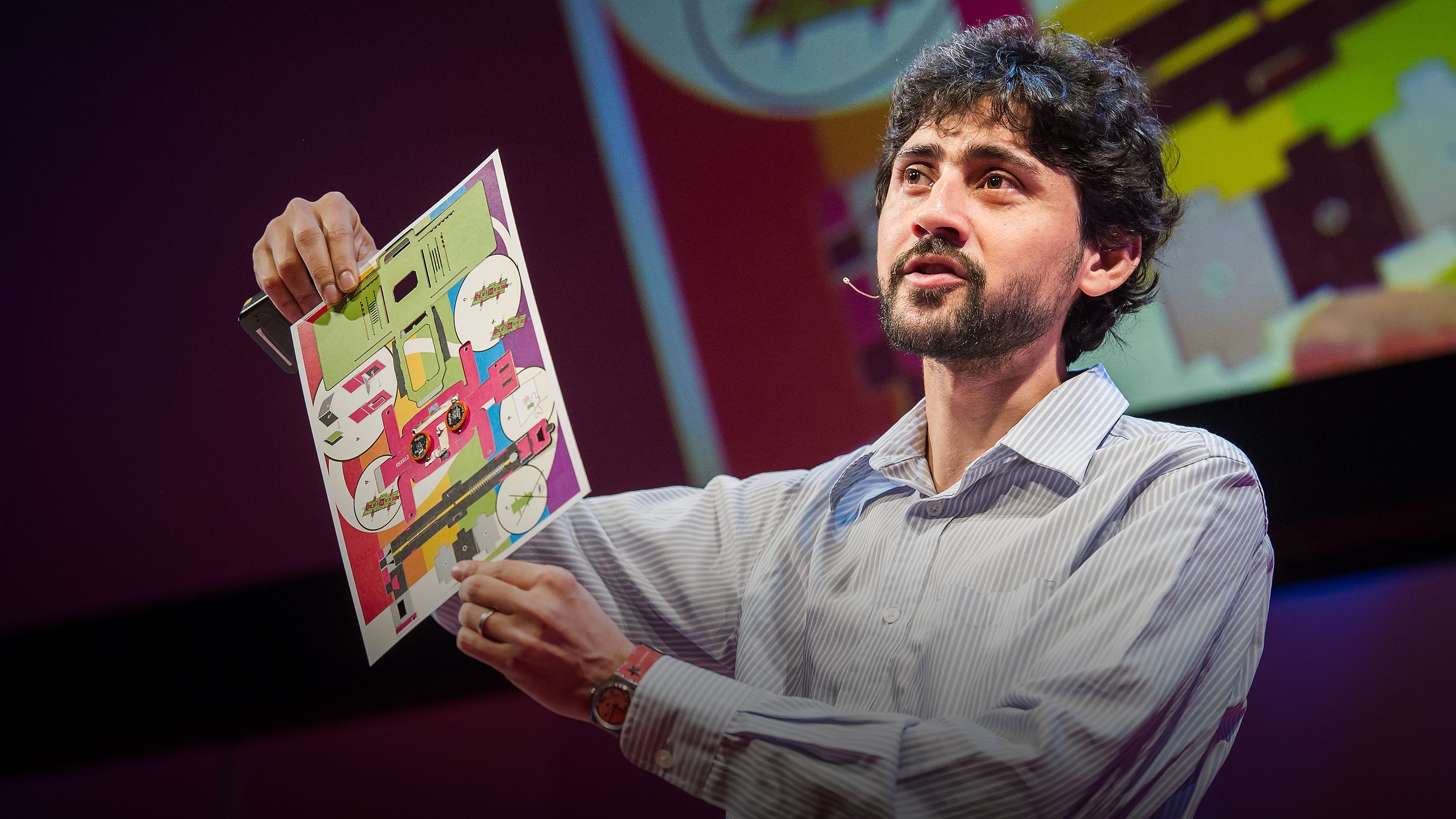
Prakash's ultra-low-cost, "print-and-fold" paper microscope won a $100,000 grant from the Gates Foundaton in 2012.
Manu Prakash’s TED Talks
More news and ideas from Manu Prakash
We humans
A personal playlist from Shah Rukh Khan: 8 unforgettable TED Talks
November 8, 2019
Just in time for the second season of TED Talks India, Bollywood actor, producer and series host Shah Rukh Khan selects 8 talks that have inspired him and tells us why.
Continue readingScience
Meet the genius scientist transforming the world on a shoestring
July 12, 2017
Bioengineering professor Manu Prakash brought the world a 50-cent microscope. Now he's created more cheap public health tools, including a paper centrifuge and a mosquito identifier. And he’s just getting started.
Continue readingLive from TED2017
Storytellers and scientists: Notes from TED Fellows Session 2 at TED2017
April 25, 2017
On the morning of TED2017’s first day, our TED Fellows continue to blow minds in session 2 of the TED Fellows Talks — including a science demo featuring carnivorous plants, some gorgeous cultural mashups, and an introduction to the fish who won evolution. Do plants have brains? Well, no, but they’re certainly not dumb. And, […]
Continue reading