
Jaap de Roode studies the ecology and evolution of parasites, focusing on those that attack the monarch butterfly.
Why you should listen
At his lab at Emory University, Jaap de Roode and his team study parasites and their hosts. Some of the questions that intrigue them: If a parasite depends on its host's survival for its own well-being, why do so many of them cause harm? In what ways are hosts able to self-medicate in order to make themselves less desirable to parasites? And are the abilities to harm hosts — and the ability of hosts to self-medicate — favored by natural selection?
The De Roode Lab focuses on the monarch butterfly and its parasites. The team has made a fascinating discovery: that female butterflies infected by a parasite choose to lay their eggs on a specific variety of milkweed that helps their offspring avoid getting sick. De Roode hopes that this insight could lead to new approaches in medications for human beings in the future.
Jaap de Roode’s TED Talks
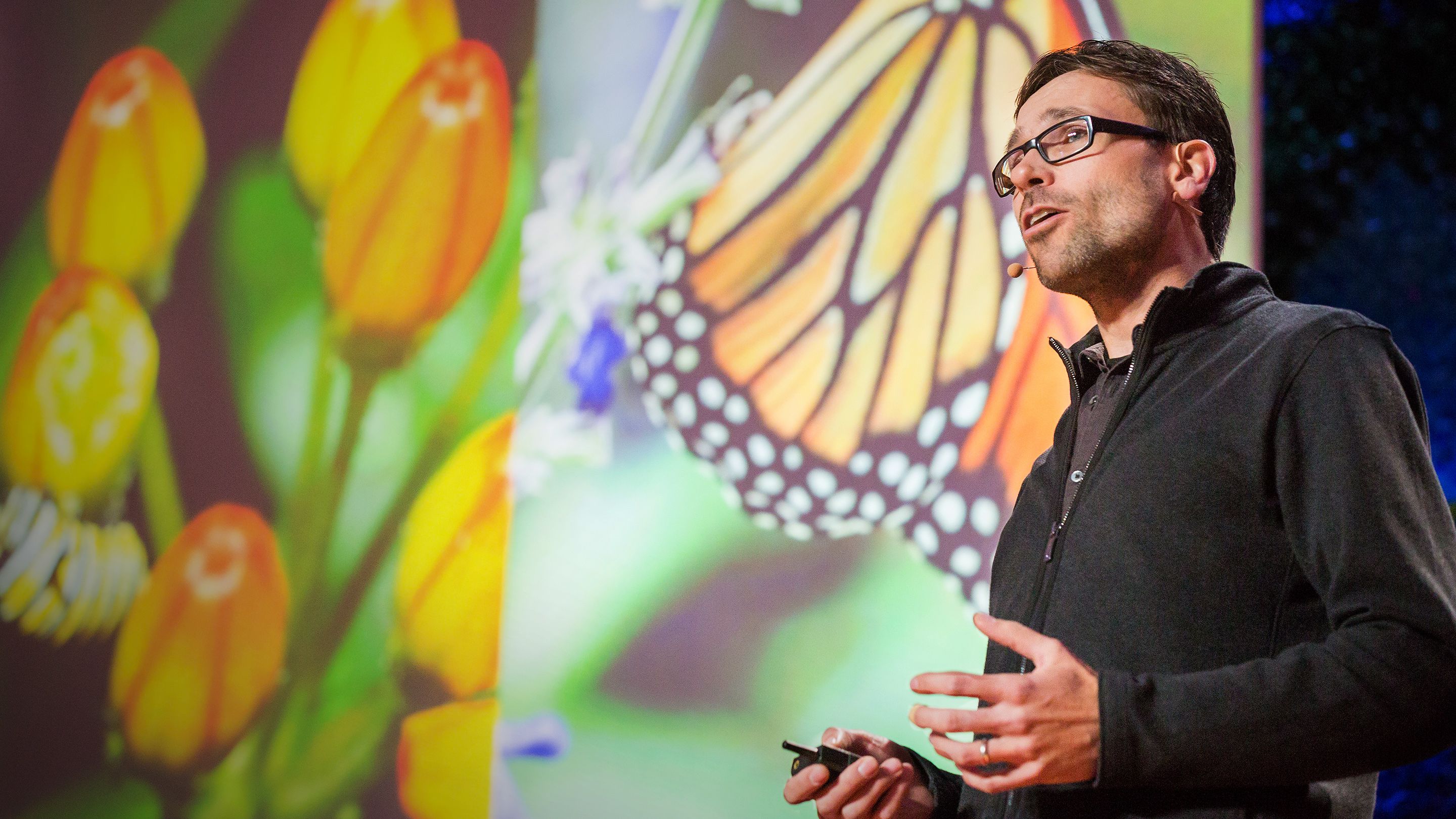
More news and ideas from Jaap de Roode
Q&A
The other butterfly effect: A youth reporter finds out how monarchs fight their own parasites
November 25, 2014
Jaap de Roode is a biologist who studies parasites and their hosts — particularly Monarch butterflies. At TEDYouth 2014, he spoke about Monarch butterflies, their self-medicating ingenuity — and what that ingenuity can help humans discover. Lubna Batool, an 11th-grade New Yorker, was fascinated. On site at TEDYouth, with a dozen monarch butterflies flapping about […]
Continue readingYouth
Worlds far and near, of the past and of the future: A recap of Session 1 of TEDYouth 2014
November 15, 2014
By Cynthia Betubiza, Ella Dawson and Kate Torgovnick May Session 1 of TEDYouth 2014 brought us to many worlds imagined. From a look at other planets that could be like Earth, to an introduction to a mysterious dinosaur bigger than T. rex, to a beet-tastic vision for the future of food, this morning’s speakers brought wonder, passion […]
Continue reading