
Honor Harger
Executive Director, ArtScience Museum
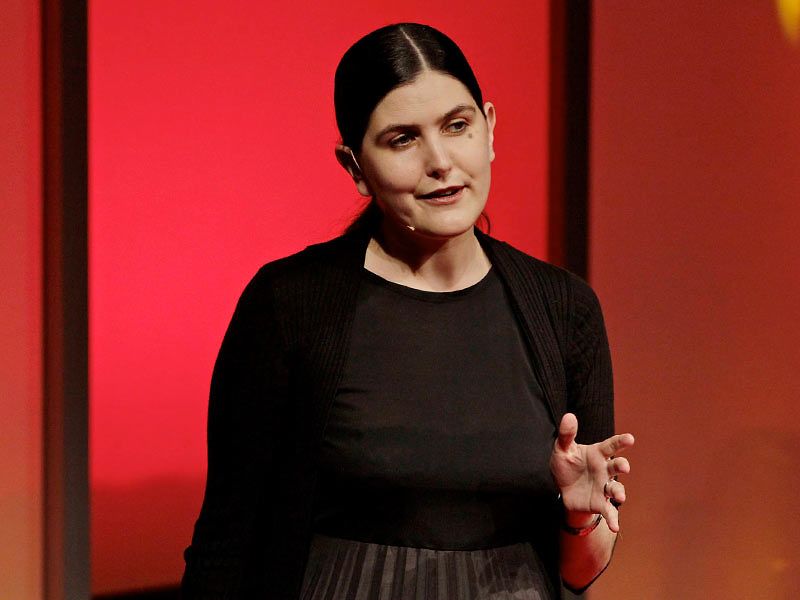
Honor Harger explores the cultural impact of scientific ideas and how technology shapes society.
Why you should listen
Curator Honor Harger, originally from New Zealand, serves as executive director for ArtScience Museum in Singapore. Since she joined, the museum has held large-scale exhibitions by some of the world's best known artists, including Leonardo da Vinci, Salvador Dalí and M.C. Escher, and presented significant exhibitions that explore aspects of science including big data, particle physics, natural history, marine biology, cosmology and space exploration.
Before joining ArtScience Museum, Harger was the director of Lighthouse, a digital arts venue in Brighton, UK. In 2010, she was guest curator of the transmediale festival in Berlin, and from 2004 to 2008, she was director of the AV Festival, then the UK's largest biennial of digital art, film and music. She was the first curator of webcasting for Tate, where she also curated events and concerts at Tate Modern. Harger is one of the cofounders of the sound art collective, r a d i o q u a l i a. One of their main projects was Radio Astronomy, a radio station broadcasting sound from space.
Honor Harger’s TED Talks

More news and ideas from Honor Harger
Live from TED2020
Conversations on the future of vaccines, tech, government and art: Week 5 of TED2020
June 18, 2020
Week 5 of TED2020 featured wide-ranging discussions on the quest for a coronavirus vaccine, the future of the art world, what it’s like to lead a country during a pandemic and much more. Below, a recap of insights shared. Jerome Kim, Director General of the International Vaccine Institute Big idea: There’s a lot of work […]
Continue readingIn Brief
A new map of the Peruvian Amazon, the race to explore the deep ocean, and a rock album reimagined
March 10, 2017
As usual, the TED community has lots of news to share this week. Below, some highlights. A map to guide conservation. After almost eight years of airborne laser-guided imaging spectroscopy, Greg Asner has finally mapped all 300,000 square miles of the Peruvian Amazon. Highlighting forest types that are reasonably safe and those which are in […]
Continue reading