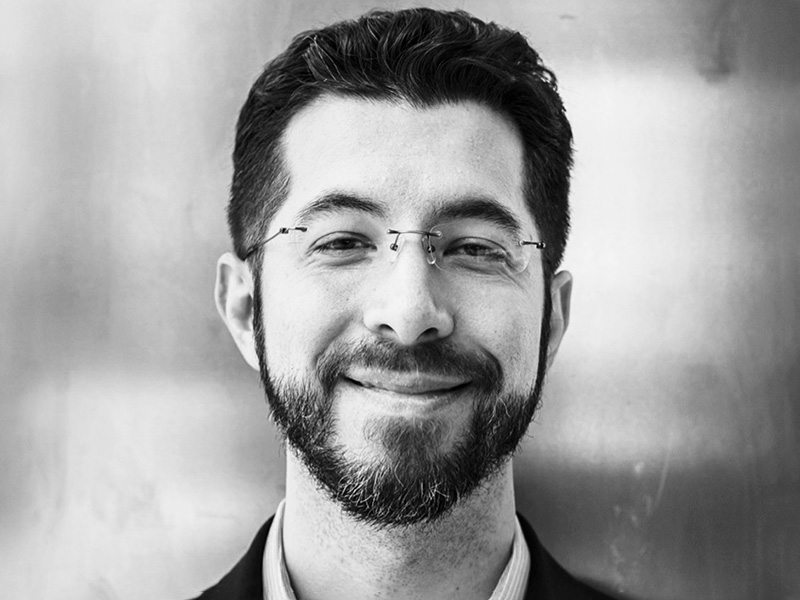
Ed Boyden is a professor of biological engineering and brain and cognitive sciences at the MIT Media Lab and the MIT McGovern Institute and the MIT Yang Tan Collective.
Why you should listen
Amongst other recognitions, Boyden has received the Wilhelm Exner Medal (2020), the Croonian Medal (2019), the Canada Gairdner International Award (2018), the Breakthrough Prize in Life Sciences (2016), the Grete Lundbeck Brain Prize (2013) and the NIH Director's Pioneer Award (2013). He was also named to the World Economic Forum Young Scientist list (2013) and the Technology Review World's "Top 35 Innovators under Age 35" list (2006). His group has hosted hundreds of visitors to learn how to use new biotechnologies and spun out several companies to bring inventions out of his lab and into the world. Boyden received his Ph.D. in neurosciences from Stanford University as a Hertz Fellow, where he discovered that the molecular mechanisms used to store a memory are determined by the content to be learned. Before that, he received three degrees in electrical engineering and computer science, and physics, from MIT. He has contributed to hundreds of peer-reviewed papers, and he has given hundreds of invited talks on his group's work.
Ed Boyden’s TED Talks
More news and ideas from Ed Boyden
In Brief
A noninvasive method for deep brain stimulation, a new class of Emerging Explorers, and much more
June 16, 2017
As usual, the TED community has lots of news to share this week. Below, some highlights. Surface-level brain stimulation. The delivery of an electric current to the part of the brain involved in movement control, known as deep brain stimulation, is sometimes used to treat people with Parkinson’s disease, depression, epilepsy and obsessive compulsive disorder. […]
Continue readingIn Brief
An exercise-powered boat on the Seine, a young eagle hunter, and a test of global education
December 9, 2016
As usual, the TED community has lots of news to share this week. Below, some highlights. Bike on the Seine … literally. Carlo Ratti Associati unveiled a concept for the Paris Navigating Gym, a boat that would use the energy from passengers’ stationary-bike workouts to propel itself through Paris along the Seine. Aboard the 20-meter-long […]
Continue readingIdeas
Red light, brain probes and the future: An enlightening conversation
February 21, 2014
Ed Boyden is the head of the Synthetic Neurobiology group at the MIT Media Lab, where he works on tools to map, control, record — and maybe even someday build — the brain. Boyden has worked on optogenetics, a technique which deploys light-sensitive molecules to the brain and then applies light to them to “turn […]
Continue reading