
Diana Reiss studies animal cognition, and has found that bottlenose dolphins (and Asian elephants) can recognize themselves in the mirror.
Why you should listen
Diana Reiss’s research focuses on the cognition and communication of marine animals, with an emphasis on comparative animal cognition. Essentially, she studies the evolution of intelligence. Reiss pioneered the use of underwater keyboards with dolphins to investigate their communicative abilities and provide them with more degrees of choice and control. Reiss and her colleagues demonstrated that bottlenose dolphins and an Asian elephants possess the rare ability for mirror self-recognition previously thought to be restricted to humans and great apes. She wrote about this work in her recent book, The Dolphin in the Mirror.
Reiss' efforts also involve the rescue and rehabilitation of stranded marine mammals, including the successful rescue of Humphrey, the humpback whale, from San Francisco Bay waters. Her advocacy work in conservation and animal welfare includes the protection of dolphins in the tuna-fishing industry and efforts to bring an end to the killing of dolphins in the drive hunts in Japan.
Reiss is a cognitive psychologist and professor in the Department of Psychology at Hunter College and the Biopsychology and Behavioral Neuroscience subprogram at the Graduate Center, CUNY. She directs a dolphin cognitive research program at the National Aquarium in Baltimore and is a research associate at the Smithsonian’s National Zoo in DC, where she investigates elephant cognition.
What others say
As I study dolphins, they reveal more about the nature of their intelligence. These remarkable mammals share with us many abilities we once thought were uniquely human.
Diana Reiss’ TED Talk
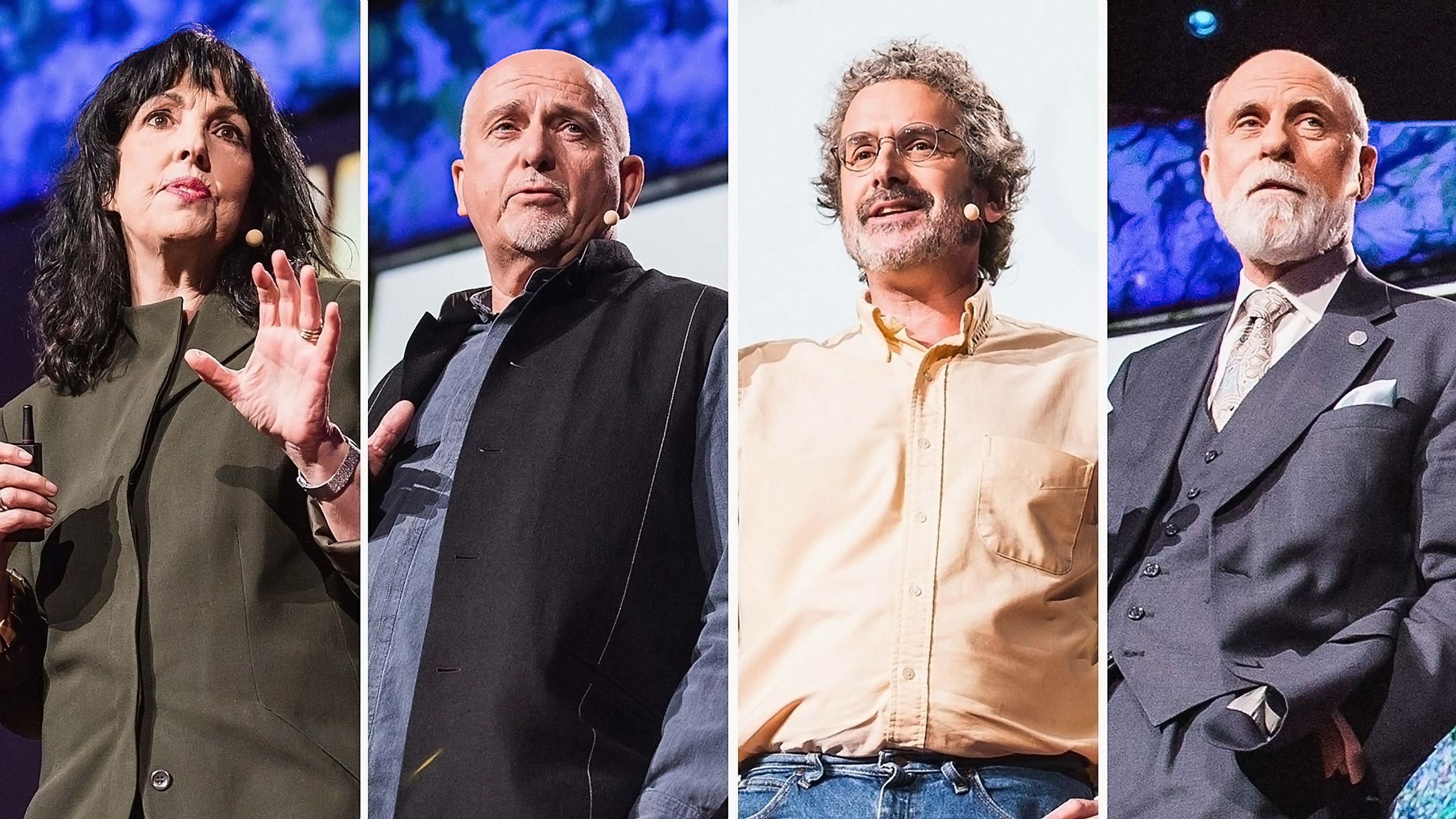
Diana Reiss, Peter Gabriel, Neil Gershenfeld, Vint Cerf
The interspecies internet? An idea in progress
19 minutes 47 secondsApes, dolphins and elephants are animals with remarkable communication skills. Could the internet be expanded to include sentient species like them? A new and developing idea from a panel of four great thinkers -- dolphin researcher Diana Reiss, musician Peter Gabriel, internet of things visionary Neil Gershenfeld and Vint Cerf, one of the fathers of the internet.Posted Jul 2013
More news and ideas from Diana Reiss
Science
What can scientists learn from dolphins playing whack-a-mole?
September 27, 2017
By creating tech that lets dolphins play computer games and request belly rubs, we can understand their intelligence and perhaps even get a preview of life on other planets, says marine mammal researcher Diana Reiss.
Continue readingTechnology
10 animals who’ve ruled the internet
July 10, 2013
“I make noises for a living, and on a good day it’s music,” says Peter Gabriel in today’s talk. “I work with a lot of musicians from around the world. Often, we don’t have any common language at all. But we sit behind our instruments and suddenly there’s a way to connect and emote.” This […]
Continue readingCulture
The interspecies internet: Diana Reiss, Peter Gabriel, Neil Gershenfeld and Vint Cerf at TED2013
March 1, 2013
The internet connects people all over the world. But could the internet also connect us with dolphins, apes, elephants and other highly intelligent species? In a bold talk in Session 10 of TED2013, four incredible thinkers come together to launch the idea of the interspecies internet. Each takes four minutes to talk, then passes the […]
Continue reading