By studying how ant colonies work without any one leader, Deborah Gordon has identified striking similarities in how ant colonies, brains, cells and computer networks regulate themselves.
Why you should listen
Ecologist Deborah M. Gordon has learned that ant colonies can work without central control by using simple interactions like how often the insects touch antennae. Contrary to the notion that colonies are organized by efficient ants, she has instead discovered that evolution has produced “noisy” systems that tolerate accident and respond flexibly to the environment. When conditions are tough, natural selection favors colonies that conserve resources.
Her studies of ant colonies have led her and her Stanford colleagues to the discovery of the “Anternet,” which regulates foraging in ants in the same way the internet regulates data traffic. But as she said to Wired in 2013, "Insect behavior mimicking human networks ... is actually not what’s most interesting about ant networks. What’s far more interesting are the parallels in the other direction: What have the ants worked out that we humans haven’t thought of yet?" Her latest exploration: How do ants behave in space?
What others say
To understand how [harvester ant] foraging differences pay off in the long run, you’d need to study a group of harvesters for decades. That’s exactly what Gordon has done. Since she was a graduate student in 1985, she has almost single-handedly kept an annual census of around 300 harvester colonies in an area of New Mexico.
Deborah Gordon’s TED Talks
More news and ideas from Deborah Gordon
Science
There’s no upside down in space
May 13, 2014
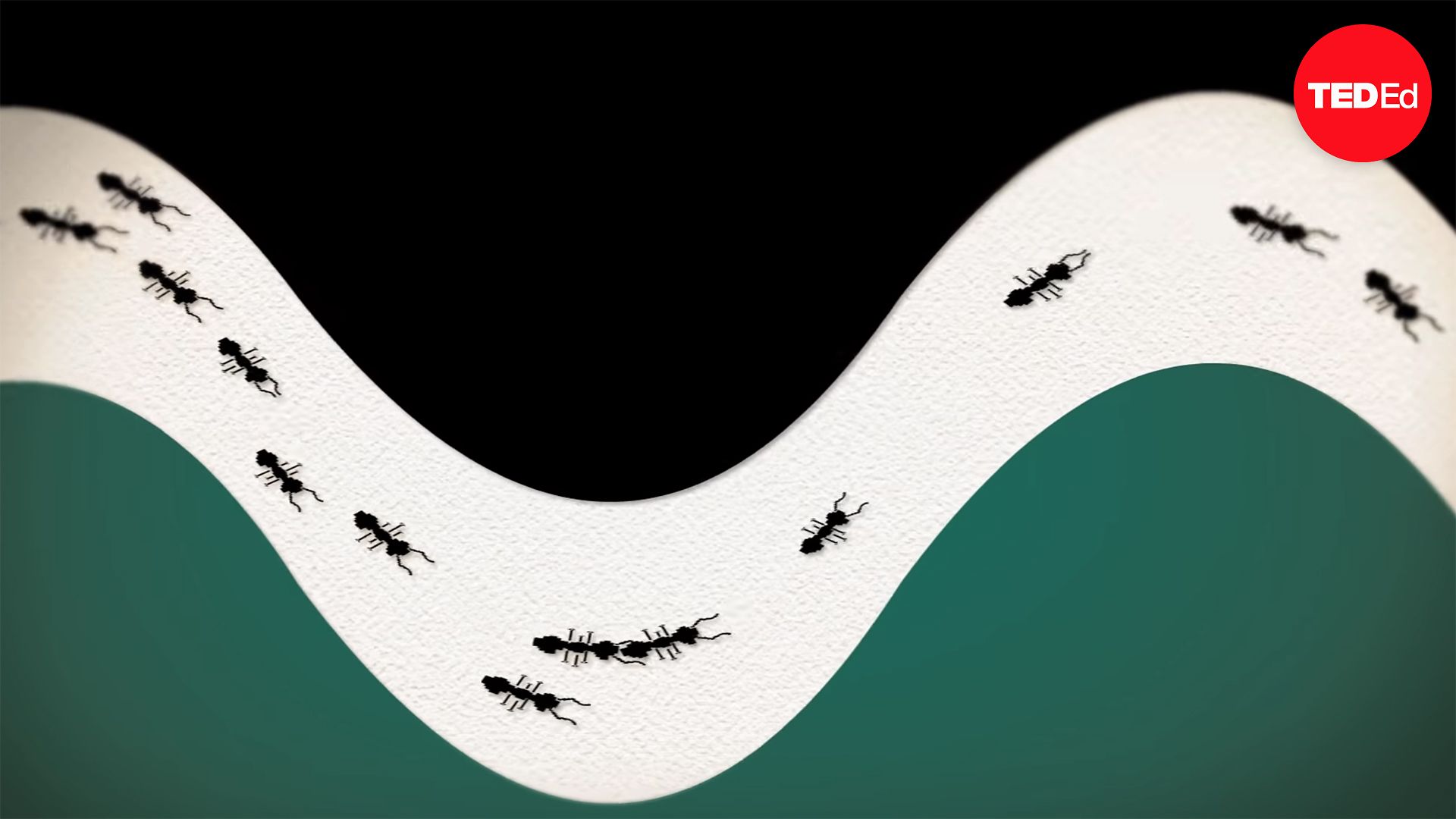
Ecologist Deborah Gordon shows that ants create resilient, productive networks without any central guiding intelligence. Maybe we should learn from the little critters, not just squish them.
Continue readingLive from TED
What we can learn from the Anternet: Deborah Gordon at TED2014
March 20, 2014
“I study ants in the desert, in the tropical forest and in my kitchen,” says Deborah Gordon. An ecologist, she researches the behavior of ant colonies — which are systems that operate without central control. (While they have a queen, Gordon explains, the queen only lays eggs and doesn’t actually issue orders.) Gordon thinks that, from […]
Continue readingLive from TED
Signals: The speakers in session 9 of TED2014
March 20, 2014
Communication is fundamental to how we relate and interact. But we receive signals from everywhere — other living creatures, the ecosystem, the earth itself, and the space beyond. In this session six speakers will explore how we send, and more importantly receive, those signals. Here are the speakers who appeared in this session. Click below […]
Continue reading