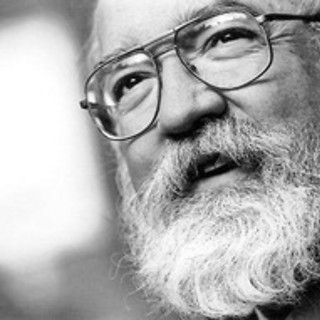
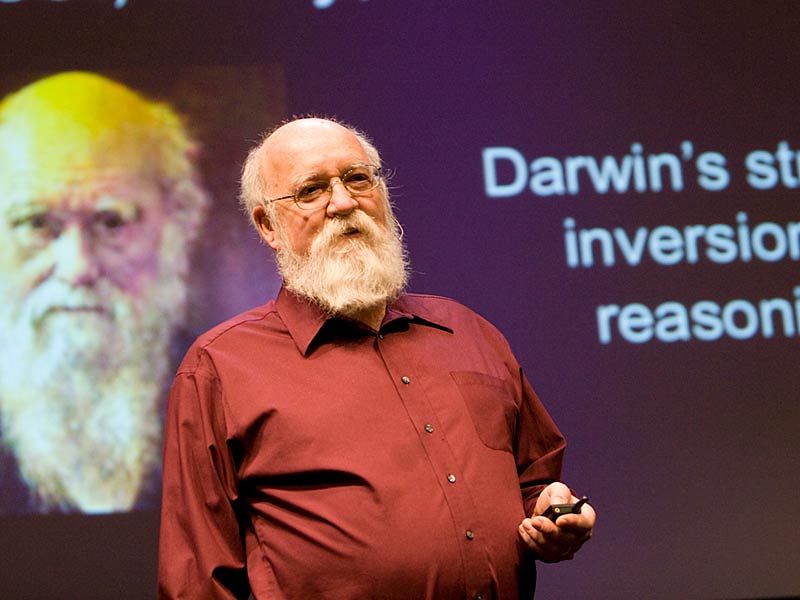
Dan Dennett made the case that human consciousness and free will are the result of physical processes.
Why you should listen
Dennett's 2003 book Freedom Evolves explored how our brains evolved to give us — and only us — the kind of freedom that matters, while 2006's Breaking the Spell examined belief through the lens of biology. He regarded religion as a natural rather than a supernatural phenomenon, and he urged schools to break the taboo against empirical examination of religion. He argued that religion's influence over human behavior is precisely what makes gaining a rational understanding of it so necessary: "If we don't understand religion, we're going to miss our chance to improve the world in the 21st century," he said.
Dennett's mind-shifting perspective on the mind itself distinguished his career as a philosopher and cognitive scientist. The philosophy community never quite knew what to make of him — he defied easy categorization and refused to affiliate himself with accepted schools of thought. His other landmark books included The Mind's I, co-edited with Douglas Hofstaedter, Consciousness Explained, Darwin's Dangerous Idea and Intuition Pumps, among many others.
Dan Dennett’s TED Talks
More news and ideas from Dan Dennett
Live from TED
Lies, sex, an even freer Wikipedia and Sir Ken at a slaughterhouse: A recap of “The future is ours,” All-Stars Session 5 at TED2014
March 20, 2014
By Kate Torgovnick, Morton Bast, Thu-Huong Ha The future. When it comes down to it, it’s not about flying cars, flashy robots, jetpacks, or awesome sunglasses. It’s about the little things we can do to advance healthcare, better education, create opportunities, improve connections between each other, and make lives just a little bit easier. In […]
Continue readingNews
TED news in brief: Esther Perel on female libido, an update on Henry Markram’s supercomputer brain, and more
May 22, 2013
Below, take a look at some of the TED speakers and Fellows who are cropping up in the news this week. Lybrido, a drug to treat women with low libido, is in clinical trials and could be presented to the FDA for review as early as this summer. In The New York Times Magazine‘s look […]
Continue readingUncategorized
Where does consciousness originate? All over our brain
March 19, 2009
New Scientist is running a fascinating article on new brain research happening at INSERM that appears to show that consciousness arises from activity distributed across the brain — rather than any single locus or “seat.” Gaillard’s team flashed words in front of volunteers for just 29 milliseconds. The words were either threatening (kill, anger) or […]
Continue reading