Alastair Parvin believes in making architecture accessible to 100 percent of the population.
Why you should listen
"As a society we’ve never needed design thinking more,” says Alastair Parvin, but most people -- particularly those in cities of growing density and poverty -- can’t afford it. Parvin, who was trained in architecture but chooses to make a career looking for ideas beyond its conventional framework, wants to change that.
He is one of a team behind WikiHouse, an open-source construction set that allows anyone to freely share model files for structures, which can then be downloaded, "printed" via CNC cutting machine and easily assembled. Parvin calls WikiHouse a very early experiment, the seed of what he sees as design’s great project in the 21st century: the democratization of production.
What others say
Sounds promising? It is. This is a revolutionary way of producing architecture.
Alastair Parvin’s TED Talk
More news and ideas from Alastair Parvin
Gallery
How to print out your own house
May 23, 2013
Architect Alastair Parvin came to TED2013 with questions that challenge our preconceptions about building. How about we involve everyone in the architectural design process, not just professional architects building for the super-wealthy? What about a world in which cities are built by citizens? Parvin isn’t merely being rhetorical, as he shares in today’s talk. He […]
Continue readingDesign
Wikihouse’s Alastair Parvin on the bright potential of community-led development
March 4, 2013
One of the things we’re interested in exploring here at TED is … what happens after a talk? Most often, a speaker is telling us a story without an ending — a tale that’s just beginning rather than coming to an end. That’s certainly the case with TED2013 speaker Alastair Parvin, whose project, Wikihouse, is really just […]
Continue readingDesign
The DIY house of the future: Alastair Parvin at TED2013
February 27, 2013
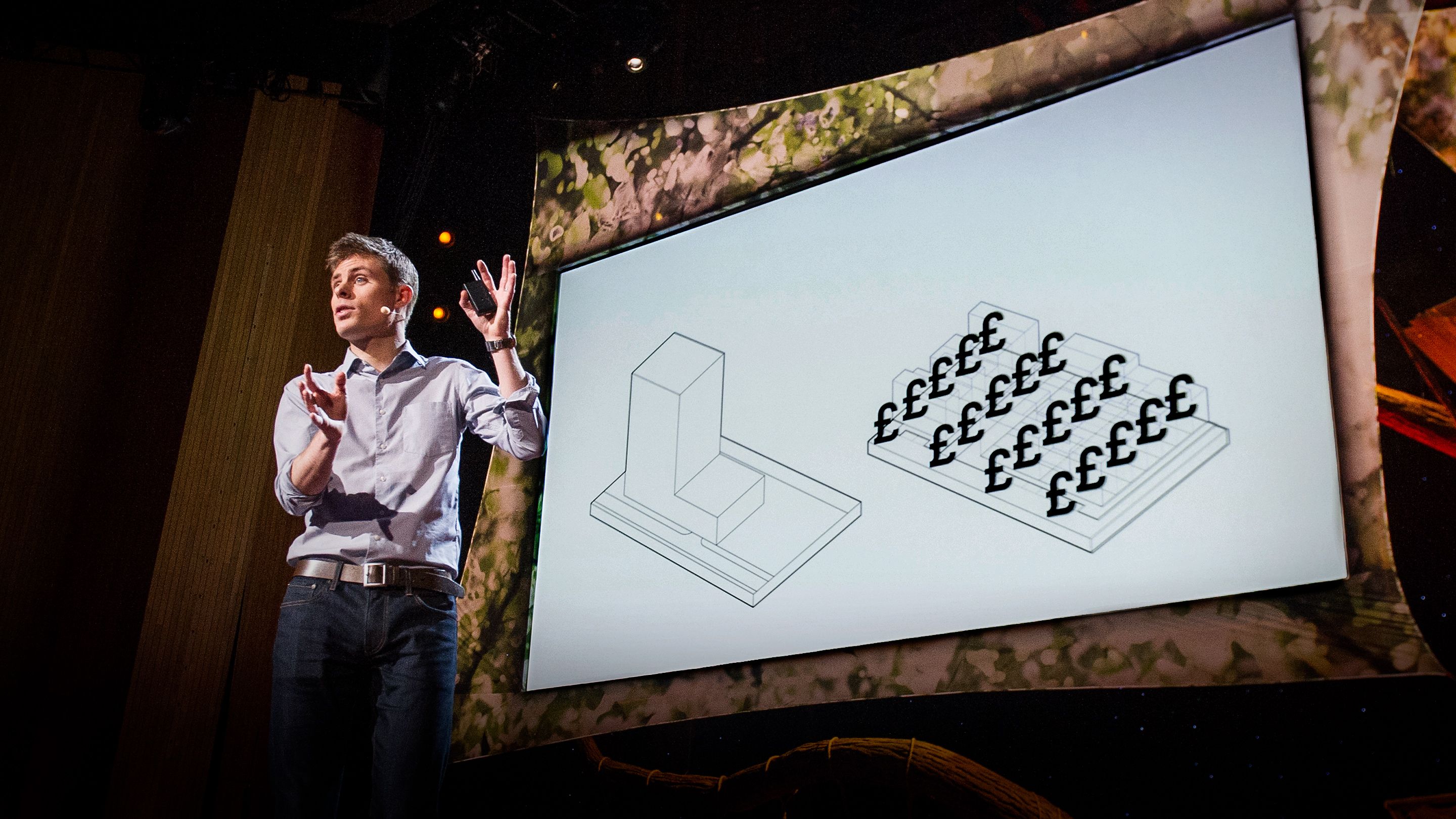
Designer Alastair Parvin begins this Session 4 of TED2013 with the theme “Disrupt!” When we use the word architect or designer, Parvin suggests, we mean a professional, a person paid to design. And we believe it’s only these people who can solve the world’s biggest design problems. But he says firmly: That’s wrong. When Parvin […]
Continue reading