Past TEDx event
TEDxUoN
The Power of Connection
Speakers
Speakers may not be confirmed. Check the event website for the latest lineup.
Aditya Jairam
Physiotherapist
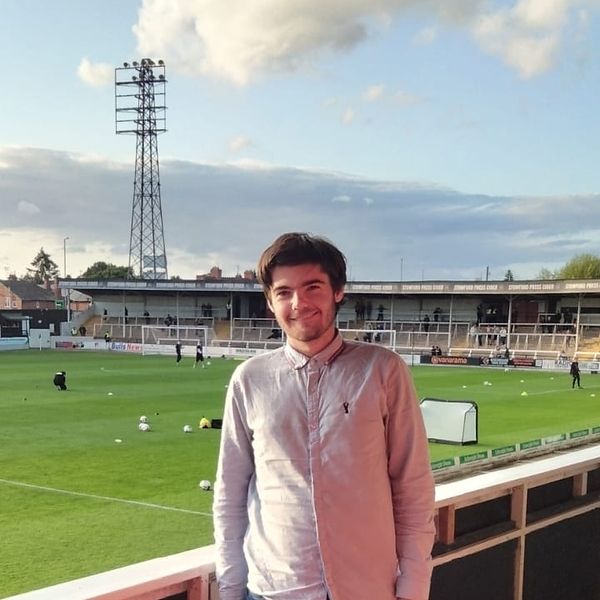
Aditya Jairam is a physiotherapist and postgraduate student in Sport and Exercise Medicine at the University of Nottingham. His interests lie in athlete longevity, injury recovery, and the systems that enable human performance to endure. Having worked with athletes across clinical and sporting environments, Aditya noticed a pattern that traditional performance models often overlook: injuries don’t just disrupt the body; they unsettle rhythm, identity, and an athlete’s connection to their craft. He further explores how biomechanics, load management, and recovery intersect with something less measurable but equally vital- the relationship athletes maintain with movement itself. In his TEDx talk, he asks a simple question: what if longevity isn’t about getting stronger, but staying connected?
Andrew Maghari
Architecture Student
Going through university is about building new friendships - but what about old ones? Old connections cannot be dismissed. "Let's be friends." Just a three-word sentence from one seemingly ordinary assembly talk during secondary school still lingers in me. What can be start of a friendship can evolve into dynamic social circles, networks and relationships. Once playing with friends on an online game every Friday, chilling after a toiling school week, is now once a blue moon as your friends scatter. Everyone goes through a friendship change - or should I say the three phases of friendships: fully connect, gracefully disconnect, friendships will stick around. Each person has their unique exotic social circle, some radiating and energetic, others more concealed and concentrated. Blending current generation culture, context and agenda into the talk, this talk hopes to instil a refreshing insightful and hopeful outlook on friendship how it can shape a person.
Ayra Masood
Management Student
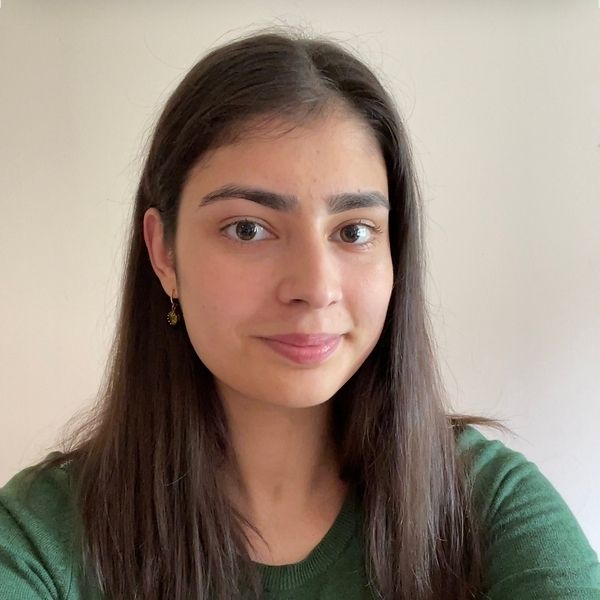
My name is Ayra. I am currently studying Management, partly to fuel my type-A love for organisation and planning and partly because I genuinely enjoy building systems that help people thrive. Outside of my studies, I love travelling, exploring new cultures, cuisines and finding beauty in the everyday. Whether that is long walks in nature, early-morning pilates, painting, baking, or cafe dates with friends. For a long time, balance was not something I embrace rather, it was something I feared. There was also a time when I felt disconnected from my own culture and identity. But through growth, healing, and self-reflection, I have come to realise that these layers are what make me, me. This is why I am passionate about speaking on the power of connection: because reconnecting with myself allowed me to reconnect with others, my culture and the world around me.
Charlotte Marsh
Breath Coach
Charlotte Marsh is a certified Buteyko breath coach, trauma-informed Pilates instructor, and the award-winning author of Susie Sloth and Her Secret Superpower. Her work bridges science, storytelling, and lived experience to help children and adults build calmer nervous systems through better breathing. Her journey began after a serious back injury during pregnancy led her to Pilates and later to specialising in women’s health and breathing. When she noticed one of her children struggling with unusual breathing patterns alongside growing worries, she trained with Buteyko Clinic International and expanded her work to children and teens. Today, Charlotte delivers school workshops, parent and teacher training, and workplace wellbeing programmes, teaching evidence-based breathing strategies that support focus, sleep, emotional wellbeing and resilience. She regularly collaborates with healthcare and education professionals and works within NICE-aligned, non-clinical mental health guidance.
Gabriel Santos
Pharmaceutical Sciences Student
Despite being an American born to loving Filipino immigrants, Gabe decided to fly thousands of miles across the Atlantic Ocean to study in England and is currently a second-year student of Pharmaceutical Sciences. While inculcated into the medical field as a kid, he has cultivated a wide variety of interests beyond STEM, such as literature, history, art, music, and philosophy. Somehow he has managed to find a confluence of many such topics in his upcoming speech that scrutinises the human condition of estrangement and humbly hopes to provide listeners meaningful insights in embracing absurdity.
Ian Mullen
Director of Strategic Programmes, Oracle
Ian Mullen spends an unhealthy amount of time thinking about why some stories stick and others don’t. Over the years, working across leadership, strategy, and organisational transformation, he noticed something curious: the ideas that land aren’t always the best ones, they’re the ones told well. Fascinated by storytelling, rhythm, and the strange things our brains remember (the words to a song you’ve not heard in decades), Ian explores how communication really works in the real world. Not on a stage with a spotlight, but in job interviews, pitches, presentations, and everyday conversations. In his TEDx talk, Ian shares why great communication isn’t about being louder, more confident, or more charismatic, but about finding the rhythm that helps ideas connect, resonate, and be remembered.
Miranda Geller
Sociology Student
Miranda Geller is a second-year undergraduate sociology student at the University of Nottingham and an international student from Peru. Her research, undertaken during a co-creation placement, examines the practical application of co-creation in higher education, with a focus on student voice and curriculum design. She is dedicated to making co-creation accessible as a tool for educational practice and works to disseminate this knowledge in formats that are clear and approachable for non-academic audiences.
Saanya Handa Bakshi
Neuroscience Student
Saanya Handa Bakshi is a third-year neuroscience student at the University of Nottingham and the founder of a neurorehabilitation and neuromodulation clinic in development in Delhi, India. Originally from India, Saanya is passionate about the intersection of social neuroscience, chronobiology, and clinical recovery , exploring how connection, safety, and biological timing shape the brain's capacity to heal. She challenges the assumption that healthcare environments are neutral, and asks what it would take to design spaces the nervous system actually recognises as safe. She is driven by one observation that won't leave her alone: that loneliness carries the same mortality risk as smoking fifteen cigarettes a day, and we still treat it like a personality problem.