Past TEDx event
TEDxAnjo
Field of Gratitude ~えん~
Speakers
Speakers may not be confirmed. Check the event website for the latest lineup.
Anjo City Junior Symphony Orchestra
Symphony Orchestra
In March 2018, the Anjo City Symphony Orchestra, a general incorporated association, was founded by volunteer citizens with the aim of creating a town where children can grow up vibrantly and with music. The approximately 30 members hold regular concerts twice a year and perform live at various venues around the city. Building on these activities, a new junior orchestra was launched in April 2025. The first regular concert was held in August, and currently, 20 members, ranging from elementary to high school students, are enthusiastically practicing.
Hiromitsu Iio
Organic Farmer
Born in Tsushima, Aichi, in 1975, he grew up witnessing the evolution of organic farming and the natural food movement as the second-generation president of Rinnesha, an organic foods and natural goods company, and became fascinated with the agriculture, food, and lifestyle of the mountainous community. In 2006, he founded an organic cafe, and in 2008, he established a circular-based farm in Takinoue town, Hokkaido, where visitors can learn about multifunctional agriculture. He has expanded his agribusiness to two locations in Aichi and Hokkaido. Based on the belief that “agricultural efforts are the origin and foundation of life,” he and his wife founded “Kurashi no Asaichi” in 2011, aiming to practice regional circular agriculture and foster market development. Since 2014, he has been running an experiential farm near an urban area, and in 2020, he founded the agricultural corporation Minpata Project, which operates both domestically and internationally.
Marlon Griffith
Contemporary Artist, the “mas’ man”
Born in Port of Spain, Trinidad and Tobago, in 1976. He began his artistic career as a “mas man,” a carnival costume designer in his homeland of Trinidad and Tobago, and later expanded his practice into contemporary art. He has created parade-style performance works accessible to the public in diverse communities worldwide, including South Africa, Canada, the United Kingdom, China, Belgium, and Japan. His work, which explores community history and social dynamics while shining a light on the untold stories of the people living there, has been highly acclaimed. In 2010, he was selected for the John Simon Guggenheim Memorial Foundation Fellowship and the Commonwealth Foundation’s Commonwealth Connections Award. Since 2009, he has based his activities in Nagoya and participated in the Aichi Triennale 2019. He continues to work energetically both domestically and internationally.
Michio Okada
“Weak Robotics” Pioneer
Born in Asakawa, Fukushima, in 1960. After earning a Doctor of Engineering degree from Tohoku University’s Graduate School of Engineering, he engaged in research on spoken language systems. Born with a soft voice, he often had difficulties being heard by others. But he realized that being hesitant to speak out can lead to richer communication. There, he began to propose the new concept of “weak robotics” and developed diverse robotic systems. From 2006 to 2024, as a professor at the Department of Computer Science and Engineering at Toyohashi University of Technology, he led research in the cognitive science of communication, social robotics, and human-robot interaction. Since April 2025, he has served as the vice president and a professor in the Faculty of Contemporary Society at Chikushi Jogakuen University, where he has engaged in the education and research of “Convivial Robotics,” which evolved from his “weak robotics” research.
Miyuki Haga
Radio host and journalist
Born in Kanagawa in 1988. After graduating from a university, she joined The Chunichi Shimbun Co., Ltd. in Nagoya. After reporting on a juvenile detention center for work, she became interested in the rehabilitation and reintegration of criminals. She then became more interested in the possibility of people behind bars connecting with society through the media, and studied “prison radio” at Nagoya University Graduate School. She launched “Kosei Radio 〜Break through the Wall,” a program featuring people who have served in prison or juvenile detention centers at an FM radio station in Toyota, Aichi, in October 2022. Its activities have been highly praised and won the 61st Galaxy Award in the journalism category in 2023.
Mutsuko Sasaki
Indigo Artisan
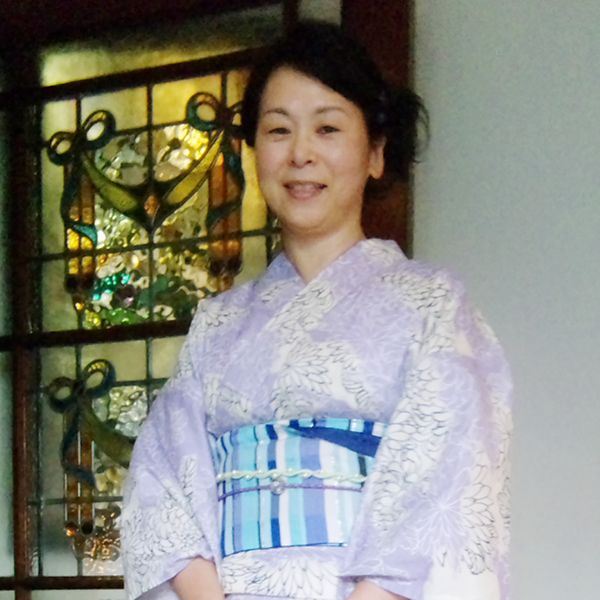
Born in Anjo in 1977. Since her tea ceremony and flower arrangement teacher was an indigo dye artist, she first studied indigo dyeing at a studio in 2012. Sensing the potential of indigo dyeing’s connection to environmental conservation and mental and physical health, in 2017 she studied authentic indigo dyeing techniques using the “ancient natural lye fermentation method” that has been handed down since the Edo period, from indigo dyeing masters Aishu and Aiyu Yano at the Honaizome Yano Factory in Tokushima, using the dyeing agent created by Akihito Sato, a nationally designated intangible cultural asset for Awa indigo manufacturing techniques. She has held solo exhibitions in New York, at Takeda Kahei Shoten, the founder of Arimatsu Shibori, and at Jozanen in her hometown, Anjo, and is committed to creating opportunities for people to experience authentic indigo dyeing both in Japan and abroad.
Takahisa Kasai
Humanitarian Aid Worker
Born in Anjo in 1950. After graduating from Aichi University of Education in 1974, he worked as a teacher in Anjo. After retiring, he moved to Kyiv, and served as an external lecturer at the Department of Japanese and Comparative Culture, International Human Development of “Ukraine”. He also founded the international management company Natsu with the aim of sending Ukrainian talent to Japan. On February 24, 2022, following the start of Russia’s invasion of Ukraine, he returned to Japan two weeks later. He immediately began accepting Ukrainian refugees in his hometown of Anjo City, as well as in Tokyo and Osaka. He founded the general incorporated association, Jakuyu Support, a Ukrainian humanitarian aid organization, and is involved in activities to connect Ukrainian culture to the future, such as the Japan Invitation Project for the Morawski Choir.
Yoshihiro Tanaka
Haptics Researcher
Born in Saitama in 1980. A leading researcher in haptics, captivated by the unseen world of others’ senses. His childhood experience with weak digestion sparked an interest, especially in “tactile sensation.” He entered the Graduate School of Engineering during his junior year at the School of Engineering, Tohoku University, and he received his Ph.D. in Engineering there. Since 2006, he has been studying the mechanisms behind individual differences in tactile perception at Nagoya Institute of Technology. Recognizing that tactile sensation is deeply connected to movement and the minimal self, he promotes research using technology to record and share tactile sensations, creating new embodiment and human connections. Currently, as a Professor and Special Advisor to the President at the university, he is dedicated to developing “haptics interfaces” that connect people to people and to their environment, collaborating with experts across diverse fields.