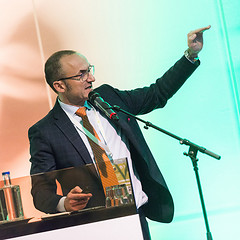
About Stefano
I am a…
Business adviser, Change Agent, Doctor, Entrepreneur, Event planner, Foodie, Parent, Photographer, Scientist, Writer/Editor
Bio
Short version: Stefano is from Italy, by way of Australia, California, New York, Bhutan and back to California. When not trying to learn guitar, out on a bike, or trying to teach his kids basic math, he is an orthopedic surgeon at a major academic institution who is doing two things: 1) trying to drag his colleagues into the 21st century when it comes to digital health and 2) challenging the status quo in knee replacement surgery. Besides that, he loves pretty much everything so long as it does not involve sitting on a beach doing nothing.
Longer version: Stefano is a professor of clinical orthopedic surgery specializing in total joint arthroplasty at the University of California San Francisco (UCSF) with a special interest in knee replacement. He is also the founder and chair of DOCSF, the Digital Orthopedic Conference. Academically, Stefano has two primary interests: knee arthroplasty surgical techniques and digital health technology as applied to musculoskeletal care. Current clinical research interests include quantifying the impact of digital health on orthopedic care delivery, the use of sensor data to predict clinical outcomes through artificial intelligence, and better understanding how kinematic alignment might influence how we perform total knee replacements. Stefano has been fortunate to work on a number of multicenter prospective trials looking at questions relative to clinical orthopaedics such as the use of Tranexamic Acid and establishing clinical guidelines with groups such as the Musculoskeletal Infection Society and when he worked at the The Permanente Medical Group. Prior to joining UCSF, Stefano helped to launch and build the Kaiser Permanente Total Joint Replacement Registry and its research arm. With respect to Digital Orthopedics, Stefano is a member of the Center for Digital Health Innovation at UCSF and is the Founder and Chair of the Digital Orthopedics Conference (DOCSF). DOCSF aims to bridge digital health and clinical orthopaedics by focusing on the implementation of digital health tools using the musculoskeletal vertical as the case study. Stefano consults in technology and serves as an adviser to both digital health companies and multinational corporations. In the late 90’s he started an online retailer selling women’s costume jewelry which he considers his practical MBA. Stefano serves on committees for two national orthopedic organizations (AAHKS and AAOS), is an Associate Editor for Arthroplasty Today, has written a book on change management in healthcare, co-authored over 30 papers in major orthopedic journals, and delivered over 100 lectures and keynote presentations nationally and internationally on both clinical and digital orthopedics.
But I am having a really hard time learning guitar...
I'm passionate about
Pretty much everything that does not involve sitting on a beach doing nothing... and besides that: I really love teaching and exploring ideas that challenge the status quo or long held assumptions. Debunking them is really interesting though not always popular.
An idea worth spreading
Social Adjacency In his book “Where Good Ideas Come From: The Natural History of Innovation”, Steven Johnson introduced the concept of the “adjacent possible” to explain how ideas are generated. Regardless of its origins, the construct can be very helpful when assessing the viability of new technologies and how easily they may become a practical tool in the digital health armamentarium. The Adjacent Possible construct is not too far from the idea that almost all innovation is derivative. There are innumerable start-ups that failed not because of a lack of brilliance, vision or execution but because of poor timing and lack of technological adjacencies such as data storage infrastructure, prevalence and distribution of technology, computational capacity, and data transmission speeds to name a few. For a new technology to be Possible (read: “thrive”), it is critical for its Adjacent (read: “enabling”) infrastructure to be both in place and thriving. The ecosystem matters. Timing matters. It’s not just the technological adjacencies that matter though. Just as important, and possibly harder to adjust for, are social adjacencies. Social adjacencies include laws, payment reforms, financial models, political drivers, wealth distribution, and demographics. Demographic agencies are possibly the most interesting and the most powerful drivers of long-term change. Understanding the importance of these adjacencies may spell the difference between success and failure. Getting it right provide you with a competitive advantage.
Areas of expertise
cooking, digital health, healthcare, leadership, management, orthopaedics, surgery
The TED story
... is about to be written!
It will have a great beginning with lots of hope and exploration, a soul searching middle where all clarity is called into question, and end with a resolution and commitment to make the world a better place. It will be sprinkled with a series of interesting characters, some connection to food, and a couple of interesting insights... maybe more.