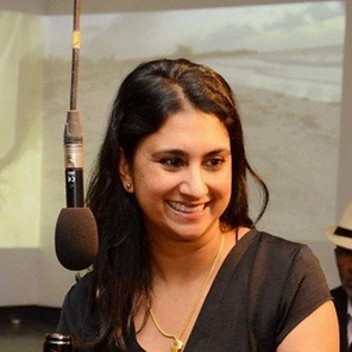
About Nabila
I am a…
Change agent
Bio
Nabila Alibhai is the founder of inCOMMONS, an organization that develops and invigorates public spaces and builds collective leadership. inCOMMONS' New York-based sister company, limeSHIFT, uses the same principles and embeds artists into workplaces to make them more happy, purposeful and creative. She recently authored "How Colour Replaces Fear," a chapter in the book Art & The City, about art that heals divisions and unites communities.
Currently, inCOMMONS' main projects are Colour in Faith, a neighborhood solidarity project through art; building an inclusive sculptural space with Nairobi City County; experimenting with art and healing; and looking for partners to create urban sweet spaces for our greatest gardeners: (pollinators) bees, hummingbirds and butterflies. limeSHIFT is working with New York City's Carnegie Hall on a traveling installation called Espejismo.
Alibhai had a 13-year career working on different aspects of conflict transformation from communications to health and resilience. She has worked on projects in Afghanistan, Pakistan, Kenya, Tanzania, the United States and Switzerland. She has held positions in the Aga Khan Development Network, the United Nations and the International Organization for Migration. As a Research Fellow in MIT's Special Program for Urban and Regional Studies, she advanced her efforts to influence health, security and community solidarity through public spaces. She now works in her home country of Kenya for the Emmy-award winning communications, research and production company, Well Told Story.
I'm passionate about
Imagination as the critical muscle in building resilience, addressing incapacity to hope, and building a better cultural ecology.
Creating physical manifestations of our highest possibility.
An idea worth spreading
Beauty inspires belonging and belonging is a necessary component to participating in and evolving society collectively.
Beauty is underrated in its influence on how much it connects us visually to our physical and cultural environment. It creates an unspoken conversation that is felt through the senses. It also pulls interest into the project and encourages others to share and participate.
Areas of expertise
conflict transformation, public health, resilience, strategic communications, urban design
People don't know I'm good at
eating