About Paul
I am a…
Brainstormer, Consultant, Idea generator, Inventor, Potential employer, Scientist, Technologist, Web guru
Bio
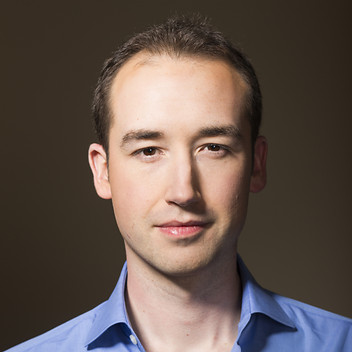
Paul Wicks, Ph.D., is the Founder and Chief Evidence Officer of ProofStack Health, a boutique evidence agency for digital health companies. As an independent consultant Paul has supported over 50 organizations including Woebot, Ada Health, Click Therapeutics, Biogen, and AstraZeneca.
Previously, Paul spent 13 years as VP of R&D at PatientsLikeMe, building one of the world’s largest patient communities and pioneering decentralized trials, digital biomarkers, and real-world evidence. He has authored over 205 peer-reviewed papers, served on editorial boards of journals including the BMJ, Digital Biomarkers, and BMC Medicine, and is an honorary professor at the University of Birmingham.
A neuropsychologist by training, Paul completed his Ph.D. at King’s College London and a postdoc on the psychology of Parkinson’s disease. His work has been featured by BBC, CNN, and The New York Times. He was named MIT Technology Review’s “Humanitarian of the Year” in 2011 and is a TED Fellow and FLIER alumnus of the Academy of Medical Sciences.
I'm passionate about
Empowering patients through information
An idea worth spreading
We are all patients; or we will be at some point, or we will care for someone that is a patient at some point. We have more to gain by sharing medically-sound data with one another than we risk. Where this isn't true, such as in the case of pre-existing conditions for insurance companies, we must make it true.
The way research is done now is not designed to find cures; it is designed to attract more research funding. The small sample size, limited scope, and limited time scale of most clinical research are as severe a limitation now as they have ever been, and we have failed so far to make technology do all the hard work for us. We can do this, but it will require overcoming a number of hurdles in technology, design, statistics, and research methodologies. All these we can do easily. The hardest barrier to be overcome will be the tendency towards inertia that exists in us all and is particularly hard to shift in institutions. If we can't shift them, we will go round them.
Areas of expertise
AI, Amyotrophic Lateral Sclerosis, Angel Investing, Cognition and Learning, Depression and the pursuit of mental health, Digital Health, Executive Function, Health 2.0, Humanitarian Efforts, Neuropsychology, Online Communities, Public Health, Rare Diseases
The TED story
I was invited to speak at a TEDx event in the Berkshires in 2010, where I presented a prototype of a new feature at PatientsLikeMe to help patients discover more about the severity of symptoms over time. http://www.youtube.com/watch?v=adwHhBRghzM. A little while later I started collaborating on some work in Parkinson's disease with TED Fellow Max Little, and together we published a study looking at the variability of that disease in clinical trials compared to PatientsLikeMe, as well as collaborating on Max's PD Voice Initiative. In 2013 I was fortunate enough to join the TED Fellows program where I shared the launch of our Open Research Exchange on the TED stage and made a fantastic new group of friends.