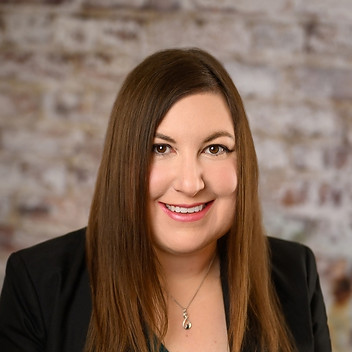
About Lauren
I am a…
Brainstormer, Educator/Teacher, Explorer, Idea generator, Scientist
Bio
Lauren Sallan is a macroevolutionist whose work integrates fossils and living systems to understand how biodiversity reorganizes over deep time. As Head of the Macroevolution Unit at the Okinawa Institute of Science and Technology, she studies how biodiversity is reset and ecosystems are rebuilt after global environmental disruption. Her work reveals how evolutionary history, biological constraints, and chance interact to produce recurring solutions over hundreds of millions of years. By focusing on the assembly, collapse, and reassembly of ecosystems, Sallan’s research offers a unifying view of why major evolutionary patterns repeat — and why they sometimes do not.
I'm passionate about
Macroevolution, deep-time biodiversity, fossils and living fishes, evolutionary theory, and communicating how science reveals long-term patterns in nature.
An idea worth spreading
Evolution doesn’t just move forward — it reorganizes. Across hundreds of millions of years, ecosystems repeatedly collapse and rebuild, often rediscovering similar ways of working even with entirely different species. By combining evidence from fossils and living life, we can understand how history, constraint, and chance shape biodiversity at scales we can’t observe directly. These deep-time patterns help explain how life responds to change — including the challenges we face today.
The TED story
I first joined the TED community as a Fellow while trying to make sense of how life changes across deep time — not just through mass extinctions, but through the repeated ways ecosystems reorganize, innovate, and endure. Through my TED talks and a TED-Ed lesson, I’ve had the chance to share why fossils and living organisms together reveal patterns we can’t see on human timescales, from why fishes keep their distinctive shapes to how biodiversity responds to environmental change.
Coming back to TED over the years — including leading Discovery Sessions — has been a chance to test ideas, refine how I tell scientific stories, and connect with people who are curious about how the natural world works at its largest scales. TED has been an important part of my growth as a scientist and communicator, and I hope to keep that conversation going in the years ahead.
People don't know I'm good at
I have been intensively studying Japanese for over four years, though my reading is still way better than my speaking!