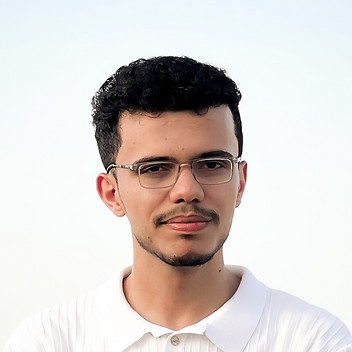
About Mazen Ahmed
I am a…
Artist, Designer, Explorer, Student
Bio
I am Mazen Ahmed , a passionate and highly creative Graphic Designer with more than four years of professional experience in graphic design and freelance creative services. Throughout my career, I have been dedicated to transforming ideas into meaningful visual experiences that inspire audiences, strengthen brands, and achieve measurable business objectives. My work extends beyond creating visually appealing graphics; I focus on designing strategic visual communication that delivers value, builds trust, and creates lasting impressions.
Over the years, I have collaborated with creative agencies, printing companies, commercial businesses, startups, and non-profit organizations, contributing to a wide range of branding and marketing projects. My portfolio includes visual identity design, social media campaigns, advertising materials, print design, packaging, presentations, promotional assets, and digital marketing content. Every project has enhanced my understanding of different industries and strengthened my ability to adapt my creative approach according to each client's goals, audience, and market positioning.
I strongly believe that successful design is not simply about aesthetics. Effective design combines creativity, strategy, psychology, and business understanding to communicate messages clearly and inspire action. For this reason, I always begin every project by understanding the client's vision, researching competitors, analyzing target audiences, and identifying marketing objectives before developing visual concepts that align creativity with measurable outcomes.
Throughout my professional journey, I have worked across multiple industries including restaurants, perfume brands, construction materials, retail businesses, community initiatives, educational organizations, and non-profit institutions. This diverse experience has given me the flexibility to understand different customer behaviors, brand personalities, and communication styles, enabling me to create customized visual solutions that resonate with specific audiences.
My expertise covers a broad spectrum of graphic design services including branding, logo design, corporate identity systems, social media graphics, advertising campaigns, brochures, flyers, billboards, presentation design, packaging, promotional materials, digital assets, and marketing visuals. I enjoy building complete visual systems rather than isolated designs, ensuring consistency across every customer touchpoint.
One of my greatest strengths is creating creative advertising campaigns driven by strong concepts. I enjoy every stage of the creative process—from brainstorming ideas and building visual narratives to selecting typography, colors, lighting, composition, and final execution. I believe that every visual element should serve a purpose and contribute to the overall message while maintaining high aesthetic standards.
As technology continues to transform the creative industry, I actively integrate Artificial Intelligence into my workflow to improve efficiency, accelerate ideation, generate creative concepts, write professional prompts, and produce high-quality visual assets. Rather than replacing creativity, I use AI as an advanced creative assistant that allows me to spend more time refining ideas and producing exceptional design solutions. My ability to combine traditional design expertise with modern AI-powered tools enables me to deliver innovative results while maintaining originality and professional quality.
I possess advanced proficiency in Adobe Photoshop and Adobe Illustrator, along with extensive experience using AI-powered creative platforms and design technologies. I continuously invest in learning new techniques, industry trends, and emerging technologies to remain competitive and deliver the highest quality work for every client.
Beyond technical expertise, I have developed strong communication, teamwork, leadership, and project management skills. Working with multidisciplinary teams and participating in community initiatives has taught me the importance of collaboration, responsibility, adaptability, and meeting deadlines under pressure. I enjoy working in dynamic environments where creativity, innovation, and strategic thinking come together to solve real business challenges.
My volunteer experiences and participation in youth initiatives have further strengthened my ability to design for social impact, creating visual identities and communication materials that support educational, cultural, and community-driven programs. These experiences have expanded my perspective beyond commercial design and reinforced my belief that design has the power to influence communities and create positive change.
Continuous learning is one of my core professional values. I consistently follow global design trends, study branding systems, marketing strategies, user experience principles, typography, visual storytelling, and AI advancements.
I'm passionate about
I'm passionate about ideas that begin as simple questions and grow into visual experiences that can change how people feel, think, or connect with the world around them. For me, design has never been just a career or a creative skill. It's the way I observe life, understand people, and express ideas that words sometimes cannot.
I find inspiration in the smallest details. A building, the way sunlight falls on a wall, traditional patterns, conversations with strangers, or even ordinary moments that most people walk past without noticing. I've learned that creativity starts with paying attention long before opening any design software.
One of my favorite parts of the creative process is the moment when an unclear idea slowly becomes something real. Watching a concept evolve into a meaningful visual experience never gets old. I'm not interested in creating work that's only beautiful. I want to create work that makes someone pause, smile, remember something, or see a familiar story from a new perspective.
I'm especially passionate about branding because I believe every brand has its own personality and story. Good design gives that story a voice. There's something incredibly rewarding about helping a small idea grow into a recognizable identity that people trust and connect with.
I enjoy combining creativity with strategy. Great design isn't only about taste or aesthetics; it's about understanding people, emotions, culture, and communication. Before I begin designing, I spend a lot of time thinking, researching, and asking questions because I believe that the strength of an idea always matters more than visual effects.
As someone from Yemen, I draw endless inspiration from my country's architecture, heritage, colors, and history. They remind me that creativity isn't limited by resources. In fact, some of the most meaningful ideas are born where challenges exist. I hope to share more of this visual culture with the world through modern design while staying true to where I come from.
I'm also fascinated by the relationship between creativity and artificial intelligence. I don't see AI as something that replaces designers. Instead, I see it as a tool that expands our ability to experiment, imagine, and create. Technology can speed up the process, but curiosity, empathy, and human perspective are still what make ideas meaningful.
Learning is another passion of mine. I enjoy exploring new design trends, studying visual storytelling, experimenting with different creative approaches, and constantly challenging myself to grow. Every project teaches me something new, every client offers a different perspective, and every mistake becomes part of my creative journey.
I also believe design can do much more than promote products or services. It can inspire conversations, strengthen communities, preserve culture, and create positive change. That's one of the reasons I enjoy contributing to youth initiatives and creative projects that have a social impact alongside commercial work.
At the heart of everything I do is a simple goal: to create work that people remember because it made them feel something. I don't want to design just to fill empty space. I want to create ideas that outlive the visuals themselves.
I'm passionate about building meaningful experiences through design, connecting culture with innovation, combining technology with creativity, and proving that great ideas can come from anywhere in the world. I believe every designer has a responsibility not only to create beautiful work but also to create work that matters.
An idea worth spreading
Design Is Not Art. It Is Responsibility.
For a long time, I believed design was about making things look beautiful. Over the years, I realized that beauty is only the final result of something much deeper. Design is really about making decisions that shape how people think, feel, and respond. Every color we choose, every empty space we leave, every line we draw, and every word we place has the power to influence someone's experience.
Creativity doesn't begin when we open a design program. It begins when we choose to look at a problem differently. Most people see the world as it is. Designers imagine what it could become. That's why I believe design is not simply about creating visuals—it's about reimagining reality.
The best ideas are rarely the most complicated. They're the ones that feel honest. If an idea can be understood by a child, appreciated by someone from another culture, and remembered years later, it has real value. Simplicity isn't about removing details. It's about understanding which details truly matter.
Today, artificial intelligence can generate stunning images in seconds. But meaning still comes from people. AI can suggest colors, layouts, and compositions, but it cannot understand why one image gives someone hope, why another builds trust, or why a simple visual can inspire action. Technology makes creation faster, but it doesn't replace human perspective.
That's why I don't see AI as a competitor. I see it as a creative partner. The designers who will make the biggest impact aren't the ones who use AI the most—they're the ones who know how to combine technology with empathy, curiosity, and human understanding.
I come from Yemen, a place full of challenges but also rich in history, architecture, culture, and untold stories. Growing up there taught me that creativity isn't born from unlimited resources. It's born from observation. When resources are limited, ideas become your greatest asset. Constraints don't limit creativity—they often reveal it.
I also believe that every culture has a visual language worth sharing with the world. Designers shouldn't spend their careers copying global trends. Instead, they should contribute something authentic that reflects where they come from and what they have experienced. When design carries genuine identity, it crosses borders more naturally than words ever can.
Great design does more than attract attention. It builds trust. It transforms companies into brands, products into experiences, and ideas into memories. The success of a design shouldn't be measured by likes or shares, but by whether it changes someone's perspective, helps them make a decision, or leaves a lasting impression.
Learning has become one of the most important parts of my journey. Every project teaches me something new. Every client offers a different perspective. Every mistake becomes another step toward better thinking. Curiosity, more than talent, is what keeps creativity alive.
My goal has never been to create beautiful graphics simply for the sake of beauty. I want to create ideas that outlive the visuals themselves. A good design captures attention for a moment. A meaningful idea stays with people for years.
If there's one belief that guides my work, it's this:
Don't design to fill empty space. Design to leave a lasting impact.
Because I believe the world doesn't need more images. It needs more ideas that make life clearer, more meaningful, and more human.
Areas of expertise
Graphic Design
Brand Identity Design
Art Direction
Creative Marketing
Advertising Campaign Design
Digital & Social Media Design
AI-Assisted Design
Visual Communication
Creative Project Management
Creative Team Collaboration
The TED story
Some experiences become memories. Others quietly change the way you think, work, and see the world. For me, TEDx was one of those experiences.
When I first joined TEDx, I thought I was there simply as a graphic designer. I expected to create visuals, build the event's identity, and support the team through design. I quickly realized that TEDx is much more than an event, and much more than a group of volunteers working toward a deadline. It's a community built around ideas, purpose, and people who genuinely believe they can make a difference.
The journey wasn't easy. It was demanding, exhausting, and sometimes overwhelming. There were long nights, endless meetings, constant revisions, and countless details that most attendees would never notice. As the event got closer, the pressure grew, and so did our responsibilities. But looking back, I don't remember the exhaustion as much as I remember the purpose behind it. Every challenge felt meaningful because we were building something that mattered.
The greatest gift TEDx gave me wasn't experience—it was people.
I had the chance to meet individuals from completely different backgrounds, yet they all shared one thing in common: passion. They were ambitious, curious, and driven by something bigger than themselves. They weren't simply chasing success; they wanted to create impact. Being surrounded by people who genuinely believe that one idea can change someone's life completely changed the environment I was used to.
Every conversation taught me something new. Every team meeting gave me a different perspective. I learned that listening is just as important as speaking, and that the strongest ideas often come from collaboration rather than individual talent. Creativity grows when different minds come together with the same purpose.
Through TEDx, I also met speakers and inspiring personalities whose influence extended beyond their professions into their communities and, in many cases, beyond national borders. Hearing their stories reminded me that meaningful achievements rarely begin with perfect circumstances. They begin with a simple idea, followed by consistency, courage, and the willingness to keep moving forward despite uncertainty.
As a graphic designer, TEDx transformed the way I think about design.
Before this experience, I focused primarily on creating visuals that looked good. TEDx taught me that design isn't just about aesthetics. It's about helping ideas travel from one mind to another. Every poster, presentation, social media post, and visual element exists for one purpose: to communicate something meaningful. Since then, I've started asking myself a different question before every project—not "How can I make this beautiful?" but "How can I make this meaningful?"
The experience also shaped me far beyond design.
It taught me discipline, responsibility, and commitment. It showed me what it means to work under pressure without losing focus. I learned to manage my time better, communicate more effectively, accept feedback openly, and take ownership of my responsibilities. Most importantly, I discovered that great projects are never built by one talented person—they are built by teams that trust each other and believe in the same mission.
Another lesson that has stayed with me is that leadership isn't about titles. It's about creating an environment where people feel heard, respected, and inspired to do their best work. Watching different team leaders guide people with patience, trust, and empathy changed the way I think about leadership, and it's something I continue to carry into every project I work on.
TEDx also strengthened my belief that creativity has a purpose beyond business. Design, photography, storytelling, public speaking, filmmaking, and event organization are not just creative skills—they are tools for spreading ideas that deserve to be heard. That realization made me see my own work differently. I no longer think of myself as someone who simply creates graphics. I see myself as someone who helps ideas find their visual voice.
Perhaps the event lasted only a short time, but its impact continues long after the stage was taken down.
The friendships I built, the lessons I learned, the challenges we overcame together, and the conversations I had with extraordinary people continue to influence how I approach both my work and my life. Those experiences shaped not only my professional skills but also my character.
Today, when I think about TEDx, I don't remember the deadlines or the sleepless nights first. I remember the people, the conversations, the shared purpose, and the feeling of being part of something bigger than myself.
TEDx didn't simply add another experience to my résumé. It became part of who I am.
It reminded me that creativity isn't measured by how beautiful something looks, but by the impact it leaves behind. It showed me that meaningful work is almost always the result of passionate people working together with humilit
People don't know I'm good at
Turning unclear ideas into visual stories that people can instantly understand.
At first glance, this may seem like nothing more than part of my work as a graphic designer. But in reality, it's the way I've learned to see the world. I don't believe design begins with opening software, choosing colors, or arranging shapes. For me, it begins with a question, a conversation, or a quiet observation that most people would simply overlook. Those unnoticed moments are where my creative process truly starts.
I've always preferred listening more than speaking. Over time, I realized that every person carries a story, every project has a purpose, and every brand wants to say something meaningful—but not everyone knows how to express it. That's what fascinates me most. Before I think about creating visuals, I try to understand people. I want to know what they believe in, what they hope others will feel, and what kind of impact they want to leave behind. Once I understand that, the design almost begins to create itself.
To me, design has never been about decoration. It's about translation—translating thoughts into visuals, emotions into colors, and ideas into experiences that anyone can understand, regardless of their language or background.
Curiosity is probably my greatest creative tool.
I'm the kind of person who stops to admire the details of an old building, notices how sunlight changes the mood of a room, or finds inspiration in traditional Yemeni patterns that many people pass by every day without a second thought. Those ordinary moments are where extraordinary ideas often begin. I've learned that creativity doesn't live inside a computer screen—it lives in the way we observe the world and connect seemingly unrelated things into something meaningful.
Because of that, I spend far more time thinking than designing.
Many people assume designers spend most of their time using software. In my case, the most important part happens long before I touch the keyboard. It happens while walking through a city, reading a book, listening to someone's story, or simply sitting in silence, allowing an idea to mature. Once the idea becomes clear, the execution becomes the easiest part of the process.
What excites me most isn't creating beautiful visuals—it's solving creative problems.
There's something incredibly rewarding about taking a complicated message and making it feel simple, helping a brand discover its authentic identity, or turning an abstract concept into a visual story that someone can understand within seconds. Those moments remind me why I chose this profession in the first place.
Perhaps that's why branding has become one of my favorite areas of design.
I believe every brand is like a person. It has a personality, values, a voice, and a unique story waiting to be told. My role isn't to impose my own style but to uncover that personality and give it a visual language that feels honest and authentic. Seeing a small idea grow into a recognizable brand because people finally connect with its story is one of the most fulfilling experiences I know.
My TEDx journey strengthened these beliefs even more.
It reminded me that ideas don't change the world simply because they're brilliant—they change the world because they're communicated in a way that people can truly connect with. Watching powerful stories move audiences taught me that design isn't only about creating images. It's about helping meaningful ideas reach the people who need them most.
That experience also changed the way I think about responsibility.
Today, I see every project as more than another piece of work. Every design carries a part of my name, my values, and my perspective. That's why I always strive to create work with substance rather than decoration. People may forget the colors, the typography, or the layout, but they rarely forget how something made them feel. That's the kind of impact I hope to create.
I'm also deeply interested in technology, especially artificial intelligence—not because it can generate images quickly, but because it expands the boundaries of creativity. I see AI as a creative partner that encourages experimentation, exploration, and new ways of thinking. Yet I firmly believe that the most meaningful ideas will always come from people—from curiosity, empathy, experience, and imagination.
Outside of design, I'm constantly learning.
Books, conversations, architecture, travel, culture, and especially Yemen's rich artistic and architectural heritage continue to shape the way I think. I find endless inspiration in the intersection between tradition and innovation, believing that the strongest creative work doesn't abandon its roots—it builds upon them.
Looking back, I don't think the most valuable skill I've developed is mastering design software or creating visual identities.
The skill I'm most grateful for is learning how to see what others often overlook.