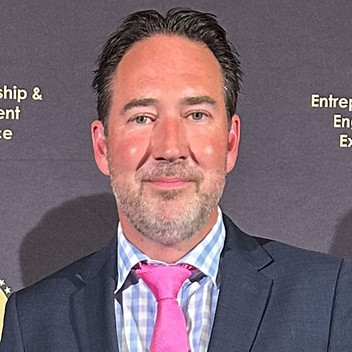
James Gardiner
Associate Professor and Associate Dean at University of East Anglia
Norwich, United Kingdom
FollowAbout James
I am a…
Business leader, Educator/Teacher, Entrepreneur
Bio
James Gardiner is the Associate Dean for Student Experience and Outcomes at the University of East Anglia. He is responsible for the strategic planning and delivery of student employability and professional development initiatives, student experience, employer and alumni relations, and executive education programmes across the faculty.
His academic leadership and teaching within the Business School focuses on individual professional management practice, high performance teams, and branding as well as working in close collaboration with employer and professional institution partners such as the Chartered Management Institute and Financial Industry Group.
Throughout his career, James has been committed to transforming the student experience through technology and innovative pedagogical practices, ensuring that universities build and empower learners to make a positive contribution to the world. James speaks regularly at Westminster Insights events, teaches at the University of Cambridge, and has recently delivered papers at Harvard, INSEAD, and the Bocconi School of Management.
Before joining academia, James worked in the London Financial Market and as a senior leader within the consulting and tech industry. He is also the Co CEO and founder of the award winning EdTech firm Studious Digital Education.
I'm passionate about
Lakes, hills, skiing and when not doing that then teaching marketing and management.
An idea worth spreading
The relationship between happiness and organisational success is often presented as straightforward. Happy employees perform better. Happy teams collaborate more effectively. Happy workplaces deliver stronger results.
The reality is more complicated. Some of the most successful teams are not especially happy, at least not all of the time. Elite sports teams, start ups racing against competitors and organisations managing major change often experience stress, frustration and disagreement. People work long hours. Deadlines loom. Standards are high. Expectations are demanding. Yet performance can still be exceptional. This raises an uncomfortable question. Should leaders be trying to make people happy at work?
There is a growing argument that the answer is no.
Employees rarely look back on their most rewarding achievements and describe them as easy or enjoyable. Building a business is difficult. Completing a challenging project can be exhausting. Learning a new skill often involves failure, uncertainty and self doubt. None of these experiences feel particularly positive in the moment. What they create, however, is growth. People want more than happiness. They want progress. They want to feel useful. They want to know that what they do matters.
Good leaders understand this. Their role is not to remove every source of pressure or discomfort. It is to create an environment where people can do meaningful work and succeed together. Sometimes that means asking difficult questions. Sometimes it means holding people accountable. Sometimes it means challenging a team member whose performance is falling short.
None of those conversations are likely to increase happiness in the short term.
Strong teams also need conflict. Not personal conflict. Not politics. Productive disagreement. Teams that avoid challenge often drift towards groupthink. Poor ideas go untested. Problems remain hidden. Innovation slows. The desire to keep everyone comfortable can become a barrier to improvement.
Perhaps happiness is better understood as an outcome rather than a goal. When people trust their colleagues, contribute to something worthwhile and see evidence that they are making progress, satisfaction often follows. It is deeper than momentary happiness. More durable too.
The best leaders do not spend their time trying to keep everyone smiling. They focus on creating purpose, setting standards and helping people achieve things they did not think possible.
Areas of expertise
branding, enterprise, Learning, management, teaching, teams and business
The TED story
New to TED but love the output and the brand
Things you might not know
Lego