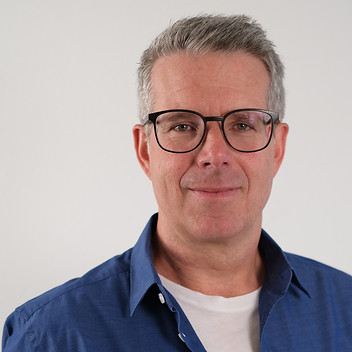
About Clive
I am a…
Architect, Atheist, Athlete, Business leader, Environmentalist, Project manager, Technologist
Bio
Clive Hildering is the Founder and CEO of 360Carbon, a Switzerland-based tech company helping countries and cities adapt to climate change impact through their digital risk & climate inteligence solution. He spent over a two decades designing and delivering sustainable and circular economy projects across Africa and Europe, building a strong foundation in connecting science, technology, and sustainability within the built environment. Clive advised leading real estate clients and governments on decarbonization, net-zero strategies, and the integration of ESG metrics into investment and asset management frameworks. His work is defined by a proactive and analytical approach, embedding sustainability as a systemic principle throughout the entire project lifecycle.
I'm passionate about
My passion for connecting people and ideas began in architecture.
One of the first lessons architecture teaches you is that no great building is ever designed by one person. It is the result of bringing together architects, engineers, contractors, clients, policymakers, and communities, each contributing their expertise at the right moment in the process. Success depends not only on technical excellence, but on understanding how every part of the system connects. That lesson has shaped my entire career.
Today, whether I'm working on climate resilience, sustainability, or technology, I see the same principle at work. The challenges we face are too complex to solve within individual disciplines. Progress happens when we connect science, technology, policy, finance, and, above all, people.
I love building teams where different perspectives become a source of innovation. Creating environments where experts learn from one another, challenge each other's assumptions, and work towards a shared purpose consistently produces better outcomes than any individual could achieve alone.
Ultimately, I'm passionate about creating connections between disciplines, between people, and between ideas, because lasting change doesn't happen in silos. It happens when we build systems that enable people to succeed together.
An idea worth spreading
Sustainability isn't a technology problem. It's a systems challenge.
For decades, we've treated climate change as something we can solve through better policies, better engineering, or better data alone. These are all essential—but they are not enough.
Real transformation happens when we change how we work together.
Data helps us understand where risks exist, how our environment is changing, and what actions are needed. But data only becomes valuable when it is accessible, trusted, and understood by the people who need it most. Too often, the communities experiencing the greatest impacts of climate change, particularly across the Global South, have the least access to the information that could help them prepare and adapt.
Climate intelligence should not be a privilege reserved for well-funded institutions or wealthy nations. It should be a shared resource that empowers everyone to make better decisions.
Equally important is the human connection behind the data. Technology should strengthen collaboration, not replace it. The conversations between governments, scientists, businesses, and local communities are where resilience is truly built. When people share knowledge, challenge assumptions, and make decisions together, data becomes action.
I believe the future of sustainability lies in combining accessible climate intelligence with stronger human collaboration. Together, they enable us not just to understand our rapidly changing world, but to adapt to it with confidence, equity, and purpose.
Areas of expertise
Animal-spotting, Architecture, Data-Mapping, Managing Projects, Nature based Solutions, Snowboarding, Sustainability
The TED story
My career has never followed a straight line.
I started in architecture, where I learned that every successful project depends on bringing together people with different expertise at exactly the right moment. That experience shaped the way I see the world: the most meaningful solutions emerge not from individuals working in isolation, but from people connecting across disciplines.
As my career evolved into sustainability and climate resilience, I realised the same principle applies on a global scale. Climate change is not simply an environmental challenge, it is a systems challenge. Solving it requires governments, businesses, scientists, communities, and technology to work together in new ways.
That realisation eventually led me to found 360Carbon, where we develop digital tools that help decision-makers move from reactive climate adaptation to preactive climate resilience. But the technology is only part of the story. My real ambition is to help people connect through shared understanding, because data only creates impact when it enables collaboration.
That's why TED resonates so strongly with me.
TED has spent decades connecting people through ideas, breaking down barriers between disciplines, cultures, and perspectives. In many ways, that's exactly what I'm trying to achieve through my work: making complex knowledge accessible, creating common ground between different stakeholders, and empowering people to work together toward a more resilient future.
The story I hope to share isn't just about climate change or technology. It's about the power of connection. When we connect ideas, data, disciplines, and people, we create possibilities that none of us could achieve alone.
Things you might not know
People often know me as someone who works in sustainability, climate resilience, and technology. What they don't always see is that I'm deeply curious about how systems work.
My training and early career as an architect taught me to look beyond individual components and understand the relationships between them. Whether designing a building, developing a climate resilience strategy, or building a technology company, I instinctively start by mapping the system, identifying the people, processes, data, and interactions that influence the outcome. I find that understanding these connections often reveals opportunities and solutions that might otherwise be overlooked.
I'm fascinated by patterns and enjoy connecting ideas from different disciplines. I often find myself drawing links between architecture, science, technology, business, and human behaviour to better understand complex challenges and uncover new ways forward.
What many people also don't know is how much I enjoy bringing people together. Some of the most impactful outcomes I've seen have come from creating the right environment for collaboration, where different perspectives can challenge, inspire, and strengthen one another. I genuinely believe that diverse teams, united by a shared purpose, can achieve far more than any individual working alone.
In the end, I don't see my role as having all the answers. I see it as understanding the system, asking better questions, and creating the connections that help people discover better solutions together.