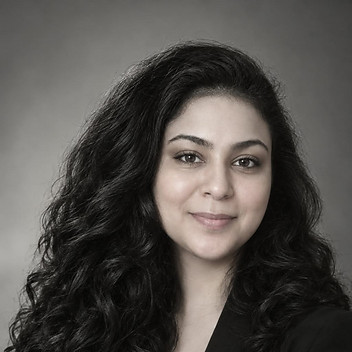
About Wajeeha
I am a…
Activist, Brainstormer, Educator/Teacher, Environmentalist, Event planner, Explorer, Idea generator, Muslim, Philanthropist, Project manager, Writer/Editor
Bio
As an educator, linguist, researcher, and scholastic leader, I think that real change starts when people are allowed to think critically, speak fearlessly, and be heard.
I work in the nexus of language, education, communication, and leadership, and I have an M.Phil. in linguistics and TESOL. I work to improve teaching, curriculum design, academic quality, and the development of communication skills that empower people outside of the classroom as a lecturer in English and head of quality control at the English department at Superior University in Pakistan.
My career experience has shown me that education is about more than just imparting knowledge; it's about assisting individuals in challenging presumptions, realizing their potential, and putting ideas into practice.
I am interested in the same basic question whether I am mentoring research, helping to establish courses, assisting educators, or planning community-building activities: How can we create situations where individuals and ideas have the opportunity to grow?
Additionally, I have spearheaded university-wide projects that call for cooperation, ingenuity, and a common goal. These encounters have reinforced my conviction that effective leadership is about creating an environment where people can participate, take responsibility, and do worthwhile tasks rather than just being visible.
In my capacity as TEDx Superior University's Licensee and Lead Organizer, I am introducing this attitude to a platform that is based on concepts that are worth promoting.
As the Licensee and Lead Organizer of TEDx Superior University, I am bringing this philosophy to a platform built around ideas worth spreading.
Our theme, "Unheard Realities," reflects my conviction that some of the most significant concepts come from viewpoints, experiences, and issues that have not yet gotten the recognition they merit.
I want to help create a culture that values meaningful action over passive agreement, debate over dismissal, and curiosity over assumption. Building something that matters long after the event is over is, in my opinion, the most fulfilling aspect of leadership.
I'm passionate about
I have a strong belief that language, education, and ideas have the ability to change people's perceptions of themselves and the world.
As a linguist and teacher, I find it fascinating how language determines who gets heard, shapes identity, affects opportunities, and fosters a sense of belonging. In my opinion, communication involves more than just efficiently expressing oneself; it also entails paying close attention, appreciating differences, and establishing links between different points of view.
Education that fosters the development of the full person- not only knowledge, but also skills, attitudes, confidence, curiosity, and the capacity for independent thought is something I am really passionate about. I want educational institutions and classrooms to foster critical thinking, responsible communication, and the ability to apply knowledge to meaningful action.
The labor that goes on behind the scenes, such as creating curricula, enhancing academic procedures, mentoring research, organizing teams, and transforming lofty concepts into workable systems, also appeals to me. Clarifying complexity and assisting others in moving from intention to execution gives me a sense of purpose.
Beyond my career pursuits, I cherish introspection, self-improvement, faith, and the discipline of gradually growing in competence and compassion. In my opinion, ambition gains greater significance when it is paired with humility, and leadership gains greater significance when it opens doors for others.
In the end, I am passionate about establishing intellectual, professional, and educational environments that inspire individuals to speak meaningfully, think creatively, and actively contribute to the world they wish to create.
An idea worth spreading
The realities we do not hear may be the ones we most need to understand.
It's be that the realities we don't hear are the ones we most need to comprehend.
We frequently use well-known stories to make sense of the world. We pay attention to the voices we know, believe the viewpoints that support our preconceived notions, and ignore encounters that contradict our beliefs. However, the experiences we don't often hear can highlight presumptions we've never questioned and unimagined possibilities.
In my opinion, listening is a human and intellectual obligation rather than just a polite gesture. It necessitates that we take a moment before passing judgement, maintain our curiosity when something seems strange, and acknowledge that our comprehension of reality is never fully formed.
This is especially crucial in leadership, where decisions impact those whose views may not be present in the room, in education, where pupils require more than just facts, and in society, where advancement depends on our readiness to challenge conventional wisdom.
An concept is not always valid because of an unheard viewpoint. It might, however, highlight a query we neglected to pose, an issue we misinterpreted, or a remedy we hadn't thought of.
With TEDx Superior University and our theme, Unheard Realities, I hope to contribute to the creation of an environment where individuals are exposed to concepts that upend their preconceptions, broaden their comprehension, and encourage them to approach well-known issues in novel ways.
I hope that instead of just recalling what they heard, individuals will reevaluate their prior beliefs, challenge what they had taken for granted, and become more aware of the voices around them.
Making room for a viewpoint we might have overlooked otherwise is sometimes the first step toward altering the world.
Areas of expertise
Academic Quality Assurance, Academic Writing, Applied Linguistics, Assessment Design, Communication Skills, Corporate Training, Cross-Disciplinary Collaboration, Curriculum Development, Educational Leadership, English Language Education, Event Management, Public Engagement, Research Mentoring, Speaker and Program Curation, Teaching and Learning, TESOL
The TED story
My TED talk is based on a conviction that has influenced both my leadership style and my work as a teacher: ideas should be given careful consideration rather than just an audience.
As someone who works in the fields of language, communication, and education, I witness firsthand how our understanding of a situation may be altered by the way we formulate a question. A fresh viewpoint might refute a presumption, start a discussion, or highlight a potential that has gone unnoticed.
I saw a chance to put that belief into effect when I took on the task of bringing TEDx to Superior University.
I wanted to contribute to the development of a platform where ideas might transcend disciplinary borders, where speakers could offer viewpoints based on their work and experiences, and where students could come across questions that go beyond traditional answers and textbooks.
The necessity of creating space for viewpoints that are frequently disregarded, misinterpreted, or excluded from mainstream discussions gave rise to the concept Curated Lives. It challenges us to see beyond the obvious and think about what our current narratives could be lacking.
I've been reminded by organizing TEDx that a significant stage is constructed long before the crowd shows there. It calls for careful curation, teamwork, meticulous attention to detail, accountable communication, and a dedication to making sure that concepts are communicated honestly and clearly.
For me, this journey is not simply about hosting an event. It is about contributing to a culture of curiosity - one in which people are willing to listen beyond their familiar circles, engage with challenging ideas, and carry new questions into their everyday lives.
I see TEDx as a chance to link knowledge with real-world experience and intellectual curiosity with practical application. The platform will have achieved something worthwhile if one thought inspires a student to challenge an assumption, helps someone view another person differently, or motivates a significant change that goes beyond the event.
I want to contribute to the creation of a TEDx experience where the ideas continue to travel while the stage is transient.
People don't know I'm good at
People witness the presentation, the event, or the final product. They might not realise how much I like putting the pieces together to make it happen.
I am skilled at giving ambitious ideas structure by decomposing a difficult goal into doable steps, figuring out what is lacking, organising people and tasks, and maintaining focus on the bigger picture while attending to the specifics.
My work in academic quality and education has enhanced my capacity to identify gaps, pose pertinent questions, and devise workable solutions to enhance a procedure. I like the challenge of transforming something that seems daunting at first into a strategy that people can actually carry out.
The distinction between disciplines also appeals to me. While my work in leadership and event management necessitates that I take into account how people interact, make decisions, and convert their goals into results, my background in linguistics motivates me to pay attention to how people communicate.
I like to create environments that allow others to perform at their best, even if it's not as obvious. That may entail assembling a group, honing a concept, or just posing a question that clarifies someone's own thought process.
I have confidence in being creative doesn't always mean coming up with something really original. Sometimes it's about seeing a connection that others have overlooked, figuring out how to move forward with little funding, or creating a framework that makes a fantastic concept a reality.
I appreciate the process of continuing to learn. However, I have learned that some of the most significant work isn't necessarily the most obvious, and that seeing what others haven't yet recognized is frequently the first step toward making significant changes.