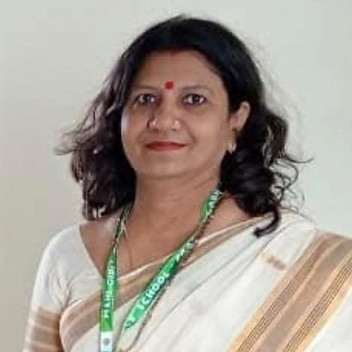
About Nirupama
I am a…
Educator/Teacher, Hindu, Parent
Bio
I am Nirupama Sisodiya, Principal, Mahi Girls' School, Pratapgarh. I have been with this institution since it's inception
I'm passionate about
Teaching my students with very love and passion
An idea worth spreading
The Most Dangerous Lie We’re Taught: “Be Yourself”
“Be yourself” is terrible advice for most of your life.
Not because authenticity is bad—but because “yourself” is mostly accidental.
Think about it.
Your personality, habits, beliefs, insecurities, ambitions—none of them were consciously chosen. They’re a messy side-effect of:
the family you were born into
the money you didn’t have
the teachers you randomly got
the internet you happened to scroll
the fears you absorbed before you could name them
That’s not a “self.”
That’s a default configuration.
Yet we glorify it. We tell kids to “be themselves” before they’ve even designed a self. That’s like telling someone to keep a house exactly as it was when they found it—dust, broken windows and all—because “it’s authentic.”
Here’s the uncomfortable truth:
Most people don’t live their lives.
They defend their defaults.
They call it personality:
“I’m just bad at math.”
“I’m not a morning person.”
“I’m an introvert, that’s just me.”
“I can’t be disciplined.”
No.
That’s not you.
That’s the version of you that survived without intention.
A Better Idea: Temporary Selves
Instead of “be yourself,” we should teach this:
Borrow a self. On purpose.
Act like a different version of a human—temporarily, deliberately, unapologetically.
Want discipline? Borrow the self of someone who wakes up early—even if it feels fake.
Want confidence? Borrow the posture, voice, and pace of someone who commands rooms.
Want kindness? Borrow the habits of someone who listens even when it’s inconvenient.
People say, “But that’s not authentic.”
Here’s the counterpunch:
Authenticity without choice is just inertia.
Every skill you respect was once fake.
Every confident person once rehearsed confidence.
Every calm mind once forced silence.
We don’t call learning to walk “inauthentic.”
We don’t call learning a language “pretending.”
So why do we call learning a better way to exist fake?
Identity Is a Tool, Not a Prison
Your identity isn’t who you are.
It’s who you’re currently running.
And here’s the part that really messes with people:
You can switch identities without betraying yourself.
You don’t owe loyalty to an outdated version of you just because it’s familiar.
Growth doesn’t feel like “becoming more you.”
It feels like betrayal at first.
That’s why people resist it.
The World Rewards Designed Selves
Look closely. The people who shape the world aren’t the ones who “found themselves.”
They built themselves.
Painfully. Repetitively. Intentionally.
They didn’t ask, “Who am I?”
They asked, “Who do I need to become?”
And then they practiced that answer until it stopped feeling fake.
The Idea Worth Spreading
Stop telling people to be themselves.
Tell them this instead:
You are allowed to outgrow your first draft.
That single permission—if truly believed—would quietly change how people learn, lead, love, and live.
And maybe that’s why we don’t teach it.
Because a world full of people who redesign themselves on purpose
is a world that’s very hard to control.
The TED story
For a long time, people labelled me as “the strict one.”
Not rude. Not unfair. Just… strict.
What they didn’t notice was what happened after the class ended.
Kids who were scared to speak started asking questions.
Kids who thought they were “bad at studies” stopped saying that.
Not because I went easy on them—but because I went clear with them.
I don’t teach to impress.
I teach to make things click.
I break ideas down in ways that make sense to them, not the textbook.
Sometimes that means silence. Sometimes discipline. Sometimes pushing a little harder than comfort allows.
Strictness isn’t the opposite of care.
Sometimes it’s proof of it.
And the irony is—
the kids understand this long before adults do.
Things you might not know
People don’t know this about me:
I’m good at teaching kids in ways that actually stick—even if I look strict doing it.