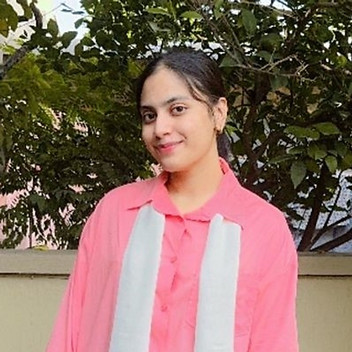
About Areej
I am a…
Engineer, Muslim, Student, Technologist, Web guru
Bio
I am Areej Rashid, a software engineering student, social entrepreneur, and youth leader passionate about using technology, creativity, and education to create meaningful impact. I currently serve as the Chief Operating Officer of Inspire Excellence, a UNDP- and Jazz-recognized social enterprise registered with SECP and FBR Pakistan, where I lead initiatives focused on skill development, digital learning, and student empowerment.
My work spans technology, leadership, and community-driven innovation. I have organized tech competitions, led research teams, and designed programs that help students bridge the gap between academic learning and real-world skills. I have represented organizations at UN-endorsed bootcamps, served as an ambassador for national-level virtual competitions, and collaborated with multidisciplinary teams across tech, research, and social impact sectors.
At the core of everything I do is a belief in accessible learning and purposeful leadership. I am driven by curiosity and creativity, and I strive to empower young people, especially students, to build confidence, develop practical skills, and lead with impact in an increasingly digital world.
I'm passionate about
I’m passionate about software engineering because it allows me to turn ideas into real, usable solutions that solve everyday problems. For me, software engineering is not just about writing code — it’s about understanding people, identifying gaps in systems, and designing technology that makes life easier, learning more accessible, and opportunities more inclusive.
As a student of software engineering, I’ve learned that even simple applications can create meaningful impact when they are built with intention. Whether it’s developing systems that improve access to information, streamline processes, or support education and skill development, I’m driven by the idea that technology should serve people, not overwhelm them. I’m especially interested in building solutions that help students bridge the gap between theoretical knowledge and real-world application.
What excites me most about software engineering is its power to scale impact. A single well-designed system can reach thousands of users, empower learners, and create long-term change. This is why I see software engineering as a tool for empowerment — one that, when combined with creativity, ethics, and purpose, can shape a more equitable and opportunity-driven future.
An idea worth spreading
Empowering students by bridging the gap between education and real-world skills through accessible technology and purposeful learning.
Around the world, students are working hard to earn degrees, yet many still feel unprepared for real-life challenges, careers, and leadership. Traditional education often prioritizes grades over practical skills, leaving a gap between what students learn in classrooms and what the real world actually demands. I believe this gap is one of the biggest barriers preventing young people from reaching their full potential.
Through my work in technology, social entrepreneurship, and student-led initiatives, I have seen how access to the right skills, mentorship, and practical exposure can completely transform confidence and capability. When students are given opportunities to apply knowledge through real projects, technology-driven platforms, and purpose-oriented learning, they don’t just become employable — they become empowered.
This idea is worth spreading because it reframes education as a tool for impact, not just instruction. By using accessible technology and intentional skill-building, we can create learning environments that prepare students to solve real problems, lead with confidence, and contribute meaningfully to society. Bridging this gap doesn’t require abandoning education — it requires evolving it, so learning translates into action.
Areas of expertise
leadership, Operations Management, programming, public speaking, Software Engineering, Technology, Technology Communication, Website Development
The TED story
My story begins with a simple realization: doing well academically does not always mean feeling prepared for the real world. As a student of software engineering, I found myself learning concepts, writing code, and completing assignments—yet I often questioned how this knowledge would translate into real impact. At the same time, I saw many capable students around me who lacked confidence, exposure, or access to opportunities, not because they weren’t talented, but because no one had shown them how to apply what they were learning.
Instead of waiting for answers, I started building them. Through my work in technology and social entrepreneurship, I began creating spaces where students could learn by doing—through projects, skill-based programs, and technology-driven initiatives. I learned that even imperfect systems, when built with purpose, could empower people far more than perfect theories left unused.
What shaped me most was realizing that software engineering is not just about systems—it’s about people. Every line of code reflects a decision, and every system reflects a value. I discovered that when technology is designed with empathy, accessibility, and intention, it can transform uncertainty into opportunity.
My TED story is about reimagining education and technology as tools for empowerment. It’s about showing that when students are given the right skills, support, and confidence, they don’t just adapt to the future—they shape it.
People don't know I'm good at
People don’t know I’m good at breaking down complex problems and quietly turning confusion into clarity. In software engineering, this often means taking systems that seem overwhelming—whether it’s code, workflows, or ideas—and simplifying them into logical, workable steps. I enjoy analyzing why something isn’t working, tracing it back to its root cause, and then rebuilding it in a way that actually makes sense to the user.
Beyond the technical side, I’m also good at translating complexity for people. I can explain technical concepts to non-technical audiences, align teams with different skill levels, and help others feel confident instead of intimidated by technology. This ability often goes unnoticed because it happens behind the scenes, but it’s one of the skills I rely on most to lead, build, and problem-solve effectively.