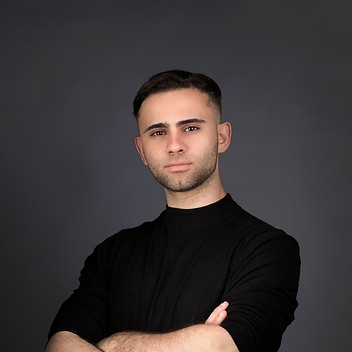
About Pantelis
I am a…
Idea generator, Investor, Journalist, Policy maker, Potential employer, Project manager, Social entrepreneur, Student
Bio
“Love responsibility. Say: it is I, I alone who will save the world. If it is lost, it is I who am to blame.” says Kazantzakis in his Ascesis, a book discovered by a 15-year-old teenager who firmly believed he would change the world…Nonsense!That teenager, intoxicated by romanticism and a gaze both innocent and naive—one might say—adopted this quote as the banner of a personal strategic plan for his future, a future he hoped (and still hopes) would be optimistic and bright.Following that book came many others of similar nature, influencing moments and beliefs, slowly shaping a personality deeply interested in ethics, politics, and governance.A few years later, these interests led the young man to the School of International and European Studies at the University of Macedonia and to a deeper search for professional direction—but more importantly, for the meaning of his life. (He’s still searching…)Around the same time, he also discovered a new world—that of entrepreneurship and volunteerism—which captivated him. In it, he saw that the interests of that teenage self remained alive, not just as abstract theories without real substance.Today, that teenager is attempting to merge his passion for politics with entrepreneurship by creating a local news and advertising platform: euosmos.gr!At the same time, he fulfilled his military service, combining his duty with his professional development and now he is actively in the search of his next professional step—remaining committed to all the “nonsense” he believed in as a fifteen-year-old.His greatest ambition is to become a key player in Greece’s foreign policy.His biggest dream: to open the best private school.
I'm passionate about
People, volunteering, communications, entrepreneurship, youth, leadership and foreign policy
An idea worth spreading
The idea of a world without the need of categorisation in order to understand each other. The idea of community ready to talk out loud the truth and respect everyones opinion.
The TED story
When I was fifteen, I found a book that did something dangerous: it made me feel responsible.
Not “do your homework” responsible. Not “be nice” responsible.
Cosmic-responsible.
It was Kazantzakis’ Ascesis, and inside it a line that hit me like a dare:
“Love responsibility. Say: it is I, I alone who will save the world. If it is lost, it is I who am to blame.”
Now, if you’re an adult hearing that, you might smile politely and think: Teenagers and their drama.
And honestly? Fair.
Because at fifteen, I didn’t just like that quote. I adopted it like a flag. I built a personal strategic plan around it—as if life was a project, and I was the project manager of the world.
It was nonsense.
Beautiful nonsense.
I was intoxicated by romanticism, by the kind of innocent certainty that makes you believe history is waiting for your name. I truly believed I would change the world—and I believed the world needed me to.
But here’s the twist: while the certainty was naive… the question underneath it wasn’t.
The question was: What do you do with responsibility when you’re too young to have power?
So I did what many of us do when we don’t have power yet.
I read.
One book became many. Books about ethics, politics, governance. Ideas that didn’t just entertain me—they slowly shaped me. They didn’t give me answers. They gave me a direction, and then they took the map away.
A few years later, that direction brought me to the School of International and European Studies at the University of Macedonia. I thought I was choosing a professional path.
But really, I was choosing a deeper search.
Not for a job—though I definitely needed one.
For meaning.
And—spoiler alert—I’m still searching.
But around that same time, I discovered something that changed the way I understand big ideas.
I discovered a world where values don’t stay on paper.
Entrepreneurship. Volunteerism.
A world where you don’t just debate what’s right—you build something and let reality respond.
And I saw something unexpected: that fifteen-year-old’s “nonsense” was still alive.
Not as abstract theory.
As energy.
As urgency.
As the stubborn belief that if you care about your community, you don’t just criticize it—you participate in it.
That’s what led me to the thing I’m building today:
A local news and advertising platform called euosmos.gr.
It’s not a revolution.
It’s not a manifesto.
It’s… local.
And that might sound small, but local is where responsibility becomes real.
Because you can’t hide behind ideology when the issues have names and faces and street corners you walk by every day.
At the same time, I completed my military service—a very Greek chapter of life that forces you to hold two truths in your hands at once:
Duty is real.
And so is your future.
I tried to combine both—service and professional development—while staying committed to the same “nonsense” I carried at fifteen.
And now I’m standing at a familiar crossroads: searching for my next professional step.
But this time I’m searching differently.
Because somewhere between fifteen and today, I learned something crucial:
Responsibility isn’t a lightning bolt.
It’s not a quote.
It’s not even a feeling.
Responsibility is a practice.
It’s the daily decision to stop outsourcing your hope to “someday” or “someone.”
So yes, my ambition is big.
My greatest ambition is to become a key player in Greece’s foreign policy.
And my biggest dream?
To open the best private school.
And maybe those sound like two unrelated goals—foreign policy and education.
But to me, they’re the same question asked in two different ways:
How do we build a country that thinks clearly, acts ethically, and prepares its people to lead?
Because foreign policy is what a nation does in the world.
And education is how a nation becomes the kind of nation that can.
So I won’t pretend I’ve “found” the meaning of my life.
I’m still searching.
But I’ve learned to respect that teenage version of me—the one with the romantic gaze and the naive certainty.
Not because he was right.
But because he was brave enough to choose responsibility.
And maybe that’s what growing up really is:
Not losing the nonsense…
but refining it.
Turning a slogan into a discipline.
Turning “I will save the world” into something quieter, tougher, and more honest:
“I will do my part—consistently—starting where I stand.”
Things you might not know
Public Speaking