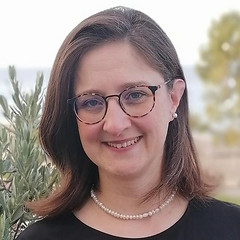
About MUBERRA
Bio
I am a PhD candidate at Samsun University and currently serve as the Technology Transfer Office Manager, where I work at the intersection of innovation, collaboration, and community engagement. My professional journey has taken me through both public and private institutions, including roles as an EU Information Centre Coordinator and Project Director. These experiences have given me a strong foundation in designing, coordinating, and delivering local, national, and international events—from major conferences to cultural programs, concerts, and social impact initiatives.
Event organization has always been one of my strengths. I enjoy bringing people together, creating meaningful experiences, and shaping environments where ideas can grow. My passion for world music and global cultures adds richness to my perspective and deeply influences the way I curate and design events.
Sustainability is a central theme in both my academic and professional life. I actively promote the Sustainable Development Goals and believe in encouraging communities to engage in conscious, responsible decision-making. Transformation, in particular, is a concept I value greatly. I find it fascinating to examine the world, the environment, and culture through the lens of transformation—understanding how change emerges, how it shapes societies, and how collective awareness can guide us toward a more resilient and inclusive future.
As a TEDx organizer, my aim is to create a space where impactful ideas can be shared freely, and where individuals feel inspired to contribute to meaningful change. I believe that transformation begins with awareness, and that every idea worth spreading holds the power to activate collective action.
I'm passionate about
I’m passionate about sustainability, culture and the process of transformation—understanding how we evolve as individuals and communities, and how ideas can spark the kind of change that lasts.
An idea worth spreading
Transformation has always been something that pulls me in—not because it’s an academic concept, not because it’s considered a trendy idea, but because it truly shapes the way I look at the world. When I observe nature, culture, communities, or even my own choices, I find myself asking: What is changing? How is it changing? And what part do I play in it?
Throughout my work—whether organizing large-scale events, managing international projects, or promoting sustainability—I’ve noticed something consistent: transformation rarely announces itself. It begins quietly. A thought, a question, a spark of curiosity… and suddenly a completely new path opens up.
When I first read Kafka’s The Metamorphosis, what struck me wasn’t Gregor’s transformation itself, but the fact that the world around him refused to transform with him. It reminded me how isolating change can feel when it isn’t understood, accepted, or shared. And it made me realize something important: when transformation is embraced collectively, it becomes a force that can heal, strengthen and inspire.
My passion for sustainability grows from that same place. The world doesn’t only need solutions—it needs a shift in mindset. Without transforming the way we think, what we prioritize, or how we relate to the planet, meaningful progress will always remain incomplete. Sustainability, at its core, is a call to rethink the way we live.
Even my love for world music connects to this idea. Every rhythm, every cultural story, every evolving sound reflects a journey of transformation. Listening to music from different cultures reminds me of how humans have always changed, adapted and reinvented themselves—and how powerful it is when diverse voices come together.
Being part of TEDx brings all of this together for me. What I want is to help create a space where people don’t just hear ideas—they feel them. A space where a single sentence can challenge a belief, where a story can open a new perspective, and where someone might walk away thinking differently about their own path.
Because “an idea worth spreading” is, at its heart, an invitation to transform, to notice, to question, to imagine and to act.
Transformation starts with awareness, grows with courage and becomes real when we choose to move together. And in that journey, we don’t just change—we evolve. We become more conscious, more connected and more capable of creating a future that reflects our best selves.
Areas of expertise
Creative Industries, Project Management, Sustainability, Transformation
The TED story
My relationship with TED began long before I ever imagined organizing an event myself. I still remember attending TEDx Atakum—not once, but twice—and feeling something shift inside me each time. Sitting in the audience, I watched ordinary people step onto the stage and share ideas that were personal, brave and transformative. It wasn’t about giving a speech; it was about opening a window into a different way of seeing the world. And those moments stayed with me.
Beyond those two events, I’ve watched countless TED and TEDx talks from all over the world. Talks from different cultures, different languages, different disciplines. Talks that made me question my assumptions, talks that moved me emotionally, talks that stayed with me for days. TED became more than a platform for me—it became a space of curiosity, inspiration and possibility. A place where ideas breathe, where stories connect, and where transformation feels tangible.
Over time, something inside me started to grow: the realization that I didn’t just want to watch TED talks—I wanted to create the kind of space where such ideas could be born and shared. I wanted to bring that sense of curiosity and connection to my own community. I wanted people here to experience the same spark that TED gave me.
So this year is meaningful for me.
For the first time, I am stepping forward not as an audience member, but as an organizer.
Organizing a TEDx event feels like the natural next step in my journey. My background in sustainability, culture, innovation and event organization has shaped the way I see the world, but TED has shaped the way I believe ideas should move through it. Now, I want to help create a stage where voices from my community can rise—where new perspectives can be heard, where conversations can begin, where transformation can take root.
This is not just an event for me.
It’s a continuation of everything TED has inspired in me over the years.
And it’s the beginning of what I hope will be many meaningful ideas worth spreading.
Things you might not know
People don’t know I'm good at music and writing. Not because I hide it intentionally or feel shy about it, but because those two parts of my life have always existed quietly, almost secretly, in the background of everything I do. They have been my private spaces—where I think, reflect, reconnect and transform. While the world often sees me through professional roles—researcher, project leader, event organizer, sustainability advocate—the creative part of me rarely makes an appearance. Yet it shapes me deeply.
Most people have no idea that my main instrument is the tanbur. It isn’t the kind of instrument people expect when they think of modern lives or academic careers. But the tanbur has been a constant companion, a subtle guide, a reminder of depth, patience and cultural memory. Its long neck and rich, resonant tones carry centuries of tradition. When I play it, I feel connected not only to music but to history, to storytelling, to something older and wiser than myself. The tanbur has taught me to listen more than I speak, to feel the spaces between notes and to trust the slow, unfolding nature of growth.
Maybe that’s why it feels so private. The tanbur is not an instrument I perform with publicly. I don’t sit on stages or record my sessions. I play when the world is quiet—late evenings, early mornings or when I need to make sense of something inside me. The instrument becomes a mirror; its sound reveals the parts of myself I don’t always have words for. And in those moments, I’m reminded that transformation is not always loud or dramatic. Sometimes it is as soft as a single vibrating string.
Writing is another hidden part of me, something people rarely see but that influences everything I do. I write to understand the world. I write to slow down my thoughts. I write to connect ideas that feel scattered. The act of writing gives me clarity; it helps me notice the details I overlook when I move too quickly. It allows me to express emotions that music awakens but cannot fully articulate. My journals and notes—most of which no one will ever read—hold pieces of who I am, pieces I often keep tucked away from the public eye.
It’s interesting how people form impressions based only on what they see. They see me organizing large-scale conferences, leading sustainability projects, managing innovation programs and connecting communities. They see the structured, organized, goal-driven parts of my personality. But they don’t see the melodies that shape my sense of timing or the pages of ideas that shape my sense of purpose. They don’t know that music and writing are the quiet engines behind much of what I accomplish.
Music, especially through the tanbur, influences how I navigate complexity. When you play an instrument like the tanbur, you learn to sense rhythm in unexpected places. You learn that silence is just as important as sound. You learn patience, especially because the tanbur demands it. There’s a delicate balance between the fingers and the strings, between control and surrender. And that balance translates directly into how I approach challenges and projects in my professional life. I can feel when a team needs energy, when a project needs pause, when an idea needs room to expand. That’s rhythm. That’s intuition. That’s the tanbur speaking in subtle ways.
Writing, on the other hand, sharpens my ability to communicate. It teaches me empathy. It helps me understand the emotional landscape behind decisions, collaborations and conflicts. Through writing, I’ve learned that every idea has a story behind it—and that when we connect to the story, transformation becomes possible. Good writing builds bridges. Good writing creates understanding. And in many ways, understanding is the first step of sustainable development, community building and social transformation.
Perhaps that’s why the theme of transformation means so much to me. I’ve realized that the most profound changes in life usually happen in private, unseen spaces—long before they become visible to others. Transformation begins in thought, in feeling, in a small shift in awareness. It begins when a note strikes something inside us, or when a sentence we write reveals a truth we didn’t realize we believed. True transformation doesn’t always begin in public; it begins within. When we transform inwardly but the world refuses to grow with us, there is friction, loneliness and misunderstanding. But when transformation is shared—when others evolve beside us—it becomes powerful, hopeful and liberating.
My hidden talents—playing the tanbur and writing—represent my own inner transformations. They reveal who I am beyond roles and expectations. They keep me grounded, reflective and connected to something deeper. They remind me that progress is not only measured in milestones or achievements, but also in the quiet ways we expand our understanding of ourselves.
So yes—people don’t know I’m good at music and writing. They don’t know how the tanbur shapes my inner world