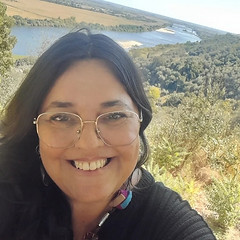
Carla Boura
Coordinator of the Mental Health and Well-Being ULisboa Programme at University Of Lisbon
TEDx Organizer
Lisbon, PortugalAbout Carla
I am a…
Care taker, Change Agent, Concerned citizen, Connector, Event planner, Explorer, Idea generator, Life mentor, Producer, Project manager, Student, World traveler
Bio
Carla Boura doesn’t just work in higher education; she reimagines it. As a passionate advocate for mental health, inclusion, and student support, she brings a uniquely creative edge to the academic world. Carla thrives on mixing unexpected fields—drawing inspiration from areas as diverse as fashion and multimedia—to design fresh, engaging methodologies that connect with people on a deeply human level.
Leading the Charge in Mental Health
Since 2024, Carla has taken on a trailblazing role as the Operational Coordinator of the University of Lisbon’s pioneering mental health and well-being promotion program. In this capacity, she is actively shaping a university culture that prioritizes psychological safety and emotional resilience. Her leadership in this area is further amplified by her role as the Coordinator of Group 4 for Special Educational Needs within the university’s Academic Success Program. Through these platforms, she is dismantling barriers and ensuring that academia is a space where every student can thrive.
A Creative Catalyst
Carla believes that true inclusion requires compelling storytelling. Stepping far beyond traditional administrative roles, she is a prolific producer of events, video campaigns, and digital content that spotlight mental health and diversity. She created, produces, and hosts the IDEA Sem Filtro podcast, a vibrant project by the University of Lisbon. The show explores the delicate boundaries between sharing intellectual ideas and personal vulnerabilities, fostering authentic conversations about what it means to build safe environments in today's world.
A Foundation of Empathy and Expertise
Behind her creative projects lies a robust academic and clinical foundation. Carla holds a degree in Psychological Sciences and completed the curricular component of the Master’s in Clinical Psychology at ISPA. Driven by a fascination with human resilience, she is currently completing her Master’s degree in Crisis and Emergency Psychology at the Faculty of Psychology of the University of Lisbon. She is also a certified Coach and Master Practitioner in Neurolinguistic Programming (INPNL), backed by specialized training in psychological and crisis intervention from the Portuguese Psychologists’ Association (OPP).
Three Decades of Impact at Técnico Lisboa
For exactly thirty years, from 1994 to 2024, Carla was the heartbeat of student support at the Instituto Superior Técnico (IST). She was a pioneer in advocating for students with special educational needs long before it became a mainstream conversation. In 1997, she implemented the university's first Mentoring Program, sparking a culture of peer support that changed the campus dynamic forever. As the coordinator of Student Support Services at the Taguspark campus starting in 2010, she spearheaded local psycho-pedagogical support systems and vibrant social responsibility programs.
Global Networks and Forward Momentum
Carla’s collaborative energy naturally extends into global and national networks. She is a vital voice in the University of Lisbon’s Special Educational Needs Network (rede NEE), the Portuguese Mentoring Network, SILAB, Técnico Sustentável, the UNITE! University alliance, and IDEM (Inclusion, Diversity, Equity in Mobility). She also contributes to academic research, exploring how technology intersects with human connection, such as her work on mobile applications for academic mentoring.
Whether she is directing a new video campaign, coordinating emergency psychological protocols, or finding innovative ways to blend creative arts with mental health strategies, Carla Boura is consistently rewriting the script on how universities care for their people.
Connect and Explore:
Email: ccarlacosta@gmail.com
ULisboa Mental Health & Well-being: saudebemestar.ulisboa.pt
Academic Success Program: https://www.ulisboa.pt/info/sucesso-academico-na-ulisboa
IDEA Sem Filtro Podcast: Listen on Spotify
IST Special Needs Network: nee.tecnico.ulisboa.pt
I'm passionate about
I am passionate about life in all its complexity, beauty, and unpredictability. I am passionate about the quiet miracle of being alive — about waking up each day with the possibility of learning something new, meeting someone unexpected, changing perspective, or discovering meaning in the smallest details. Life teaches us that growth rarely happens in comfort and that the most meaningful moments are often found in vulnerability, connection, and courage. To live fully is, perhaps, the greatest adventure of all.
I am passionate about freedom — not only as a political or social principle, but as a deeply human necessity. Freedom is the ability to think critically, to speak honestly, to exist authentically, and to pursue a life aligned with one’s values and identity. It is the possibility of becoming who we truly are without fear, oppression, or silence. Yet freedom only has meaning when it is shared collectively. A society cannot call itself truly free while entire communities continue to face exclusion, discrimination, violence, or inequality. Freedom demands responsibility, empathy, and constant vigilance.
I am passionate about love in its broadest sense: love for people, for ideas, for memories, for places, and for the invisible threads that connect us to one another. Love is one of the most transformative forces we possess. It shapes the way we care, the way we resist injustice, and the way we build communities. Love is not weakness; it is courage in its purest form. It is choosing connection over indifference and compassion over fear.
I am deeply passionate about human beings — about our contradictions, our resilience, and our extraordinary capacity to create meaning even in difficult circumstances. Every person carries a universe of experiences, stories, fears, dreams, and possibilities. Human diversity is not something to tolerate; it is something to celebrate. Diversity expands our understanding of the world and challenges us to move beyond simplistic perspectives. Different cultures, identities, abilities, languages, and ways of thinking enrich society and remind us that there is no single way to exist, learn, love, or belong.
Justice and equity are values that profoundly guide my vision of the world. I believe that dignity, opportunity, and human rights should never depend on where someone was born, how much money they have, what language they speak, or whether they fit societal norms. Equity means recognizing that people start from different realities and ensuring that systems are designed to support everyone fairly and meaningfully. Justice is not simply the absence of oppression; it is the active presence of humanity, accountability, and inclusion.
I am passionate about democracy, not as a finished achievement, but as an ongoing collective effort. Democracy requires participation, dialogue, critical thinking, and the courage to defend human rights even when it is uncomfortable. It depends on informed citizens who are willing to listen, question, and engage with the world responsibly. Democracy flourishes when people care not only about their own freedom, but also about the freedom and dignity of others.
Consciousness is another idea that deeply moves me — the awareness of ourselves, of others, and of our place within a larger human story. To live consciously is to refuse indifference. It means paying attention to the impact of our choices, questioning inherited assumptions, and remaining open to growth and transformation. Consciousness invites us to live intentionally rather than automatically.
I am passionate about the sea — its vastness, unpredictability, and silence. The sea has a unique way of reminding us both of our fragility and our freedom. It teaches humility. It creates space for reflection, stillness, and perspective. In many ways, the sea feels like memory itself: deep, powerful, and impossible to fully contain.
I am passionate about Alentejo, with its slow rhythms, endless landscapes, warm light, and profound sense of rootedness. There is something deeply human about places that invite us to slow down and simply exist. Alentejo represents authenticity, simplicity, and connection to land, history, and tradition.
I am passionate about traveling and new adventures because they expand the boundaries of who we are. Every journey changes us. Traveling is not only about movement across geography; it is about movement across perspectives. It teaches adaptability, curiosity, humility, and wonder. It reminds us that the world is infinitely larger and more interconnected than our immediate realities.
And yet, despite my love for discovering new places, I am equally passionate about my house, my personal corners of the world, and the people I love. Home is not merely a physical space; it is a feeling of belonging. It lives in familiar voices, shared meals, meaningful silences, and memories built over time. My family and friends are part of the emotional architecture of my life. They are
An idea worth spreading
Equity.
In a world shaped by profound differences — social, cultural, economic, physical, and cognitive — equity should not be treated as an abstract ideal, but as a daily commitment. We often celebrate diversity as a value, yet too many systems, spaces, and institutions continue to be designed for only a narrow portion of society. Equality alone is not enough when people begin from vastly different circumstances. Equity means recognizing those differences and ensuring that everyone has the support, access, and opportunities they need to participate fully and with dignity.
At the heart of this conversation lies the concept of Universal Design: the intentional creation of environments, services, technologies, and experiences that can be accessed, understood, and used by all people, regardless of age, ability, identity, or background. Universal Design is not merely about accessibility ramps or subtitles, although these are important examples. It is about reimagining society from the perspective of inclusion rather than adaptation. Instead of asking people to adjust themselves to systems that exclude them, we must build systems that are flexible enough to include human diversity from the very beginning.
This requires a collective shift in mindset. Equity is not the responsibility of a single profession, institution, or government. It demands collaboration between educators, psychologists, architects, policymakers, healthcare professionals, technologists, communicators, and communities themselves. Most importantly, it requires listening to the voices of those who have historically been excluded from decision-making processes. True inclusion cannot exist without participation.
Education provides one of the clearest examples of why equity matters. A student with a disability, a first-generation university student, or someone facing economic hardship may formally possess the same rights as everyone else. Yet equal rights do not automatically translate into equal access or equal opportunity. If resources, communication methods, learning environments, or support systems are not designed inclusively, many people remain excluded despite the appearance of fairness. Equity means recognizing barriers before they become obstacles and creating conditions where every individual can thrive.
Technology also plays a critical role in shaping a more equitable future. Digital platforms, artificial intelligence, media campaigns, and communication tools can either deepen exclusion or expand participation. When designed responsibly, they can amplify marginalized voices, increase accessibility, and democratize knowledge. However, innovation without inclusion risks reproducing the same inequalities under a more modern appearance.
Equity is ultimately about human dignity. It is about understanding that inclusion benefits everyone, not only those who are marginalized. A society designed for greater accessibility, flexibility, empathy, and participation becomes better for all people. Parents with strollers benefit from ramps. Captions help not only deaf individuals but also multilingual audiences and people in noisy environments. Flexible learning environments support both students with disabilities and diverse learning styles. Universal Design demonstrates that when we create for human diversity, everyone gains.
The challenge before us is not whether we are capable of building a more equitable world. The challenge is whether we are willing to place empathy, justice, and shared responsibility at the center of our decisions. Equity should not be viewed as an exception, an accommodation, or a trend. It should become the foundation upon which modern societies are built.
The TED story
Through my personal journey and more than thirty years working, studying, and researching the emotional experiences of university students, I have learned that overcoming anxiety and imposter syndrome is not about eliminating fear or becoming emotionally invulnerable. It is about learning to recognize our emotions without allowing them to define our identity or limit our potential. Above all, it is about understanding the transformative importance of self-compassion.
In academic and highly demanding environments, anxiety and imposter syndrome often become invisible burdens. Many people appear confident, accomplished, and capable while internally questioning whether they truly deserve their achievements, whether they are intelligent enough, or whether they will eventually be exposed as inadequate. These thoughts are far more common than society admits. We live in cultures that reward perfectionism, constant productivity, and comparison, where self-worth is often measured through performance rather than humanity. Over the years, I have worked with extraordinary students who doubted themselves despite clear evidence of their competence and talent. I have seen people interpret every small mistake as proof of failure while dismissing every success as luck or coincidence. Anxiety intensifies this cycle by creating a permanent state of emotional alertness — the feeling that one must always achieve more, prove more, and never disappoint others.
One of the most important lessons I have learned is that anxiety is not a personal failure. It is often a deeply human response to pressure, uncertainty, unrealistic expectations, fear of judgment, or previous experiences of exclusion and criticism. Learning to recognize anxiety, rather than denying or hiding it, is an essential step toward emotional well-being. And this is where self-compassion becomes fundamental. Many people speak to themselves with a level of cruelty they would never direct toward someone they love. Individuals struggling with imposter syndrome often develop harsh internal dialogues filled with perfectionism, guilt, shame, and relentless self-judgment. Yet self-compassion is not weakness or complacency; it is the ability to treat oneself with empathy, patience, and understanding during moments of difficulty. It means recognizing that mistakes, uncertainty, and vulnerability are part of being human. In my experience, self-compassion is one of the most powerful tools for overcoming anxiety because it interrupts the cycle of shame and allows people to build healthier relationships with themselves and with failure.
It is also important to recognize that imposter syndrome is not purely individual; it is often connected to social and cultural realities. Many people grow up being underestimated, excluded, compared to others, or made to feel that they must constantly prove their legitimacy. Women, minorities, first-generation students, people with disabilities, and individuals from marginalized backgrounds frequently carry the emotional burden of navigating spaces where they feel constantly evaluated or questioned. In these contexts, self-compassion becomes an act of resistance against systems that encourage self-doubt and silence.
Another crucial lesson is learning how to ask for help. Many people have been taught that strength means handling everything alone. Yet human beings are not designed to survive emotionally in isolation. Seeking support — through therapy, friendships, mentorship, or honest conversations — is not a sign of fragility. It is a sign of courage, emotional intelligence, and self-awareness. Equally important is learning how to fight for one’s rights and challenge harmful judgments imposed by others. Too often, people internalize discrimination, exclusion, or prejudice as evidence that something is wrong with them. But no one should feel guilty for existing authentically or for occupying spaces they rightfully deserve.
I strongly believe emotional education should be valued as deeply as academic or professional achievement. We teach people how to succeed intellectually, but rarely how to cope with fear, rejection, uncertainty, failure, or emotional exhaustion. Yet emotional resilience, self-awareness, empathy, and self-compassion are among the most important skills a human being can develop. Overcoming anxiety and imposter syndrome is not a linear process. There will still be moments of doubt, vulnerability, and fear. But healing begins when people stop asking, “Am I enough?” and start understanding that their worth was never dependent on perfection in the first place.
Confidence is not the absence of insecurity. It is the ability to continue moving forward while treating oneself with kindness, dignity, humanity, and compassion.
Things you might not know
People are often surprised to discover that I am good at writing, transforming thoughts, emotions, and experiences into stories that create connection and meaning. Writing allows me to observe the world more deeply and to translate complexity into words that resonate with others.
I dance as if no one is watching. For me, dancing is freedom in its purest form: instinctive, liberating, and joyful. It is one of the few moments where movement speaks louder than language and where self-consciousness disappears completely.
I remain calm under pressure and tend to act with remarkable composure in moments of urgency or crisis. While chaos can overwhelm many people, I naturally focus on solutions, clarity, and what needs to be done. I believe that true strength often reveals itself in difficult moments.
I also have a deep connection with plants and animals. Caring for living beings teaches patience, empathy, consistency, and attentiveness. There is something profoundly grounding about nurturing growth and understanding forms of communication that exist beyond words.
Another side of me is driven by curiosity and exploration. I love immersing myself in culturally new experiences — discovering unfamiliar traditions, cuisines, languages, perspectives, and ways of living. Encountering different cultures expands not only knowledge, but also empathy and self-awareness.
At the same time, I enjoy adrenaline-filled activities and experiences that challenge comfort zones and awaken a sense of intensity, courage, and presence. Adventure reminds me how alive we truly are when we allow ourselves to embrace uncertainty.
And perhaps one of my most unexpected qualities is my fascination with solving mysteries. I enjoy observing details, connecting patterns, asking questions, and uncovering hidden meanings or explanations. Whether in people, stories, situations, or ideas, I am naturally drawn to what lies beneath the surface.