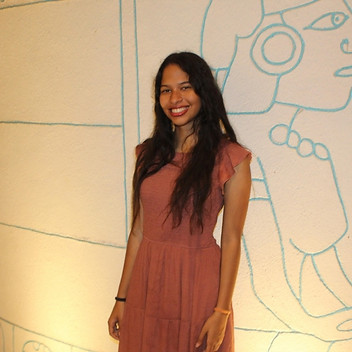
About Sonia
Bio
I’m Sonia Martin, a Dominican student at UWC Costa Rica who’s passionate about ideas that move people. Whether I’m leading a Model UN team or writing late into the night, I’m always chasing questions that don’t have easy answers. I care deeply about justice, expression, and youth empowerment — and I believe change begins when we dare to speak up, even when our voices shake.
I’m drawn to storytelling, education, and the messy beauty of collective action. My interests range from political theory to creative writing, and I’m constantly looking for ways to connect them. What drives me isn’t just fixing what’s broken — it’s reimagining what’s possible
I'm passionate about
I’m a student passionate about the intersections of politics, economics, and human rights. I believe in the power of informed dialogue and policy to shape more equitable societies—locally and globally. From a young age, I’ve been drawn to understanding how systems work, why inequalities persist, and what can be done to challenge them.
I believe young people have both the responsibility and the capacity to lead change—and platforms like TED are vital to amplifying those ideas.
I’m passionate about questioning the systems we inherit, amplifying unheard voices, and building bridges between knowledge and action. Because to me, progress begins with understanding—but it doesn’t end there.
An idea worth spreading
*Youth are not just the leaders of tomorrow — we are catalysts of accountability today.*
Too often, conversations about politics, economics, and human rights treat young people as passive observers or future inheritors. But we are already questioning power, exposing injustice, and reimagining systems from the inside out. My idea is that meaningful change doesn’t have to wait for age, title, or permission. It starts with young people who are unafraid to ask better questions — about who gets left behind, why inequality is normalized, and how policies can serve dignity over profit.
When we give youth the tools to understand economics, the platforms to speak out on injustice, and the belief that their voices matter in political spaces, we’re not just shaping future leaders — we’re building more honest democracies now.
This is not about idealism. It’s about urgency. Because the world doesn’t need more silence. It needs informed, bold, and compassionate young people who see politics not as a game of power, but as a space for responsibility.