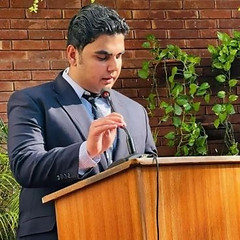
About Abdullah
I am a…
Student
Bio
Abdullah Shahzad is a dynamic individual with a passion for public speaking, poetry, literature, and academic achievements. Driven by a desire to make a meaningful impact, Abdullah strives to create something that transcends his own existence. With a plethora of accomplishments, including winning Pakistan's Youth Nationalist Tournament and the Common Queen's Essay, Abdullah has consistently demonstrated his intellectual prowess and creative flair.
As a humble and honest individual, Abdullah values loyalty, hard work, and personal growth. His unique mindset and relentless drive set him apart, fueling his pursuit of excellence in all endeavors. Currently, Abdullah is working on a research paper for his university portfolio and pursuing a TEDx license for his school, aiming to empower students to share their ideas and experiences on a global platform.
Through his endeavors, Abdullah seeks to inspire and guide others, fostering a sense of community and mutual growth. His commitment to self-improvement and his passion for sharing knowledge and ideas make him a compelling voice in his field.
I'm passionate about
I'm passionate about making education available for everyone because I believe it is the single most powerful tool to break the cycle of poverty, reduce inequality, and empower individuals to lead better, more informed lives. Growing up, I witnessed the stark contrast between those who had access to quality education and those who did not, and it became clear to me that education is not just about books or classrooms—it’s about opportunity, dignity, and hope. In Pakistan, where millions of children are still out of school, especially girls and children from marginalized communities, the need to bridge this gap is urgent. I’m driven by the idea that education should not be a privilege reserved for a few but a fundamental right accessible to all, regardless of gender, location, or economic status. I envision a society where every child, whether in the bustling streets of Karachi or a remote village in Balochistan, can dream without limits and has the means to realize those dreams through education. My passion pushes me to advocate for reforms in our educational system, support community-driven schooling initiatives, and leverage technology to reach areas where traditional schooling isn’t feasible. I believe digital learning platforms, low-cost online resources, and mobile education apps can transform the landscape if implemented thoughtfully and inclusively. But more than infrastructure, I am passionate about creating a culture that values learning—where teachers are respected and supported, where critical thinking is encouraged over rote memorization, and where education is aligned with the needs and aspirations of our society. To me, spreading education is not just about literacy; it's about empowerment, social justice, and national progress. It means equipping people with the knowledge to make informed decisions, to participate meaningfully in democracy, and to innovate solutions for the challenges we face as a nation. My passion for education also extends to adult literacy and vocational training, because I believe it's never too late to learn, and every individual—no matter their age—deserves a second chance to thrive. I am inspired by stories of resilience: children walking miles to attend school, teachers holding classes under trees, and volunteers teaching in slums without pay. These stories fuel my determination to contribute to this cause, whether it’s through policy advocacy, volunteering, or building awareness. I want to be a part of a movement that reimagines education in Pakistan—not as a burden on the state, but as its greatest investment. In a world where divisions grow sharper and challenges more complex, education remains our most reliable bridge toward unity, empathy, and collective growth. That is why I am, and always will be, passionate about making education available for everyone.
An idea worth spreading
In a country like Pakistan, rich in culture and potential but riddled with socio-political challenges, one idea that stands out as truly worth spreading is the integration of critical thinking and civic education at all levels of society. This idea, simple in concept yet powerful in impact, has the potential to reshape the very foundation of our national consciousness. At its core, it is about giving people the tools to think for themselves, question narratives, and actively participate in their own governance and development. Pakistan is a nation of over 240 million people, more than 60% of whom are under the age of 30. This youth bulge is often discussed in economic and demographic terms, but rarely is it examined through the lens of civic readiness or critical capability. Our education system—particularly in public sector schools—has long emphasized rote memorization, discouraging inquiry and creativity. At the same time, civic education is almost nonexistent, leaving generations unfamiliar with their rights, responsibilities, and roles in a democratic society.
This lack of civic consciousness and critical awareness leads to a passive citizenry—one that is often manipulated by misinformation, divisive ideologies, and populist rhetoric. The consequences are clear: political apathy, intolerance, extremism, and social stagnation. This is why the idea of empowering the people of Pakistan through critical thinking and civic education is not just worth spreading—it is essential.How Can This Idea Help the People of Pakistan?
1. Strengthening Democracy
A functional democracy depends on informed and engaged citizens. By introducing civic education early in schools and continuing it through community outreach, we can cultivate a generation that understands the Constitution, respects human rights, and values the rule of law. A critically thinking population is less likely to fall for demagoguery or become complacent in the face of corruption. It encourages voters to choose leaders based on policy and performance, not tribal loyalty or emotional manipulation.
2. Countering Extremism
Pakistan has struggled with extremism for decades. One of the most effective tools against radicalization is critical thinking. When people are taught to ask questions, examine evidence, and think beyond binary frameworks, they become less susceptible to extremist ideologies. Civic education can instill the values of pluralism, coexistence, and peaceful dialogue. Combined, these tools help create a more tolerant, secure, and united society.
3. Improving Governance
Citizens who understand how government works are more likely to hold it accountable. They demand transparency, participate in community-level decision-making, and contribute to public policy debates. This bottom-up pressure can significantly improve governance in Pakistan, pushing for reforms in health, education, infrastructure, and justice.
4. Boosting Economic Growth
A critically thinking workforce is also a more innovative and productive one. When students are taught to solve problems creatively rather than memorize outdated formulas, they become better prepared for modern jobs and entrepreneurship. As Pakistan seeks to grow its tech industry and startup ecosystem, critical thinking becomes an economic imperative.
5. Empowering Marginalized Communities
Critical thinking and civic education are also tools for empowerment. They enable women, religious minorities, and disadvantaged groups to understand their rights, articulate their needs, and advocate for themselves. In a society where many voices are still silenced, this idea can give power to the voiceless.
Making It Happen
To spread this idea effectively, we need a multi-pronged strategy:
Curriculum Reform: Introduce civic education and critical thinking modules in school curriculums across all provinces. These lessons should be age-appropriate, interactive, and culturally relevant.
Teacher Training: Teachers must be trained to facilitate discussions, encourage questions, and move away from rote learning. This requires investment in professional development and pedagogy reform.
Media and Technology: Use digital platforms, social media, and community radio to spread civic knowledge and critical discourse. Gamified learning and storytelling can engage youth in creative ways.
Public Campaigns: Nationwide awareness campaigns—similar to those for polio or census drives—can highlight the importance of civic responsibility and critical engagement.
Partnerships: Collaborate with NGOs, universities, and international partners to design and implement pilot projects that can scale.
Areas of expertise
brain storming, entrepeneurship, leadership skills, management skills, marketing, public speaking
The TED story
My TED story begins with a simple belief: that access to education should not be determined by where you're born, what language you speak, or how much money your family makes. Growing up in Pakistan, I saw firsthand how unequal our educational landscape truly is. I saw children with brilliant minds and big dreams held back not by their abilities, but by their circumstances. And while many saw it as a fact of life—something unchangeable—I couldn't accept that. I couldn’t stand by while potential was wasted simply because opportunity was out of reach.
My journey hasn’t been about standing on big stages or making headlines. It started in small ways—helping a friend with studies, volunteering with local learning initiatives, creating awareness about education inequality, and slowly realizing that my voice, no matter how young or unknown, could carry weight if I used it with purpose. Over time, I began to understand that the power of an idea lies not in how loud it is, but in how deeply it resonates. My idea worth spreading is simple, yet urgent: we must democratize access to education in Pakistan. Not just formal education, but critical thinking, digital literacy, and civic awareness—tools that empower people to shape their futures.
TED, to me, represents the courage to challenge what is, and imagine what could be. My story is not one of perfection—it’s one of progress. It’s about a young person choosing to speak up, even when it’s easier to stay silent. It’s about using every resource—every platform, every conversation, every connection—to shift the narrative from hopelessness to possibility.
Standing on a TEDx stage is not the end of my story—it’s just a chapter. It’s my way of saying to every young person out there who feels like they don’t belong in the rooms where change happens: you do. You absolutely do. If I can be here, so can you. And together, we can build a Pakistan where education is not a privilege, but a promise fulfilled.
Things you might not know
People don’t know I’m good at understanding and uplifting others when they’re going through something difficult. I may not always speak the loudest in the room or share every thought I have, but I’ve always had a strong sense of emotional awareness—the ability to read between the lines, to notice when someone is off, and to be a calm, grounding presence when they need it most. Whether it's a friend dealing with pressure, a teammate struggling silently, or someone just needing to feel heard, I tend to pick up on what’s unsaid and offer support in a way that feels natural and respectful. It’s not something I often talk about or take credit for, but it’s a skill I value deeply because it allows me to connect with people on a more human level, beyond titles or appearances. I think in a world that moves fast and praises noise, being quietly dependable and emotionally present is underrated—but it’s something I’m proud to be good at.