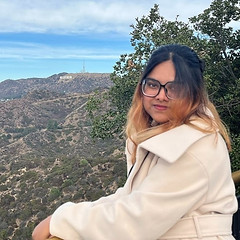
About Rafa Islam
I am a…
Entrepreneur, Event planner, Marketer, Muslim, Project manager, Student, Technologist, World traveler
Bio
Rafa Islam Diba is a marketing strategist, brand builder, and cybersecurity practitioner based in Kuala Lumpur, Malaysia. She is the Founder and Organiser of TEDxAsia Pacific U, an independently organised TED event bringing ideas worth spreading to the Asia Pacific university community.
Rafa's work sits at the intersection of strategy, communication, and technology. She leads brand strategy and marketing at Centered Edge, the executive leadership content platform of Mahat Advisory, where she builds the brand infrastructure for an audience of ASEAN's C-suite. She is also Co-Founder and Director of TAEI Academy: The Advancement of Empathy and Integrity, an institution advancing empathy and integrity as lived practice for adult professionals in Malaysia.
Her background in Computer Science with a specialization in Cybersecurity and Digital Forensics gives her a technical foundation that shapes how she thinks about strategy, communication, and the systems behind both. Six years of freelance digital marketing work across 550+ clients worldwide built the execution instinct underneath all of it.
Rafa believes the most interesting work happens at intersections, between disciplines, between industries, between the person you think you are and the one actually showing up. That conviction runs through everything she builds.
I'm passionate about
Building things that last, brands, institutions, and experiences that have a clear reason to exist and deliver on it. The intersection of marketing and cybersecurity, and what it means to think analytically about creative problems. Ideas that challenge how we see ourselves.
Travel, standing somewhere vast and unfamiliar and letting it quietly rearrange your perspective. Stories that sit in the space between uncertainty and nostalgia. And the question of how education needs to evolve to keep pace with a world that AI is reshaping faster than most institutions are willing to acknowledge.
An idea worth spreading
The gap between who we believe we are and how we actually operate, in our work, our leadership, our daily decisions, is one of the least talked about problems in professional life. We invest heavily in skills, credentials, and strategy. We invest very little in the patterns running underneath all of it. Closing that gap, slowly and deliberately, is where the most important growth actually happens.
Areas of expertise
Brand & Strategy, Cybersecurity, Digital Marketing, Entreprenuership
The TED story
I almost didn't do TEDxAsia Pacific U a second time.
The first edition took everything, months of speaker curation, sponsorship negotiations, logistics, managing a 40-person team, all of it sitting on top of a full academic and professional workload. There were stretches where I genuinely questioned whether the effort was worth it.
Then the event day happened. I stood in the room and looked around at the people who had chosen to spend their time there, genuinely curious, ambitious professionals who cared about ideas and wanted to think harder about the world. There was a particular energy in that room that I hadn't anticipated. The appreciation people expressed afterward wasn't about the production quality. It was about the fact that the event existed at all, that someone had built a space for that kind of thinking in this part of the world.
That was the moment I understood why people keep doing this.
TEDx, for me, is about the conviction that ideas, the right ones, shared well, can actually change how people see things. The 2026 edition of TEDxAsia Pacific U is themed "Room to Breathe." It takes place August 1 in Kuala Lumpur. Building it is still a lot of work. It's still worth it.
Things you might not know
Seeing the structural problem underneath a surface-level one. Most briefs describe a symptom, low engagement, unclear positioning, an event that isn't landing. I tend to be more useful two levels upstream, figuring out why the symptom exists in the first place. People are sometimes surprised that someone who came from digital marketing and cybersecurity thinks the way I do about brand and institutional strategy. I'm also a better listener than people expect, which turns out to be one of the most underrated strategic skills there is.