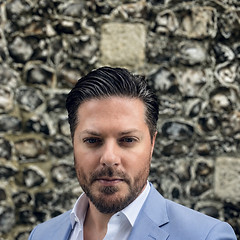
About Leon
I am a…
Writer/Editor
Bio
Leon is a BAFTA Connect member, a popular British children's and teen author, and a multi-award-winning director. His work is driven by a deep fascination with the human story, underpinned by his academic background, which includes an MSc in Psychology from the University of Wolverhampton and a BA (Honours) from Guildford. As an author, Leon channels this focus into two key areas. The first is cinematic adventures for tweens and teens, infusing science fiction, fantasy, and magic with explorations of human psychology. The second is imaginative short stories designed to entertain young minds, spark curiosity, and inspire creativity. This unique fusion of narrative and psychology is built on a highly successful career in directing, which garnered 51 awards and 18 nominations. His creative projects have been featured prominently across major UK broadcasters—including the BBC, ITV, Channel 4, Channel 5, and Sky—broadcast live on BBC Radio, and have reached Number 1 on the Apple Film Chart.
I'm passionate about
Children's and teen literature, creativity and psychology. The human story.
An idea worth spreading
How creativity and curiosity in early years helps reduce mental distress in later life.
Areas of expertise
Applied Psychology, Children's and Teen Author
The TED story
For years, I lived what felt like two separate lives. In one life, I was a director. I was on set, in the edit suite, chasing the perfect shot. It was a life of external validation—of deadlines, broadcasts, and the pursuit of measurable success. I was incredibly fortunate: my work was featured on the BBC, ITV, and Channel 4; it hit Number 1 on the Apple film charts; and it resulted in 51 awards and a BAFTA membership. But in my other life, I was a psychology student, poring over research on human behaviour, cognitive development, and the architecture of the human mind-I fell in love with the human story. The director was obsessed with the what—what the audience sees, what happens next. The psychologist was obsessed with the why—why we make the choices we do, why we feel the way we do. I kept these two worlds apart, convinced they were unrelated. The "real" work of film and the "academic" work of psychology. Then, the two worlds collided. I was researching children's psychology and simultaneously looking at the media and the digital landscape they were consuming. I saw a problem. On one hand, there was incredible, high-octane entertainment. On the other, there were "educational" messages. But the two rarely met with depth and purpose. We were showing children what to do, but we weren't giving them the tools to understand why, and to understand our own journey through life. I realised my two "separate" lives weren't separate at all. They were the same job. As a director and author, you build a world. You guide a character through a crisis. You meticulously craft an emotional and psychological journey for an audience. As a psychologist, you study how we build our inner worlds. How we navigate our own crises. How we author our own emotional and psychological journeys. This led me to my idea: What if we stopped just telling stories and started building them? What if I could use the entire toolkit of a director—cinematic scope, thrilling sci-fi, epic fantasy, a sense of magic—to serve a deeper purpose? What if a story about a space adventure was secretly a blueprint for managing anxiety? What if a magical quest was a dress rehearsal for resilience? This is why I stepped away from directing at the height of my career. It wasn't a retirement; it was a reframing. My work now is to fuse these two worlds. I write cinematic adventures for tweens and teens, but I infuse them with the principles of human psychology. I also write simple stories for younger minds, designed not just to entertain, but to be the first spark for their own curiosity and imagination. The stories we tell our children are not just escapism. They are the psychological blueprints for the adults they will become. We are not just authors and creators; we are the co-directors of their inner worlds.