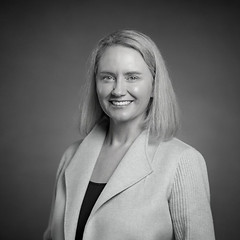
About Sandra
I am a…
Architect, Connector, Environmentalist, Foodie, Idea generator
Bio
I’m drawn to the kinds of problems that don’t come with a playbook, and the decisions people make when navigating them.
My background spans biotech, healthcare, and climate tech, where I’ve worked across large systems and early-stage ventures, from global organizations to 0→1 company building. Across all of it, I kept noticing the same pattern: the hardest problems were more than technical. They were shaped by how people interpret information, make trade-offs, and move forward under uncertainty.
That led me to spend several years focused on decision-making, combining neuroscience, psychology, and operating experience to better understand how leaders and teams actually make decisions, where things break down, and how to improve outcomes over time.
Today, I continue to work across technical and venture environments, helping translate complex ideas into action and supporting teams navigating high-stakes, ambiguous problems.
I'm passionate about
I love to spend time in the space between intention and action, between data and judgment, and between what’s visible and what’s quietly shaping outcomes.
I care deeply about helping founders and teams, especially in technical fields, turn complex ideas into something others can understand, support, and build around. That translation layer is often the difference between a good idea and a thriving company.
I’m also passionate about supporting women building in tech and climate, creating more opportunities, stronger networks, and environments where different perspectives genuinely shape outcomes.
More broadly, I’m drawn to systems, whether human or ecological. How we build within them, from ideas to companies to communities, and how we help people think more clearly and act more intentionally.
I’m happiest in environments that create space to think. In a forest, near the ocean, or deep in conversation with someone who sees the world differently. That’s usually where the most interesting ideas begin.
An idea worth spreading
A beautiful garden can still be an ecological desert.
What we perceive as lush or vibrant doesn’t always translate to ecological value. Many ornamental landscapes offer little to no support for insects, birds, or other wildlife, often without us realizing it.
Small changes in the spaces we shape can have an outsized impact on restoring biodiversity.
Areas of expertise
Big messy problems, Decision-making under uncertainty, Early-stage venture building, Systems thinking in complex environments, Translating complex ideas into action
The TED story
When decisions fail, it is rarely because of a lack of intelligence or information. They fail because we don’t see how we’re making them.
I’m drawn to questions that don’t have clean answers, the ones that sit at the intersection of disciplines, where science meets human behaviour, and where outcomes are shaped as much by people as they are by data.
TED, to me, represents that space.
A place where ideas are explored from multiple angles, where curiosity matters more than certainty, and where different perspectives don’t compete, they build on each other.
My work has been shaped by moving between worlds, biotech, climate tech, startups, and large organizations, and noticing that across all of them, the hardest problems are rarely just technical.
They’re human.
They’re about how we interpret information, how we make trade-offs, how we influence each other, and how we move forward when there isn’t a clear answer.
Having the time and space to explore new ideas, new ways of thinking, and diverse perspectives is essential to expanding our understanding. That’s what I’m most excited about at TED.
Things you might not know
Much of my work sits between disciplines, where something is not yet fully understood or translated into action.
My role is often to help make sense of what is actually going on beneath the surface. This can include what is driving a decision, where assumptions are being made, or why something is not landing the way it should. Often, it involves connecting dots that have not yet been connected or making patterns visible that a team has not fully articulated.
That can look like translating a highly technical idea so it resonates with a broader audience, helping a group step back and see the factors shaping their decisions more clearly, or at times reshaping the idea itself so it can work in the real world.
I also think carefully about how something will be experienced by others. Where people might get stuck, what will connect, and what may be overlooked. That perspective shapes how ideas, conversations, and moments are designed.
The impact is about strengthening the quality of insight, and enabling it to carry through into action.