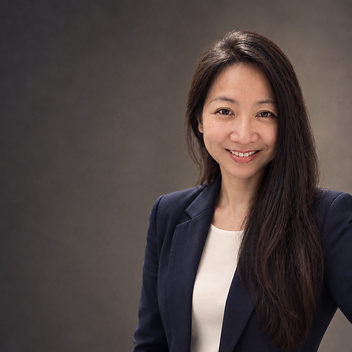
Ming-Chun Hsieh (Samantha)
Co-Founder at Un Laboratory
TEDx Organizer
Lienchiang County (Matsu Island), TaiwanAbout Ming-Chun
I am a…
Architect, Brainstormer, Designer, Educator/Teacher
Bio
I am an educator, cultural producer and island-based spatial practitioner from Taiwan. My work connects spatial thinking, creative producing, applied linguistics, experimental education, heritage interpretation and community-based cultural development.
Since 2009, I have developed long-term work across Kinmen, Taiwan and Matsu, exploring how historical and peripheral spaces can become living environments for learning, dialogue, collaboration and local agency.
I am currently based in Meishi, Matsu, where I work through "Mei Stone Translatio Scheme" to reinterpret former Cold War military heritage through art, heritage education, long-stay learning, co-working, cultural exchange and local participation.
I am also the Licensee and Lead Organizer of TEDxNangan, an independently organized TED event in Matsu.
I'm passionate about
I am passionate about helping people move from visiting a place to belonging to it—and from belonging to taking part in its future.
I care about the relationship between space, learning, language, heritage, mobility and local economies, especially in islands, borderlands, former military sites and historic communities shaped by distance or difficult histories.
I am interested in how long stays, shared work, artist residencies, cultural exchange and public conversation can create reciprocal relationships rather than short-term consumption.
I believe a place is truly regenerated not when it looks newly renovated, but when it can keep nurturing people, relationships, knowledge and the capacity to imagine a future together.
An idea worth spreading
A place is not truly regenerated when a building is restored. It is regenerated when it can keep building people’s capacity to stay, learn, collaborate and shape a future together.
I call this Reproductive Placemaking.
Too often, heritage regeneration is measured by renovation, visitor numbers or short-term consumption. Yet a renovated building can remain socially empty, and an event can attract audiences without creating a lasting relationship.
Reproductive Placemaking asks whether a place can become infrastructure for public capacity: Can it help people understand their history? Can it make room for residents, young people, returnees, creators and newcomers to meet across difference? Can economic activity circulate back into learning, cultural work and public life?
When space, learning, mobility and local economies support one another, a place can gradually become self-renewing—not by copying one model, but by generating its own relationships, knowledge, opportunities and public value from within.
The TED story
My TED story began with a question that followed me across classrooms, historic houses and islands: why do some spaces invite people to participate, while others—even when beautiful or well funded—leave people feeling like visitors?
At the Architectural Association in London, I learned to see space as something that shapes movement, encounter and public life. In Amsterdam, I learned that creative ideas need collaborators, structure, resources and care to enter society. At Newcastle University, I studied how language and identity shape people’s ability to name their experience and participate in a shared world.
In Kinmen, historic houses taught me that heritage matters when people can use it, question it and build new relationships around it. In education, I learned that even the best curriculum cannot sustain change unless people can ask questions, express themselves, collaborate and act.
In Matsu, these threads came together in former military spaces shaped by Cold War borders and collective memory. This is where I began to articulate Reproductive Placemaking: designing places that do not merely host activities, but nurture the people and relationships a community needs to renew itself.
TED matters to me because ideas can invite us to see differently. As the Licensee and Lead Organizer of TEDxNangan, I am bringing that invitation to an island setting through the theme Held Together: how do people remain connected across distance, difference and uncertainty?
Things you might not know
I am often most interested in what does not appear in an architectural drawing or event schedule: who feels able to enter a room, who has time to stay, whose story is considered credible, and where cultural-project income eventually goes.
I work across spatial design, creative production, language education, heritage, community practice and local economic design. This helps me translate between architects, educators, artists, public-sector partners, students, residents, entrepreneurs and international collaborators.
I believe small details can shape public life: an open chair, welcoming language, a shared meal, a clear role for a newcomer, or a way for income to return to learning. These are often the quiet infrastructure through which trust, participation and future capacity are built.