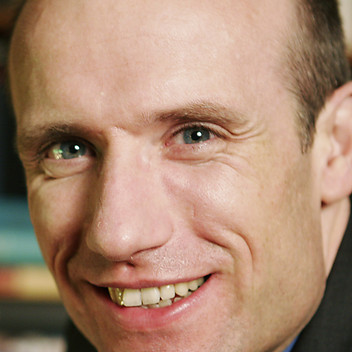
About Stefan
I am a…
Consultant, Educator/Teacher, Writer/Editor
Bio
I am Professor of International Security at the University of Birmingham, England, UK. A political scientist by background, I specialise in the management of contemporary security challenges, especially in the prevention and settlement of ethnic conflicts and in post-conflict reconstruction in deeply divided and war-torn societies. I have extensive expertise in Northern Ireland, the Balkans, Central and Eastern Europe, and the former Soviet Union, and have also worked on a wide range of other conflicts elsewhere, including the Middle East, Africa, and Central, South and Southeast Asia. Bridging the divide between academia and policy-making, I have been involved in various phases of conflict settlement processes, including in Sudan, Moldova, Sri Lanka, and Kosovo. Currently, I am involved in an advisory capacity in the settlement of the status of Kirkuk and the resolution of the conflict over Transnistria in Moldova. I have widely published on security issues for academic and general audiences and regularly contribute to electronic and print media.
I the past, I have held visiting professorships at the Johns Hopkins University School of Advanced International Studies, Bologna Center, the University of Sofia, the University of Bucharest, the University of Skopje, the University of Belgrade, Humboldt University Berlin and Free University Berlin. I am an International Associate of the Liechtenstein Institute on Self-determination at Princeton University. In 2006, I served as Distinguished Visiting Fellow at the UK Defence Academy. I have an 'Erstes Staatsexamen' in German and English from the University of Leipzig, a Masters Degree in Political Theory from the University of Cambridge, and a Ph.D. in Political Science from the London School of Economics and Political Science.
I'm passionate about
conflict prevention and resolution
An idea worth spreading
Throughout the 1990s, ethnic conflicts were what international terrorism is today—one of the top issues on national and international security agendas. Since then, the number of conflicts has steadily decreased (by different counts from above 40 to below 10). This has two main reasons: fewer conflicts have started (we have become smarter about prevention) and more conflicts have been resolved (we know more now about 'how' to resolve them). Also, conflicts last less long now and fewer people get killed in them (we are faster about doing something constructive) and fewer see a resurgence of violence after they have been supposedly resolved (we are better about making solutions 'stick'). For this trend to continue, we need to learn lessons of past successes (and failures) in three areas: leadership, diplomacy, and institutional design.
Areas of expertise
Conflict Management, Conflict Prevention, Conflict Resolution, Diplomacy, Leadership, Security