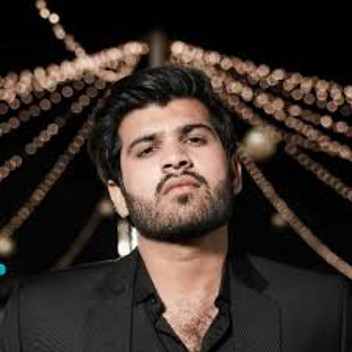
Muhammad Owais Idrees
Lecturer at National University of computer and Emerging Science
TEDx Organizer
Islamabad, PakistanAbout Muhammad Owais
I am a…
Educator/Teacher, Engineer, Foodie, Muslim, Parent, Scientist, Student, Technologist
Bio
I am a lecturer, researcher, and educator at the FAST School of Computing, FAST-NUCES Islamabad, where I work at the intersection of artificial intelligence, education, and real-world problem solving.
My academic interests include Agentic AI, natural language processing, large language models, and the responsible application of AI to complex domains. My research increasingly focuses on how intelligent systems can work with knowledge, reasoning, evidence, and human decision-making—particularly in areas where mistakes have real consequences.
Teaching is a major part of who I am. I enjoy taking rapidly evolving ideas in AI and turning them into concepts, experiments, and systems that students can actually understand and build. I believe universities should not only teach students what already exists, but also give them the confidence to question it, improve it, and create what comes next.
Beyond the classroom and research, I enjoy creating platforms where people with meaningful ideas can connect with an audience. Organizing a TEDx event gave me the opportunity to bring together speakers, students, professionals, volunteers, and ideas from very different backgrounds around one shared purpose: starting conversations that continue long after an event ends.
I'm passionate about
I am passionate about artificial intelligence, education, research, and creating opportunities for people to turn ideas into something real.
I particularly enjoy exploring how AI systems can move beyond simply generating text toward reasoning, using tools, collaborating, learning from feedback, and solving multi-step problems. At the same time, I am equally interested in the harder questions surrounding these systems: How do we evaluate them? When should we trust them? How do we make them accountable? And how can we ensure that technological progress actually improves people's lives?
As a teacher, one of the most rewarding experiences for me is seeing the moment when a student stops thinking, “I need to learn this,” and starts thinking, “I can build something with this.”
I am also passionate about creating communities around ideas—whether through classrooms, research projects, mentoring, technology initiatives, or platforms such as TEDx.
An idea worth spreading
The most important skill in the age of artificial intelligence may not be knowing more—it may be learning how to ask better questions.
We are entering a world where information, code, explanations, designs, and even sophisticated reasoning can increasingly be generated on demand. Access to answers is becoming easier. What remains difficult is deciding which questions deserve to be asked, which assumptions should be challenged, what evidence should be trusted, and what problems are actually worth solving.
I believe education must therefore evolve from transferring information toward developing curiosity, judgment, experimentation, and the courage to challenge existing systems.
AI should not reduce human thinking. Used properly, it should allow us to spend less time on repetitive work and more time thinking deeply about problems that matter.
The future will belong not simply to people who know how to use intelligent machines, but to people who know what they want those machines—and themselves—to accomplish.
Areas of expertise
Agentic AI, AI Agents, AI in Education, Artificial Intelligence, Computer Science Education, Large Language Models, Machine Learning, Multi-Agent Systems, Natural Language Processing, Research and Innovation, Responsible AI
The TED story
My TED story has grown over several years.
I have had the privilege of organizing TEDx at FAST three times—first in 2022, again in 2024, and most recently in 2026. With every edition, my understanding of what TEDx represents has evolved.
What began as the challenge of organizing an event gradually became something much more meaningful to me: creating a platform where ideas, experiences, and people from different backgrounds could come together.
An audience sees the final talks on stage, but behind those few minutes is an entire ecosystem—speakers refining their ideas, students and volunteers working behind the scenes, teams solving countless problems, and people collectively believing that an idea is worth sharing.
Returning to organize TEDx again and again has reinforced something I strongly believe as an educator: meaningful learning and change do not always begin with answers. Sometimes they begin with hearing the right idea at the right moment.
For me, TEDx is therefore not simply an event that I have organized three times. It is a platform I have been fortunate to help build and strengthen within the FAST community.
What makes TED meaningful to me is not only what happens on the stage, but what happens afterward—when an idea stays with someone, starts a conversation, changes a perspective, or inspires them to take action.
Things you might not know
People often know me through teaching, research, or technology, but they may not realize how much I enjoy bringing people and ideas together.
I am good at taking something that initially feels complicated—whether it is a technical concept, a research problem, or an ambitious event—and breaking it into smaller, achievable pieces.
I also enjoy spotting potential in ideas that are still rough. A student may come with an incomplete project, a researcher with an early question, or a speaker with a story that has not yet found its message. I enjoy asking questions, connecting the pieces, and helping turn that starting point into something clearer and stronger.
And perhaps unexpectedly, I genuinely enjoy working behind the scenes. Creating something meaningful often involves dozens of small decisions that nobody eventually notices—and I find that process surprisingly satisfying.