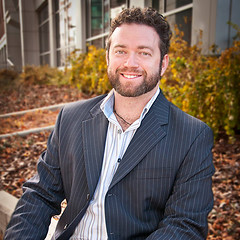
Jason Shepherd
Assistant Professor-Neurobiology at University of Utah
TEDx Organizer
Salt Lake City, Utah, United StatesAbout Jason
I am a…
Brainstormer, Educator/Teacher, Idea generator, Photographer, Scientist, World traveler
Bio
Dr. Jason Shepherd is currently an Assistant Professor of Neurobiology and Anatomy at the University of Utah School of Medicine. He joined the U in 2013 after obtaining postdoctoral training at the Massachusetts Institute of Technology and his Ph.D. at the Johns Hopkins School of Medicine. Dr. Shepherd’s research has garnered recognition worldwide; he is the recipient of the 2010 Gruber International Research Award in Neuroscience from the Society of Neuroscience and the International Society for Neurochemistry Young Investigator Award. He is also a recipient of a K99/R00 pathway to independence award from the National Institutes of Health and a National Academy of Sciences Kavli Fellow.
Brains have an amazing ability to learn and store information for long periods - in some cases, a lifetime. A major challenge in neuroscience is to understand how neuronal networks are sculpted by experience and how proteins/genes contribute to circuit modification. The goal of Dr. Shepherd's research is to understand how the brain stores information, from the molecular level through in vivo neuronal networks and how these processes go awry in neurological disorders. The Shepherd lab's recent work has been highlighted in the press, including the Atlantic, Newsweek and the New York Times.
Born in South Africa and raised in New Zealand, Dr. Shepherd enjoys the outdoors and Utah’s beautiful landscapes, which he tries to capture through a lens (https://www.instagram.com/blindsight_photography/).
I'm passionate about
Understanding how brains function at the nitty gritty level of proteins and genes. Human consciousness to the social behaviour of insects, brains render reality through these basic building blocks.
An idea worth spreading
The idea that the brain is like a muscle, the more you use it the better it becomes, is pretty accurate. It used to be thought that once you're an adult your brain is set in stone, but this is false. My area of research focuses on how brain store and process information. Brains have evolved to process and store information from the outside world and do so through synaptic connections between interconnected networks of cells. The age-old question of Nature vs. Nurture has been replaced with questions of HOW experience modifies and shapes the genetic hard wiring of the brain. What are the processes that transduce information from the outside world into long-term changes in the brain? My lab is interested in elucidating the fundamental cellular and molecular processes that underlie memory formation. In addition, the lab is interested in how these processes go awry in neurological diseases such as autism and Alzheimer’s disease.
Areas of expertise
Brain and Learning, Medical research, Molecular and Cell Biology, Neurodevelopment, Neurologic Disease, Neuroscience
The TED story
A second passion of mine is Science outreach and education, as such TED has always been on my radar since it became popular. The internet has afforded unprecedented access to information, much of which is plain out wrong. TED allows people from all corners of the world to access information from experts in almost every domain of human knowledge. It's amazing! I was involved in one of the first TEDx events in Boston at Boston University and am excited to help grow TEDxSaltLakeCity in the coming years.
Things you might not know
playing the flute. I've been playing since I was a little kid! I'm also an excellent LEGO builder.