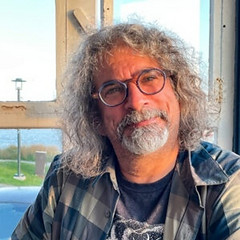
About Ermenegildo
I am a…
Change Agent, Connector, Entrepreneur, Idea generator, Social entrepreneur
Bio
Ermenegildo Conte is a community entrepreneur and experience designer focused on building ecosystems where ideas can thrive and generate real-world impact.
As the organizer of TEDxLaval since 2016, he has played a key role in shaping conversations that bring together thinkers, creators, and changemakers. His work goes beyond the stage, aiming to create meaningful connections between ideas and the communities they are meant to serve.
He is driven by a deep belief that ideas alone are not enough — what matters is how they are experienced, integrated, and translated into action. This perspective has led him to develop initiatives that emphasize collaboration, engagement, and transformation at both individual and collective levels.
His ongoing work explores how communities, storytelling, and emerging technologies can be combined to reimagine how ideas are shared and how they influence behavior, culture, and decision-making.
Ermenegildo’s approach positions him at the intersection of ideas, human experience, and community impact, with a focus on creating environments where meaningful change can take root.
He believes the future of ideas lies not only in their content, but in the systems that allow them to grow, connect, and endure.
I'm passionate about
I am deeply passionate about building communities where people feel seen, valued, and able to grow in meaningful ways.
What drives me is the idea that human potential is not limited by talent or knowledge, but often by the environments in which people evolve. Too often, individuals navigate systems where expectations are unclear, progress is invisible, and recognition is inconsistent. Over time, this creates uncertainty, disengagement, and invisible forms of stress that impact both performance and well-being.
I am fascinated by how small shifts in the way we design experiences can have a profound impact on individuals and communities. When people are given clarity, when their efforts are acknowledged in meaningful ways, and when they can clearly see their own progression, something changes. They reconnect with purpose. They engage more deeply. They grow with intention.
This has led me to explore how communities can be designed not only as spaces for sharing ideas, but as environments that actively support transformation. I am particularly interested in how recognition systems, storytelling, and shared experiences can be combined to create conditions where people feel aligned, supported, and motivated to evolve.
Another aspect of my passion lies in bridging the gap between ideas and lived experience. I believe that ideas only reach their full potential when they move beyond understanding and become something people can feel, integrate, and apply in their lives. This requires more than communication — it requires thoughtful design of the experience around the idea.
I am also deeply interested in the connection between structure and mental well-being. Many of the challenges we associate with stress or psychosocial risks are not always the result of extreme situations, but rather the accumulation of small misalignments: unclear expectations, lack of feedback, absence of meaningful recognition. By rethinking how we structure environments, we have the opportunity to reduce these invisible pressures and create healthier, more sustainable communities.
Ultimately, what I care about is helping create spaces where people don’t just consume ideas, but where they can see themselves evolving through them.
Because when people can recognize their own progress, they don’t just change their behavior — they change their relationship with growth itself.
An idea worth spreading
We often try to solve human challenges with information, tools, and systems.
But what if the real issue isn’t a lack of knowledge…
but a lack of meaningful recognition?
In many environments — workplaces, communities, even personal lives — people are expected to grow, adapt, and perform. Yet the signals that validate their progress, their efforts, and their evolution are often unclear, inconsistent, or absent.
This gap creates more than frustration. It creates invisible tension.
It affects motivation, engagement, and ultimately mental health.
When individuals cannot clearly see where they stand, what they are contributing, or how they are evolving, uncertainty takes over. And uncertainty, over time, becomes stress.
What we call psychosocial risks are not always caused by extreme situations. They often emerge from subtle, everyday misalignments between effort, meaning, and recognition.
So the question becomes:
What if we could make progress visible?
What if growth was not something people had to guess…
but something they could see, understand, and build upon?
This is where the concept of meaningful recognition systems becomes powerful.
Not recognition as reward.
Not recognition as status.
But recognition as feedback for growth.
When designed thoughtfully, systems like digital badges — or any structured form of acknowledgment — can act as mirrors. They reflect not only what someone has achieved, but how they are evolving.
They provide clarity.
They reduce ambiguity.
They help individuals reconnect with a sense of direction and purpose.
And more importantly, they can transform how communities function.
Instead of environments driven by pressure and comparison, we can design spaces driven by progression, contribution, and shared meaning.
In such systems, people are not only evaluated.
They are seen.
They are not only measured.
They are understood.
This shift may seem subtle, but its impact is profound.
Because when individuals feel seen in their progression,
they are more likely to stay engaged, to collaborate, and to grow.
And when communities are built around visible, meaningful progress,
they become more resilient, more human, and more sustainable.
The future of mental health in our societies may not rely solely on more resources or interventions.
It may depend on how well we design the systems that help people understand where they are, where they’re going…
and why it matters.
What if the next step forward is not just to support people when they struggle…
…but to design environments where they can clearly see themselves evolving?
Because sometimes,
the most powerful thing we can offer someone
is not an answer—
but a way to recognize their own progress.
The TED story
My journey with TED began with curiosity, but quickly became a commitment.
I was drawn to the power of ideas — not just as content, but as catalysts for change. Watching TED Talks, I realized how a single idea, when clearly expressed and deeply felt, could shift perspectives and influence lives.
In 2016, I decided to move from observer to contributor and became the organizer of TEDxLaval.
What I discovered was that TEDx is not simply about organizing an event. It is about creating the conditions for ideas to emerge, evolve, and connect with people in meaningful ways.
Over time, my focus shifted from the stage itself to everything surrounding it — the journey of the speaker, the clarity of the message, and the experience of the audience.
I began to see TEDx as an ecosystem where ideas are not only shared, but activated.
This led me to explore new formats and approaches that extend beyond the traditional stage, with the goal of making ideas more accessible, more engaging, and more impactful.
Throughout this journey, one thing became clear to me: ideas do not create change on their own. They need the right environment, the right structure, and the right connection to people in order to truly resonate.
My role has evolved into helping shape these conditions.
Today, I continue to explore how ideas can be experienced, not just understood — and how communities can be designed to support this transformation.
TED has influenced not only what I do, but how I see the world.
It has become a framework through which I build, connect, and contribute.
And I remain committed to expanding the reach and impact of ideas worth sharing.
Things you might not know
People don’t always realize that I am particularly skilled at seeing what is not immediately visible.
I have a strong ability to observe how people evolve within a system — not only through what they say or do, but through subtle signals: hesitation, disengagement, misalignment, or on the contrary, moments of clarity and momentum. These nuances often go unnoticed, yet they reveal where growth is happening, where friction exists, and where change is possible.
I am also very good at identifying gaps that others tend to normalize. Whether in a team, a community, or a structured environment, I can quickly sense when expectations are unclear, when recognition is missing, or when people are navigating without a clear sense of progression. What appears functional on the surface can, in reality, generate invisible stress or limit potential.
Another strength I don’t often highlight is my ability to translate complexity into something people can actually experience. I enjoy taking abstract ideas — whether related to human behavior, collaboration, or personal development — and shaping them into structures, frameworks, or experiences that people can understand, feel, and apply in their lives.
I am naturally drawn to patterns. I connect ideas across disciplines, contexts, and experiences, often seeing relationships that are not obvious at first glance. This allows me to design environments where different elements — people, ideas, systems — align in a way that creates coherence and momentum.
I also have a strong sensitivity to the human side of systems. I tend to notice how structure impacts emotion, how clarity affects confidence, and how small design choices can influence engagement, stress, and overall well-being.
Perhaps most importantly, I am good at helping people recognize their own progression — even when they don’t see it themselves. By making growth more visible and meaningful, I help individuals reconnect with a sense of direction, purpose, and possibility.
These abilities are often subtle, and not always easy to quantify. But over time, I have come to understand that they play a key role in how ideas take shape, how communities evolve, and how meaningful change can occur.