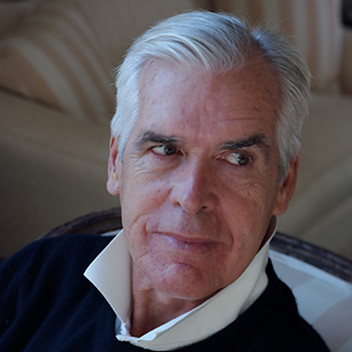
About Philip
I am a…
Activist, Business adviser, Lawyer, Photographer, Policy maker, Social entrepreneur, Writer/Editor
Bio
Philip Howard's new book, The Rule of Nobody (W.W.Norton), will be published in April 2014. The book argues that American government is paralyzed by its structure, and cannot be fixed without radical simplification. The book also suggests a "Bill of Responsibilities" be added to the Constitution, clarifying authority and reinserting citizen oversight. Fareed Zakaria calls it "an utterly compelling and persuasive book that, if followed, could change the way America works." Philip's 2010 TED talk has opened countless doors for his reform initiatives. Philip , the son of a minister in eastern Kentucky, has a long record as a prominent civic leader and public policy activist. He got his start working summers at the Oak Ridge National Laboratory for Nobel Prize-winner Eugene Wigner and has been active in public affairs his entire adult life. He has advised national political leaders on legal and regulatory reform for fifteen years, and is former Vice-Chairman of the law firm Covington & Burling, LLP. He is author of three prior books; The Death of Common Sense (1995), The Collapse of the Common Good (2002) and Life Without Lawyers; Restoring Responsibility in America (2010), and wrote the introduction to Vice-President Al Gore's book Common Sense Government. . He is also a periodic contributor to The Wall Street Journal. the New York Times and The Washington Post, and recently started blogging on the Huffington Post as "Howard's Daily." As a civic leader in NYC, Howard chaired the committee which organized the "Tribute in Light" memorial to victims at the World Trade Center.
I'm passionate about
remaking our democracy The accretion of bureaucracy is paralyzing both society and government.
An idea worth spreading
Sunset government programs so they can be realigned with current priorities. Every life choice has unintended consequences. Government programs are no exception. Unintended consequences are the rule, not the exception. There's not a program that isn't partially broken; the only question is whether it's 25% broken or 90% broken. The more precise the law, the sooner it becomes obsolete. Compare the Constitution (10 pages) with the Volcker Rule (950 pages). Political feasibility is not the standard; nothing today is politically feasible. But sooner rather than later everything will be feasible. The status quo is unsustainable; accumulated deficits are growing as government grinds loudly to a halt.
The TED story
I was happy to be part of the prize several years ago, and honored to speak at TED2010. I have lots of TED friends and love being with them
People don't know I'm good at
old-fashioned photography (8x10 view camera), musical theatre (former Whiffenpoof), road biking, and city planning (I used to teach at Columbia)