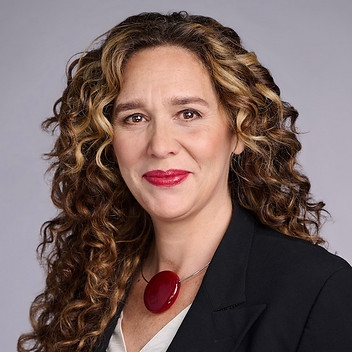
About Tzeporah
Bio
Tzeporah Berman BA, MES, LLD (honoris causa) has been designing environmental campaigns and working on environmental policy in Canada and beyond for over thirty years.
She is the Founder and Steering Committee Chair of the Fossil Fuel Non-ProliferationTreaty Initiative, a global network of nation states supported by civil society developing a companion to the Paris Agreement that will ensure international cooperation for a fair phase out of fossil fuel production in line with Paris goals and just transition.
She is also the Co-founder and International Program Director at Stand.earth (previously ForestEthics) where she works to help develop strategy for the Amazon, shipping, fashion, pipeline, LNG and old growth forests campaigns as well as the SAFE cities initiative.
She serves as a member of the Advisory Group for the Carbon Majors Project of InfluenceMap, an independent think tank producing date-driven analysis on how business and finance are impacting the climate crisis.
In 2025, she was selected as a finalist for the WIN WIN Gothenburg Sustainability Award for Trailblazing Leadership, the equivalent of the Nobel Prize for environmental leadership.
In 2024, she was named among TIME’s 100 Most Influential Climate Leaders and received Climate Scorecard Canada’s Climate Leader Award.
In 2021 she was arrested for blockading the logging of thousand year olds trees in Fairy Creek on Vancouver Island and she gave a widely-viewed TED Talk presenting the case for a global treaty to phase out fossil fuels.
In 2019, she was awarded the Climate Breakthrough Award of $2 million USD to develop a bold new global climate strategy.
In 2016, Tzeporah was appointed by the Premier of Alberta to Co-chair the Oil Sands Advisory Working Group tasked with creating policy recommendations on how to implement the climate plan, address cumulative impacts of the oil sands and recommendations on meeting Canada’s climate targets between 2030 and 2050. She was also listed as one of the 35 Most Influential Women in British Columbia by BC Business Magazine and awarded the Brescia University College Activist Award.
For six years, she was the Executive Director of the Tarsands Network tasked with developing strategies for pipeline and tarsands campaigns and related grant dockets for philanthropic foundations.
In 2015, she was appointed to the British Columbia Government Climate Leadership Team tasked to make recommendations on climate policy to meet BC legislated climate targets. That year she was also awarded the YWCA Women of Distinction Award in British Columbia.
She is the Canadian Ambassador for World Future Council Global 100%RE, and in 2014 she was awarded Planet in Focus' 2014 Canada Eco-Hero.
In 2013, she was awarded an Honorary Doctorate from the University of British Columbia, Corporate Knights named her one of the Top Women in Sustainability (Canada), and she was nominated for Climate Woman of the Year by Responding to Climate Change.
In 2011, Tzeporah’s first book, This Crazy Time: Living Our Environmental Challenge was published by Knopf Canada.
From 2010 to 2012, Tzeporah was the co-director of Greenpeace International's Global Climate Program, where she oversaw campaigns to stop oil drilling north of the sea ice line in Greenland, a campaign against Volkswagen to get support for vehicle efficiency laws, and a successful campaign to get Facebook to become the first IT company in the world to have a procurement policy for renewable energy.
In 2009, Tzeporah was appointed by the Premier of British Columbia to the Green Energy Task Force to design recommendations for the development of renewable energy in the region.
In 2007, Tzeporah was one of the experts in Leonardo Di Caprio's environmental documentary 11th Hour, was one of six Canadian nominees for the Schwab Social Entrepreneur of the Year Award, and was profiled as one of 50 Visionaries Changing the World in Utne Reader and as "Canada's Queen of Green" in the cover story for Readers Digest. She was honoured by inclusion into the BC Royal Museum permanent exhibit of one of 150 people who have changed the face of British Columbia.
Tzeporah is one of the primary negotiators and architects of the Great Bear Rainforest campaign in Canada that led to the permanent protection of 6 million hectares of old growth rainforest in 2006, an ecosystem based management forestry program, and procurement policies of major buyers of wood and paper products that changed the way that paper is made in North America and resulted in the first policies of major corporations to not buy old growth wood.
Together her work on the Great Bear Rainforest campaign and the Canadian Boreal Forest Initiative contributed to the protection of over 40 million hectares of old-growth forests.
Tzeporah has published and speaks widely on climate policy, the climate emergency, Net Zero strategies, the oil and gas industry, and the need for a Fossil Fuel Treaty.
I'm passionate about
Climate leadership and specifically supporting leaders who take risks and refuse to look away from the emergency we are in.
Supporting indigenous leaders and grassroots communities on the frontlines of fighting deadly fossil fuel development.
Driving campaigns that not only win but cause a ripple effect within a whole sector with the team at Stand.Earth
My two very different boy/men who are now over 6 ft and from whom I learn everyday. One is an activist with XR and 350, a surfer, rock climber and sailer who is studying political science at University, the other is a video gamer who is studying at the Sauder School of Business and doesn't like being outdoors that much.
Also passionate about cooking and specifically baking. My apple pie has in fact won contests.
Love kayaking, hiking and and the coast of British Columbia.
An idea worth spreading
Momentum is building globally for a phase out of fossil fuels. To make the transition away from coal, oil and gas fast and fair, the world needs a Fossil Fuel Non-Proliferation Treaty. Hashtag: #FossilFuelTreaty | Primary link: fossilfueltreaty.org
2021 has marked the beginning of the end of the fossil fuel era.
First the International Energy Agency made clear that the expansion of any new coal, oil or gas production is incompatible with the Paris Agreement’s 1.5°C target.
Then, the most recent IPCC report was heralded as a ”death knell” for the fossil fuel industry by UN Secretary-General António Guterres.
The end of coal, oil and gas is now inevitable. The only question is whether the transition will be chaotic and unmanaged, with companies focussed on their own profit, or orderly and managed by governments working together to facilitate an equitable transition that ensures no worker, community or country is left behind.
Now, 196 countries are set to gather in Glasgow for the COP26 climate summit and the ultimate test for real climate action must be whether governments address the primary cause of the climate crisis: fossil fuels. While some governments – such as Costa Rica, Denmark, Greenland, Ireland, Portugal and Spain – have begun to ban the expansion of new coal, oil or gas within their own territories, world leaders have failed to address fossil fuels on the international stage.
The unfortunate reality is that fossil fuels are the elephant in the room of international climate negotiations and most national climate plans. While coal, oil and gas are responsible for 86% of all carbon dioxide emissions in the past decade, the Paris Agreement does not even mention fossil fuels once. Not only do most ‘net zero’ plans fail to address fossil fuels, they often rely on false or unproven solutions to allow for the continued and expanded use of coal, oil and gas.
Despite the evidence, many governments continue with business as usual – allowing for the expansion of fossil fuel production at levels that would result in 120% more emissions than what is compatible with a 1.5ºC pathway.
Governments must therefore finally begin to treat the climate crisis with the urgency it demands, listen to the science and answer over a decade of demands from frontline communities, especially from the Global South and Indigenous People’s, calling for a just transition away from fossil fuels.
The good news is that a rapid global exit from coal, oil and gas is possible. The world has more than enough renewable energy resources to meet the energy demands of every person on earth.
However, a global transition away from fossil fuels will require unprecedented levels of international cooperation. This is why momentum is building globally behind the proposal for a Fossil Fuel Non-Proliferation Treaty, a framework that can complement the Paris Agreement by facilitating an equitable phase out of coal, oil and gas in line with a 1.5ºC target, with climate justice and the interests of developing countries at its heart.
Just as the world has used international treaties to defuse the threats posed by nuclear weapons, ban deadly landmines, or end the use of ozone-depleting chemicals, today the world needs a Fossil Fuel Non-Proliferation Treaty to equitably transition away from coal, oil and gas production.
In the run-up to COP26, the call for a Fossil Fuel Non-Proliferation Treaty has gained widespread support. In April 2021, 101 Nobel Laureates, including His Holiness the 14th Dalai Lama, called on world leaders to stop fossil fuel expansion. More than 1,800 scientists, over 700 civil society organisations and major cities including Los Angeles, Vancouver, Toronto, Barcelona, and Sydney have endorsed the proposal. As we approach Glasgow, Parliamentarians worldwide are now mobilising behind the call for a treaty.
The end of the fossil fuel era is near, now we need governments to work together to ensure the transition away from coal, oil and gas is fast and fair. Join us www.fossilfueltreaty.org
Areas of expertise
Amazon, Carbon capture and storage, citizen engagement, climate advocacy, climate communications, climate policy, conservation, forestry, movement building, net zero, oil and gas
People don't know I'm good at
Baking. Very good at baking.