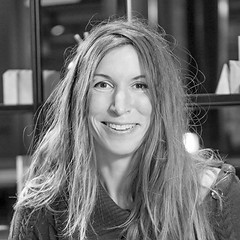
Helen Taylor
Research Fellow at University of Strathclyde & University of Cambridge
TED Attendee
Cambridge, United KingdomAbout Helen
I am a…
Change Agent, Connector, Explorer, Inventor, Scientist
Bio
**Please come and speak to me if you have dyslexia and work in an area related to sustainability.**
Originator of new scientific theory, The Evolution of Complementary Cognition - outlining evidence that our species survived past climate change through evolving to specialise in different but complementary ways of thinking that work together as a complex adaptive system - a kind of collective intelligence. My research proposes that this lays at the heart of our success, enabling us to co-create cultural, including behavioural and technological adaptations that are more than the sum of our parts.
Evolving in this way made us both hyper-adaptive but also vulnerable - to adapt all ways of thinking must work in collaboration. I believe that a lack of understanding of this adaptive system may lay at the foundation of many problems that we see today. However, by understanding it and designing organisations and institutions around this we can adapt much faster and more effectively towards a sustainable future.
LINKS:
DYSLEXIA - SPECIALISATION IN GLOBAL EXPLORATORY LEARNING: https://www.cam.ac.uk/research/news/developmental-dyslexia-essential-to-human-adaptive-success-study-argues
EVOLUTIONARY THEORY:
https://www.arch.cam.ac.uk/news/greater-sum-our-parts-evolution-collective-intelligence
CURRENT RESEARCH:
https://ces-transformationfund.org/our-projects/exploratory-learning-in-human-adaptation/
I'm passionate about
Reframing dyslexia-associated cognition, collaboration, understanding the world through the lens of complex adaptive systems, sustainability.
An idea worth spreading
The form of cognition that we're diagnosing as dyslexia has been misunderstood due to the focus on reading and writing difficulty. My research shows it’s a specialisation in global level exploratory learning - an enhanced ability to understand complexity. It’s part of a collective brain that allows our species to adapt. Interfere with that system of collective intelligence and our species cannot adapt properly. Changing how we design systems from education to academia to business is therefore fundamental to promoting sustainability.
For most of our existence, we lived in highly collaborative hunter gatherer groups so we could self-organise more effectively, but for us to adapt properly at scale, it is important to be aware of this system and to design our education systems, organisations and institutions around it.
Areas of expertise
Cultural Evolution, Dyslexia, Entrepreneurship, Human Adaptation, Organisational adaptiveness, Team buidling
Things you might not know
I love Iran and I'm learning Persian.