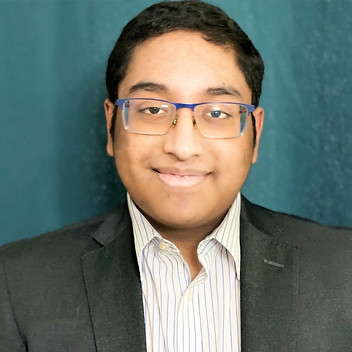
About Isaias
I am a…
Artist, Engineer, Idea generator, Job-seeker, Scientist, Single, Student, Technologist, Writer/Editor
Bio
Isaias Thomas Biju is an award-winning Computer Science student at Heriot-Watt University, Dubai, recognized for his academic excellence, leadership, and ability to bridge technology with real-world impact. Maintaining a consistent record of top grades (equivalent to a 4.0 GPA), he is a two-time recipient of the Deputy Principal’s Award and the ICL Prize for best-performing student in his degree during his first year. His academic interests span artificial intelligence, geospatial systems, human-computer interaction, and scalable software systems, with a strong emphasis on applying technical knowledge to meaningful, real-world challenges.
Beyond academics, Isaias has demonstrated initiative and leadership in building communities and driving student engagement. He is the Founder and Chair of the British Computer Society Student Chapter at Heriot-Watt University Dubai—the first across all Heriot-Watt global campuses, the second in the UAE, and the fifth internationally to establish this initiative. Under his leadership, the chapter has been structured as a professional bridge between academia and industry, with a focus on workshops, technical talks, and collaborative events that equip students with practical, career-relevant skills.
He also serves as Head of UI/UX Design for the Google Developer Group On Campus, where he conducts hands-on workshops and contributes to fostering a design-oriented, innovation-driven culture among students. His ability to simplify complex concepts and engage diverse audiences is further reflected in his experience as a speaker and facilitator. He delivered a TEDx talk in June 2025 titled “Vital Intelligence” at the University of Birmingham, Dubai, exploring the intersection of robotics and human intelligence (https://www.youtube.com/watch?v=qUyBOhQDCNY), and was selected as the only student speaker at the Sharjah Entrepreneurship Festival 2026 (https://sharjahef.com/speakers/isaias-thomas-biju), where he led a workshop on leveraging geolocation data for business decision-making using QGIS.
Isaias has also made contributions to research and academia. As a recipient of the MACS Athena SWAN Undergraduate Bursary, he conducted research on gender bias in human-computer interaction, culminating in a conference presentation. He has presented work on accessibility challenges in video game systems and continues to explore inclusive, user-centred design principles in emerging technologies. His research interests are driven by a broader goal of developing systems that are not only efficient and intelligent, but also equitable and accessible.
Professionally, Isaias has gained experience through roles that combine analytical thinking, communication, and execution. As a Student Services Intern at Heriot-Watt University, he significantly improved survey engagement metrics through data-driven outreach strategies. He has also contributed as a Student Academic Reviewer, evaluating curriculum quality and student experience to inform institutional improvements. Earlier in his journey, he worked as a content creator for an educational platform, developing high-quality academic resources.
Driven by curiosity, adaptability, and a long-term ambition to pursue advanced research, Isaias is deeply interested in the intersection of technology, society, and innovation. Whether through building student communities, delivering technical workshops, or contributing to research, he consistently seeks to create impact that extends beyond individual achievement—focusing instead on enabling others, solving meaningful problems, and shaping the future of technology in a globally connected world.
I'm passionate about
At the core, I am passionate about building systems that matter—systems that are not only technically sound, but meaningful in the way they interact with people, environments, and decisions. For me, technology is not just about writing code or optimizing performance; it is about understanding the broader context in which that code exists and the real-world impact it creates.
I am particularly drawn to the intersection of artificial intelligence, geospatial systems, and user-centered design. What excites me is not any one of these fields in isolation, but how they come together. The ability to take raw data—whether spatial, behavioural, or contextual—and transform it into insights that can influence decisions fascinates me. Whether it is using geolocation data to improve business strategy, designing interfaces that adapt to user needs, or exploring how AI systems can be made more inclusive, I am motivated by the idea of turning complexity into clarity.
At the same time, I am deeply interested in the human side of technology. My work and research in areas like human-computer interaction and gender bias have shaped how I think about systems. I have come to realise that technology is never neutral—it reflects the assumptions of those who build it. This understanding drives me to think critically about the systems I design: Who is this for? Who might it exclude? How can it be made more accessible, fair, and adaptable? For me, building technology is not just an engineering challenge; it is a responsibility.
Beyond building systems, I am passionate about building communities. There is something incredibly powerful about bringing people together around a shared interest in technology and creating an environment where they can learn, experiment, and grow. Founding and leading a student chapter and conducting workshops has shown me that impact is not just measured by what you build individually, but by how many others you enable. I enjoy breaking down complex ideas into something accessible and watching others gain confidence in areas they once found intimidating.
I am also passionate about communication—about taking ideas that are technical and often abstract, and making them understandable, engaging, and relevant. Whether through public speaking, workshops, or discussions, I see communication as a bridge between knowledge and impact. An idea, no matter how powerful, only becomes meaningful when it is shared and understood.
What drives me most is the idea of continuous growth. I am passionate about learning—not just within the boundaries of a curriculum, but beyond it. I enjoy stepping into unfamiliar domains, starting from zero, and building understanding from the ground up. In a field that evolves as rapidly as technology, I see adaptability and curiosity as essential, and I actively seek opportunities that challenge me to grow.
Ultimately, my passion lies in creating impact at multiple levels: through the systems I build, the ideas I communicate, and the communities I help shape. I am driven by the belief that technology, when approached thoughtfully, has the power not only to solve problems, but to create opportunities, reduce inequalities, and shape a more informed and connected world.
An idea worth spreading
My generation grew up not just consuming technology, but questioning it. We are builders, thinkers, and challengers—standing at the intersection of code, creativity, and consequence. We are not defined by a single discipline, but by our ability to connect them: computer science with design, data with decisions, intelligence with intention.
We are students, yes—but not passive learners. We are active participants in shaping the systems that will define the future. In classrooms, we study algorithms and architectures; outside them, we test their limits against real-world problems—whether that means understanding how geospatial data can influence business decisions, exploring how artificial intelligence can be made more inclusive, or building communities that bring people together to learn, create, and lead.
We are also aware of the weight of what we are building. Technology is no longer neutral. Every interface we design, every model we train, every system we deploy carries assumptions—about who it serves, who it excludes, and what it optimises for. And so, we are not just engineers of systems; we are stewards of impact. We ask not only “Can we build this?” but “Should we?” and more importantly, “Who benefits when we do?”
We are leaders—not because we hold titles, but because we take initiative. We build platforms where none exist. We create spaces for collaboration, for mentorship, for growth. We bring together people from different backgrounds and skill sets, because we understand that the most meaningful innovation does not happen in isolation—it happens at the intersection of perspectives. Leadership, to us, is not authority; it is responsibility.
We are communicators. In a world filled with complexity, we recognise the power of clarity. We take ideas that are technical, abstract, and often inaccessible, and translate them into something people can understand, question, and use. Whether through a talk, a workshop, or a conversation, we believe that knowledge only becomes powerful when it is shared.
We are resilient. We learn quickly, adapt constantly, and are unafraid of starting from zero. We do not wait to be experts before we begin—we begin, and become experts along the way. In a world that is evolving faster than any curriculum, our greatest strength is not what we already know, but how quickly we can learn what we don’t.
We are global in our thinking and local in our impact. We understand that the challenges we face—whether in sustainability, equity, healthcare, or infrastructure—are interconnected. Yet we also recognise that solutions must be grounded in context. We build with awareness of where we are, who we are building for, and how those systems will be used.
And above all, we are driven by purpose.
We do not pursue technology for its own sake. We pursue it as a means—to solve problems, to create opportunities, to build systems that are not only efficient, but fair; not only intelligent, but human.
So, who are we?
We are the generation that will not inherit the future quietly.
We will design it, question it, and take responsibility for it.
This is an idea worth spreading.
Areas of expertise
Communication, Computer Science, Design, Leadership, Public Speaking, Writing Skills
The TED story
My relationship with TEDx has been something I’ve been building toward long before I ever stepped onto a stage.
During my school years, I was deeply inspired by platforms like TED-Ed and TEDx. I was fascinated by how ideas—when communicated well—could shape perspectives and spark meaningful conversations. I even wanted to start a TED-Ed Club in school, a space where students could explore ideas and develop their voice. That opportunity never materialised at the time, but the intent stayed with me.
That intention eventually found its expression at university. I was selected as an external speaker for a TEDx event at the University of Birmingham Dubai, delivering my talk titled “Vital Intelligence.” The selection process itself was highly competitive—out of 65 applicants, I was shortlisted to 25, and then further selected among just 17 final speakers. Notably, I was the only speaker representing Heriot-Watt University, Dubai Campus.
The talk explored the intersection of robotics and human intelligence, but more importantly, it reflected my belief that technology must be understood not just in terms of capability, but in terms of impact. Standing on that stage was meaningful not simply because of the platform, but because it represented a moment where a long-standing aspiration—to share ideas that matter—became real.
Looking back, not being able to start a TED-Ed Club in school no longer feels like a missed opportunity. It feels like a delayed beginning. It shaped how I approach opportunities today: when a platform doesn’t exist, I am more inclined to create it; when a voice is needed, I am more willing to step forward.
My involvement with TEDx is not just about public speaking—it reflects a deeper commitment to ideas, to clarity, and to the responsibility of communicating complex concepts in a way that resonates. It is something I intend to continue building on, not just as a speaker, but as someone who creates spaces where ideas can be explored and shared.
Things you might not know
People don’t usually know that I am good at being decisive, straightforward, and clear—especially in situations where others may hesitate.
On the surface, I might not come across as someone who dominates conversations or constantly speaks up. I tend to observe first, understand the context, and process information before I respond. Because of this, people sometimes assume that I am reserved or still forming an opinion. What they often don’t realise is that when I do speak, it is usually with clarity, intent, and conviction.
One of my strengths is the ability to make decisions without overcomplicating them. In environments where there is ambiguity or too many perspectives, I focus on identifying what matters most, weighing the trade-offs, and moving forward with a clear direction. I am comfortable taking responsibility for those decisions, even when they are not the easiest or most popular ones.
I am also naturally straightforward and honest in my communication. I prefer clarity over politeness when it comes to getting things done effectively—but I am mindful of how I deliver that honesty. I believe that being direct does not mean being harsh; it means respecting people’s time, avoiding confusion, and ensuring that expectations are clearly understood. This becomes especially important in team environments, where miscommunication can slow progress or create unnecessary friction.
At the same time, I balance this directness with patience and understanding. I tend to be initially forgiving, especially when working with people who are learning, adapting, or approaching problems from different perspectives. I recognise that not everyone processes information or makes decisions at the same pace, and I make space for that. However, once expectations are set, I also ensure accountability—because clarity without follow-through has no real value.
This combination—being observant, decisive, honest, and clear—is something that often goes unnoticed at first. It is not loud or immediately visible, but it becomes evident over time, particularly in situations that require direction, structure, and resolution. Whether in team projects, leadership roles, or problem-solving scenarios, I tend to step into that space naturally when it is needed.
Ultimately, I see this as a strength because it allows me to cut through uncertainty and bring focus to situations that might otherwise remain unclear. In a world where overthinking and hesitation are common, being able to think clearly, communicate directly, and act decisively is something I value—and something I continue to refine.