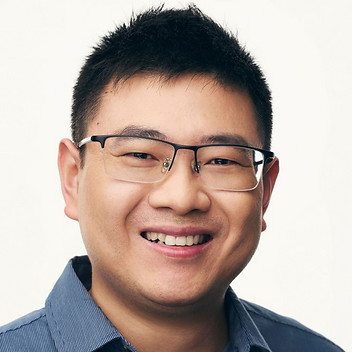
About Lei
I am a…
Educator/Teacher, Engineer, Inventor, Scientist
Bio
Lei Li is currently a postdoctoral scholar in the Department of Medical Engineering at Caltech. In 2019, he obtained his Ph.D. degree from the Department of Electrical Engineering at Caltech. His overarching research goal is to develop new medical imaging technology that uses light to visualize brain functions and cancer progression. Toward this goal, he has developed advanced photoacoustic computed tomography (PACT)—an imaging modality that combines light and sound for deep-tissue imaging—to non-invasively visualize wholebody dynamics, study brain functions, detect tumor growth and metastasis, and navigate microrobots inside the body. He also shapes the benchtop system towards a wearable device. These works enable wide-range applications in neuroscience, cancer research, and clinical translation. He is now combining light, sound and artificial intelligence to detect early-stage cancer and better understand the brain.
I'm passionate about
innovating the next generation medical imaging device to better understand the brain and detect early-stage cancer.
An idea worth spreading
Technology and engineering innovations advance modern medicine that improves human health. The innovative efforts of combining light and sound for imaging offer a new approach to understand the brain and diagnose diseases.
Areas of expertise
biophotonics, medical imaging, optical imaging
The TED story
As a kid, I was fascinated by optics and physics: natural wonders like rainbows and mirages were amazing. During my undergraduate study, I chose an optical engineering major. In my junior year, I joined an optics lab, and my research journey began. At first, my research focused on the industrial applications of optics, such as precision measurements and optical fiber sensor development, enjoyable work that aligned with my interests.
About ten years ago, my grandmother died of intestinal cancer after a late diagnosis, which made me start thinking about how cancer diagnosis could be improved. About a year later, my grandfather died from a stroke for want of prompt treatment. These great sadnesses drove me to think about how to apply what I had studied to benefit human health, aiding early diagnosis, and providing a better understanding of diseases. Reviewing the literature, I quickly noticed that modern optics had been deeply involved in fundamental biological research, medical diagnosis, and therapy. At that moment, it became clear to me that biomedical optics would be my new research focus. That year, I submitted Ph.D. applications to US universities to pursue research in biomedical optics.
Since 2012, I have devoted myself to biomedical optical imaging and to developing a new generation of biomedical instruments. I hope that my innovations can provide neuroscientists with more powerful tools for the early detection of brain diseases and a better understanding of neurological disorders, such as Alzheimer’s and Parkinson’s.
Aside from work, reading and hiking used to be my regular activities. About two years ago, very fortunately, my wife gave birth to beautiful twin girls. Ever since, taking care of them and playing with them have been fascinating. The COVID pandemic has meant that we spend more time indoors. Thus, as an aspiring teacher, I always assemble new toys in front of my daughters, showing how each part is mechanically joined and explaining how each part works. Of course, our two-year twins don’t fully understand these lessons, but they sometimes can pick up the right tools or parts for me. Lately, I have been reading elementary science books and cartoons to them. Yes, I know they are just two, but I really enjoy translating abstract physics into understandable and engaging stories for them. Although they might not study science or carry out research when they grow up, I take delight in showing them the world from a scientific perspective, and this has greatly enriched my life outside the lab in the past year.
People don't know I'm good at
Cooking and table tennis