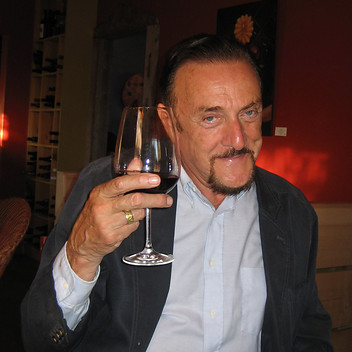
About Phil
I am a…
Activist, Change agent, Educator/Teacher, Foodie, Idea generator, Life mentor, Parent, Scientist, World traveler, Writer/Editor
Bio
Philip Zimbardo is one of the most distinguished living psychologists, having served as President of the American Psychological Association, twice President of the Western Psychological Association, designed and narrated the award winning 26-part PBS series, Discovering Psychology, and has published more than 50 books and 400+ professional and popular articles and chapters, among them, Shyness, The Lucifer Effect, The Time Cure and The Time Paradox.
Professor Emeritus at Stanford University, Dr. Zimbardo has spent 50 years teaching and studying psychology. He received his Ph.D. in psychology from Yale University, and his areas of focus include time perspective, shyness, terrorism, madness, and evil. Best-known for his controversial Stanford Prison Experiment that highlighted the ease with which ordinary intelligent college students could cross the line between good and evil when caught up in the matrix of situational and systemic forces.
Dr. Zimbardo is currently focused on his non-profit The Heroic Imagination Project, and lecturing worldwide. His current research looks at the psychology of heroism. He asks: “What pushes some people to become perpetrators of evil, while others act heroically on behalf of those in need?”
I'm passionate about
Understanding how and why good people do evil deeds, while others are passive observers, and especially about the nature of heroism of the few who take action to stop or prevent evil.
An idea worth spreading
Most heroes are ordinary, everyday people without any special markers or predispositions. Rather, their deeds are extra-ordinary in part for their rarity, in part because they involve taking action in the face of risk and sacrifice, and often under uncertainty. I believe that the very same situation that inflames the hostile imagination in some, infuses the heroic imagination in others. By democratizing and de mystifying heroes, rendering it banal, as the flip side of the banality of evil, it becomes possible to create school curricula to teach students how to develop and be ready to activate an heroic imagination.
Areas of expertise
College Teaching, Demise of Guys, Evil, Heroism, Hypnosis, Shyness, social psychology, terrorism, Time Perspective, Torture
The TED story
Invited out of the blue by June Cohen, a former Stanford University student-- never having heard of TED before.
Tried squeezing an hour talk on evil and heroes into18 min., almost did by breathlessly racing through many points across many slides constantly aware of the tyranny of the ENORMOUS count down clock with its blood red numbers ruthlessly crunching minutes and seconds away. Felt I was about to faint from hyperventilating, knew I should slow down, interior monologue going on " you must take a deep breath" ; "no can do that, will take 5 seconds and that is 2 slides' worth." Raced to conclusion at the very intersection of EVIL/GOOD in my presentation.. Ding, Ding, DONE, OVER AND OUT.
Then out of the TED blue skies floated down my deus ex machina wearing a Chris Anderson mask, "It is too important to end here; we will give you a few more minutes to finish...." (had heard my rehearsal)
Rescued from the 00.00 clock dominion. Did Heroes part, standing ovation. Exhilarating. WOW.
People don't know I'm good at
telling stories of my childhood
understanding how to become a leader
making people feel special and unique
teaching ordinary people to become everyday heroes