About Diya
I am a…
Concerned citizen, Global soul, Student
Bio
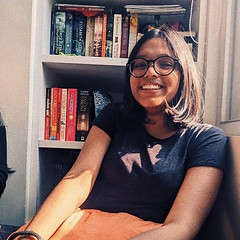
My name is Diya Rao Jaini (she/her). A high-schooler from New Delhi, India, I am all-set to graduate from my institution, Bluebells School International in March of 2022. I am a student of humanities and hold a keen interest in psychology and sociology. I currently am a member of the SDG Junior Research Labs of Youth Action Hub India, an initiative by UNCTAD. Apart from academics, I enjoy photography, public speaking and writing. I also like reading and learning more about food and travel. This has been an interest of mine since a significant duration of time. The variety in cuisines and the immense importance it holds in peoples’ lives has always fascinated me. My parents were born and raised in different parts of the country. This diversity within my heritage has deeply contributed to my understanding of differences. I believe that diversity is one of humankind's strongest assets. I love studying about new cultures and analysing the differences and similarities between their traditions. In the future, I aspire to study how cultures and ways of thought vary across societies.
I'm passionate about
I have always believed in the concept of celebrating differences. I believe that diversity is the spice to our life, for what would the world be if we were all just clones?
I am passionate about making these differences be recognised and helping people be proud of what sets them apart from the crowd; about ensuring that everyone has a platform to freely and safely express who they are. Ever so often, we tend to hide behind what we think is ‘socially acceptable’. This veil of conformity must be swept aside if we are to fully achieve our potential. Until people do not start stepping up and declaring who they really are, the world stays a step away from becoming a more diverse, more interesting place.
I am passionate about redefining the term ‘socially acceptable’ as a concept that we give our own meaning to. The idea of what is socially acceptable is a highly subjective one. Thus, being forever constrained by this term that doesn’t have any concrete meaning whatsoever is just another thing holding us back from being who we truly are.
An idea worth spreading
In the wake of the Covid-19 pandemic, I have had time to reflect upon how something so miniscule has so severely impacted us all. Yet, it shook me when I realised that the experience of dealing with the coronavirus varies drastically for everyone. The migrant workers crisis further drew this point home for me.
My takeaway from being privy to the migrant workers’ struggle was that I, like most of my peers;live a highly sheltered life. Thus, an idea worth spreading is that of checking one’s privilege and furthering this idea by using our privilege to help better someone else’s life.
I believe that socio-economic inequalities are the basis for most of the problems which the contemporary world faces. These put the people subjected to them at a double disadvantage. First, they are deprived of resources most of us take for granted and secondly, they are subjected to social discrimination.
Coming from such sheltered backgrounds, it is first imperative to understand the problems that plague the very grassroots, not just from our own perspective but from the points of view of those actually undergoing these struggles. As people in a place of privilege, it isn’t enough to provide a narrowminded solution to a problem, especially one as prevalent as this. Therefore, it is imperative that we work together in order to nip it in the bud, and to provide a balanced view to the situation.
Areas of expertise
humanities, social science, social work
The TED story
My tryst with TED began when I was scrolling through youtube a few years ago. My 12 year old self may not have understood the concept completely, but when I rediscovered it a few years later, I remember being in complete awe of the wonderful platform TED provided people to talk about a multitude of topics. What I appreciate most about TED talks is that it is an assimilation of information from various people of various backgrounds, on a plethora of topics- ranging from philosophy to sustainable development. The TED talk I enjoyed watching the most is one delivered by Kimberle Crenshaw, who talks about intersectionality and elucidates on how discrimination is not just a single-fold issue.
Thus, I couldn’t be more excited when my seniors decided to organise a TEDx event in our institution itself. I was an attendee the previous year and really appreciated the diverse group of speakers and the different things they spoke about; all unified under the theme ‘Stand in the Light- Be Seen as We Are’
Things you might not know
Although most of what I do and am good at is known to the people around me, a fact that they don’t know I’m good at is critical thinking and analysis.
I love creating a sequence to tie certain events or data together; since creating a relation makes it easier to interpret. It is a common misconception that the field of humanities does not require as much analysis as any other subject would. I believe it’s exactly that- a misconception. In the study of subjects such as sociology and psychology, analysis and critical thinking play a significant role to creating a hypothesis and carrying out systematic studies and experiments.