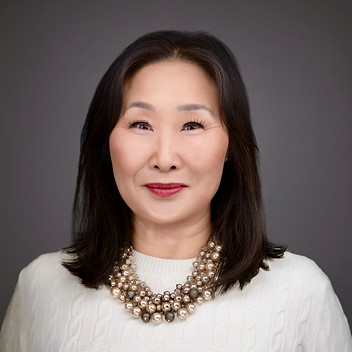
About Sara
I am a…
Brainstormer, Business adviser, Business leader, Business mentor, Change agent, Connector, Consultant, Entrepreneur, Foodie, Idea generator, Life mentor, Parent, Producer, Promoter, Social entrepreneur, Startup, Technologist
Bio
At InclusionPro, Sara’s expert team crafts transformative inclusion strategies, with a focus on team performance and unity. Her approach is human-centered, emphasizing organizational alignment and the personal growth of leaders and teams. Her expertise also extends to business consulting, coaching seasoned executives, and nurturing emerging public speakers.
With an illustrious career spanning 25 years, Sara's journey from patent attorney to visionary CEO encapsulates a diverse expertise in business, technology, legal strategy, and content creation. Sara's executive journey includes her role as CEO of ApplicantPro, a human resources technology company, and VP of Strategic Development at Patent Law Works in Silicon Valley. She has led business and product development at School Improvement Network, an educational technology company. She started her career as a patent attorney, and became a partner at Workman Nydegger.
Jones serves on the Utah State Workforce Development Board (Utah governor and legislature appointed) and Nat’l Assn of Corporate Directors Utah Chapter Board. In 2007, Sara co-founded Women Tech Council (WTC) a national organization focusing on the economic impact of women in the technology sector. She has served on the Board of Trustees for Intermountain Healthcare Salt Lake Valley Hospitals Board. Jones’ recognitions include the Kirk R. Englehardt Business Ethics Award from Utah Valley University (2024), Distinguished Alumni University of Utah (2021), and Utah Business Magazine CEO of the Year (2019). Jones has a J.D. from BYU Law School and a B.S. in chemical engineering from the University of Utah.
I'm passionate about
Creating purposeful and meaningful change that often requires moving people into new spaces of thinking. My superpower is reframing historically challenging topics through human-focused dialogue.
An idea worth spreading
Inclusive leadership is characterized by skills, not by identity.
Areas of expertise
Business Development, Diversity, Equity, Fundraising, Inclusion, Keynote speaking, Leadership, Partnerships, Programs, Strategy
The TED story
Transracial adoption has two traumas.
The first trauma is losing ties to your original family.
The second trauma is having your adoption experience invalidated - for the rest of your life.
I gave my TED talk to illuminate both of these traumas. I wanted to help others understand the complex issues facing a child who crosses one race or ethnicity into another. And this complexity lasts a lifetime. My talk barely scratches the surface of the microaggressions and emotional hurdles that children who are transracially adopted experience throughout their lives. Even from people they love.
Often, when we talk about intersectionality, we think of a pie. Each piece of the pie represents an aspect of who we are. When people tell me “you are basically a white person,” I feel like they only see the white piece of my pie. My Asian identity is invalidated. I experience guilt for not being Asian enough and guilt for being too white. It is normal for transracial adoptees to “fight to be white.” Especially when all of the narrative around them are externally reinforcing this and not allowing room for a child to develop their own understanding and racial consciousness. I’ve been exploring my Korean culture for over 20 years now, and I know I will never be fully ethnically Korean. There is also judgement from others if transracial adoptees don’t choose to seek out their culture of origin. Invalidation comes from all sides.
A wonderful friend told me: “Sara, you get to be all Asian and all white - at the same time.” This was mind blowing to me. Especially, growing up I usually heard race and ethnicity as things that could be divided up into pieces, which made me feel I was never complete. Imagine if we looked at racial and ethnic identity more like a layered cake. Each layer represents an aspect of who we are and brings something delicious and wonderful. And sometimes uniquely oppositional. For example - the magic of chocolate and salt together. It creates something new that isn’t chocolate by itself or salt by itself. It’s something even better. Sometimes the cake feels more like a culinary challenge on Iron Chef. Take all these ingredients - chocolate, salt, curry, kimchi, mole, fried chicken, and artichokes - ready, set, go! And like Iron Chef, somehow it works! All of me shows up in every single piece of the cake.
I like this version of intersectionality much better. We all have layers - and if we can learn to appreciate and value each other’s complexities, we will minimize the identity trauma that many of us feel.
People don't know I'm good at
Cooking Korean food (since 1999) and karaoke