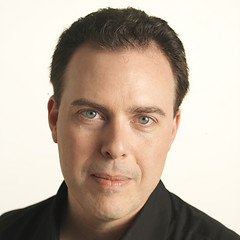
About Keith
I am a…
Blogger, Change Agent, Educator/Teacher, Entrepreneur, Foodie, Philanthropist, Public servant, Single, Social entrepreneur, Writer/Editor
Bio
After my parents forced me to give up my life-long career goal of being a projectionist and forced me to attend at least one semester of college, I decided to become a teacher. I opted to study English, and I ended up enjoying my time in academia so much that I stayed for 13 years. I earned my Ph.D. in Medieval British Literature in 1998 and was fortunate enough to waltz out of my graduate program and into a full-time, tenure-track, academic job.
One night in March of 2002, while driving home from work, I experienced a moment of what could only be classified as euphoric gratitude for the state of my life. I was doing work that I loved, actually being paid to talk to nice people about topics that I found interesting, living in a city I enjoyed (I was in Nashville at the time), happy and healthy.
I then found myself thinking about how many times - especially during my years in graduate school - that my entire life was nearly derailed by the kinds of short-term financial emergencies that we've all encountered before (happy I may have been, but wealthy I certainly was not). in one specific case, I came very close to homelessness because, on a budget of about $1100 a month (for three people), I was forced to choose between paying my rent and fixing my car, which had broken down.
I survived that situation only because my boss at the time found out about it and very quietly, without saying anything, left me a check that allowed me to pay the rent that I'd never had trouble paying before. Had that not happened, I realized, I might not ever have completed my education, and one way or the other, I knew my life would've turned out very differently.
As I thought about this person from my past and the impact that a relatively small amount of financial assistance had meant to me, I made the decision that, once i was well-off (having published an academic hit or won the lottery), I would start a charity to help people in exactly that situation - people who, through no fault of their own, had encountered a short-term emergency expense, had no way to remit payment for that expense on their own, and did not qualify for any conventional type of charity.
And then, as I daydreamed about the good I would be able to do once I had a larger pool of resources from which to draw, all of a sudden, it came to me: the people who had helped me the most in the past - none of those people had been conventionally wealthy. They had simply been kind, and in dong so, they had been silently teaching me as best they could the literal meaning of 'philanthropy': compassion for people.
Right then and there, I decided I would downsize my life to the point that I had $350.00 a month that I could use to help one person per month - maybe two - with these same types of short-term emergencies. Knowing that none of my friends would ever come to me for help (it's embarrassing when a person's life comes down to $350), I launched a small website that I created with Microsoft Frontpage (HTML was one language I had never undertaken to learn) simply inviting people with these kinds of issues to contact me and promising to help if I could.
I called that website 'Modest Needs,' primarily because the domain name was available, and I launched with no aspiration beyond that of 'paying forward' the kindnesses that people had shown to me in the past, one person at a time.
Of course, as with most things in life, that's not exactly how Modest Needs turned out.
Over the past seven years, Modest Needs has grown into a nationally respected charity of last resort. We do all of our work in a secure, online environment with proprietary software, the majority of which was donated to us by a brilliant web programmer who worked with me from 2002 - 2008, and whom I did not meet or speak to - even once - until December 2007.
These days, thanks to contributions from thousands of 'small change' philanthropists from across the US and around the world (and a few strategic partnerships), Modest Needs has grown to the point that we can now make grants totaling (on average) in excess of $100,000.00 per month to people in short-term crisis and with nowhere else to turn.
I now live in New York City and, in 2008, sat stupefied in the CGI audience as I listened to Bill Clinton and Bill Gates (two people I very much admire) talk about Modest Needs in terms of its place in the future of philanthropy.
I believe in the power of people - all people - to change lives. So these days, I spend all of my time trying to find new ways to use technology to empower people to act on one of our most basic human impulses - the desire to be kind to one another. I love what I do - it's even more fun than translating Beowulf - and thanks to my work, most of the time, wherever I happen to be, I secretly feel as if I'm the luckiest person in the room.
I'm passionate about
The use of Web 2.0 technologies to transform, not only how we think about what 'philanthropy' means, but how we reach out to one another in small and meaningful ways. And my son. Not in that order.
An idea worth spreading
I wonder if we could find a way to for 'small change' philanthropists to take on larger projects, particularly in developing nations (the building of a clinic, for example), by breaking the cost of such projects down to its component parts and allowing those persons to buy the component parts of the project (seventeen bricks, an examination table) rather than simply contributing to the overall project itself. This strategy would give people a sense of 'ownership' in each such project to which they contributed and would be very likely, I think, to inspire people to participate in such projects. To a 'small change' philanthropist, $25 doesn't sound like very much when you're trying to raise the $500,000.00 you need to build a clinic, but if you can tell the same person that they're actually buying the cement that will serve as the foundation for the clinic - well, that makes sense? I'd like to see a project of this kind launch in the very near future. Anybody want to help?
Areas of expertise
Online Giving Marketplaces, Philanthropy, for the rest of us, Web 2.0 Innovation
The TED story
This is my first time at TED, so my TED stories are all forthcoming. But I'm thrilled to be a new TEDster, and I'm willing to bet that my TED stories are gonna be REALLY good!
Things you might not know
Solving linguistic puzzles, cooking for groups of 20 or more (preferably preparing really spicy food), imitating almost any sound, and reciting long, long excerpts of Beowulf in Anglo-Saxon.