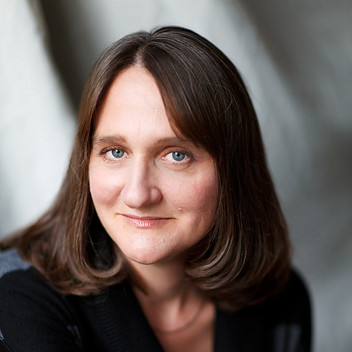
About Sandra
I am a…
Doctor, Journalist, Photographer, Scientist, World traveler, Writer/Editor
Bio
I'm a neuroscientist, science writer, and science editor. I've written three books about the brain for a popular audience, edited a neuroscience journal, and done research on brain development and learning. My latest book, Why Diets Make Us Fat: The Unintended Consequences of Our Obsession with Weight Loss, covers the information in this TED talk and lots more.
My first book, Welcome to Your Brain: Why You Lose Your Car Keys But Never Forget How to Drive and Other Puzzles of Everyday Life (coauthored with Sam Wang), was published by Bloomsbury US (March 2008) and twenty-three international publishers. The American Association for the Advancement of Science named it their Young Adult Science Book of the Year in 2009.
Our second book, Welcome to Your Child's Brain: How the Mind Grows from Conception to College, was published in September 2011 in the US and UK and is under contract with fourteen other international publishers. My science writing has been published in The New York Times, Washington Post, El Mundo and the Times of London, among other places.
As Science Editor of BeingHuman.org, a popular science website, I commissioned articles from scientists and science writers to help nonspecialists understand research in neuroscience, psychology, genetics, animal behavior, and anthropology that relates to the human experience. The articles are freely available, courtesy of the Baumann Foundation, which is sponsoring the site.
Earlier, I was the editor in chief of Nature Neuroscience, a leading scientific journal in the field of brain research. I received my undergraduate degree in biophysics from Johns Hopkins University and my Ph.D. in neuroscience from the University of Rochester. After four years of postdoctoral research at Yale University, I joined Nature Neuroscience at its founding in 1998 and was editor in chief from 2003 to 2008. During my career at the journal, I read over four thousand neuroscience papers and wrote many editorials on science policy. I have presented talks to parents, schools, non-profits, universities, and conferences.
My husband and I live on eight acres in Northern California. A few years ago, we sailed our ketch across the Pacific Ocean from San Francisco to New Zealand and back, via many South Pacific islands, including Tahiti, Bora Bora, Suwarrow, and Palmyra. I love riding my V-Strom on the back roads, truck camping, travel photography, hiking, cooking, dancing, and having written.
I'm passionate about
Evaluating evidence and getting the facts right, communicating science to the public, figuring out how the brain works, offshore sailing, cooking and eating, west coast swing dancing, how culture influences the way we think
An idea worth spreading
People can deliberately reduce their body weight in the same sense that they can decide to get less sleep than they need: to some extent, for a while, at a substantial cost. Neuroscience explains why dieting often makes people fatter and less healthy in the long run. It also impairs the ability to recognize hunger, increasing vulnerability to emotional eating and food-industry marketing. In children and teenagers, dieting increases the risk of eating disorders as well as future obesity.
The brain circuits that regulate weight influence hunger and activity in many subconscious ways and also change metabolism by modifying the amount of energy that muscles burn. Even after years of successful weight loss maintenance, the brain continues to work just as hard to promote regain. The result is a powerful mechanism to keep the body within a target weight range and to resist intentional changes. Working with this system by eating mindfully is much more effective than working against it.
Areas of expertise
anthropology, Neuroscience, psychology, Science Editing, Science Writing